

You’ve stared down that razor-thin crack or old pin scar, heart pounding, wondering if anything will hold. Regular nuts bounce out. Cams won’t even touch the walls. It’s a climber’s nightmare on steep faces where one slip means big trouble.
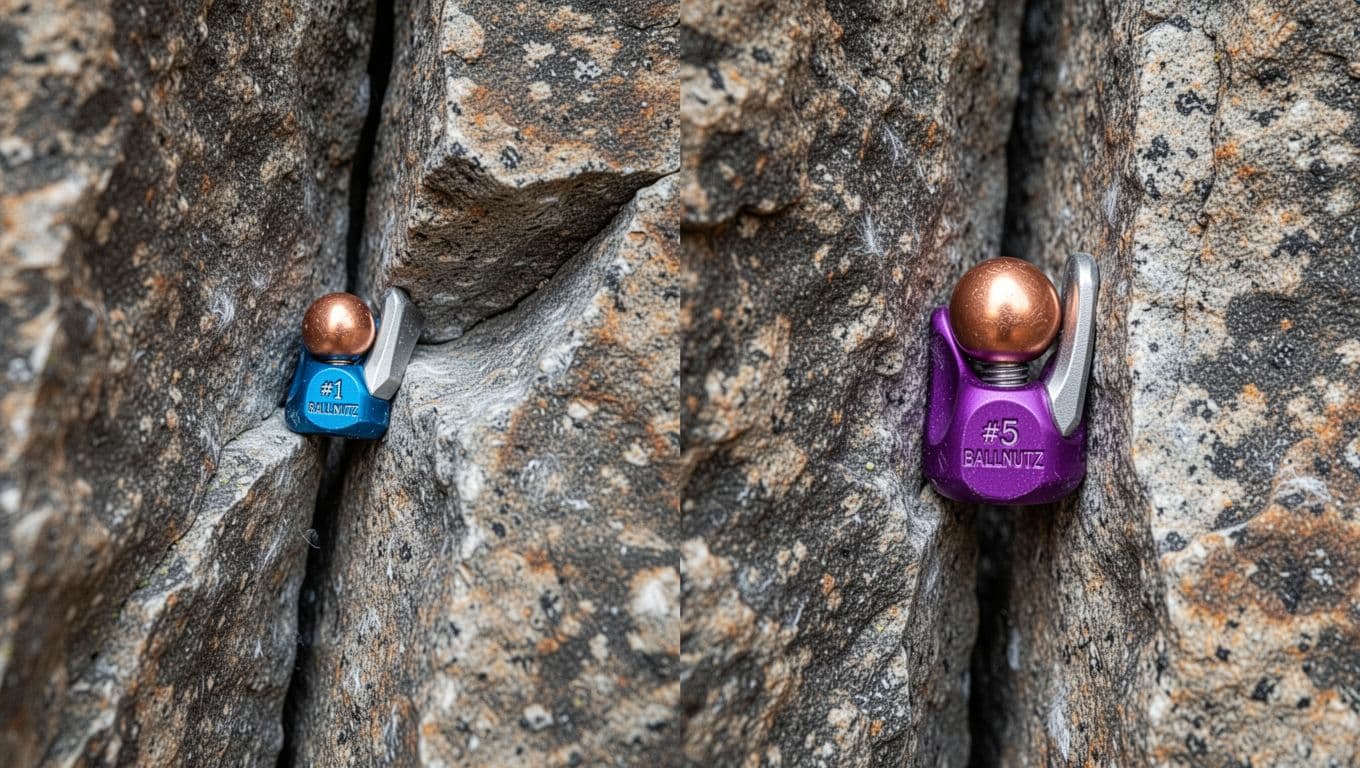
Trango BallNutz Protection changes that. These tiny active nuts use a copper ball and aluminum ramp. You pull the trigger to slide the ball down, then release it. The ball cams outward, gripping parallel cracks tight.
They start at size #1, which fits cracks from 3.7 mm wide. Five sizes cover up to 17.5 mm total. But they’re specialty gear. Don’t ditch your normal rack for them.
They excel in straight-sided placements. Think granite big walls, desert towers like Fisher Towers, or Sierra alpine routes with splitter cracks. Climbers love them there because they protect where other gear fails. However, they deform in soft rock, so pick your spots wisely.
In short, BallNutz save runs on sketchy leads. You’ll see why they’re a go-to for thin cracks ahead.
How BallNutz work, in plain English (and why they hold in tiny cracks)
Trango BallNutz Protection act like a mini cam without the bulky lobes. You get active grip in spots too narrow for regular cams. Pull a trigger, and a copper ball slides down an aluminum ramp. This shrinks the piece for tight entry. Release it, and the ball pops back up, jamming against parallel walls for a solid hold.
Passive nuts just sit there and rely on friction or shape. BallNutz go active. They expand under load. That’s why they shine in straight-sided seams, like pin scars or micro-cracks from 3.7 mm wide. However, they skip soft rock or flares. The ball needs firm, even sides to bite right.
The ball-and-ramp mechanism, what is moving and what is fixed?
The aluminum ramp stays fixed. It wedges into the crack and guides everything. The copper ball moves. Pull the trigger wire, and it slides the ball down the ramp’s groove. Now the piece fits skinny spots.
Release the trigger. The ball rolls up toward the ramp’s narrow end. It presses outward hard. Your tug on the sling seats it. Under force, like a fall, the ramp digs deeper while the ball grips. This holds up to 7-8 kN.
That soft copper deforms over time. Good side: it molds to rock bumps for better bite. Bad side: it can ding up, cut cables, or stick so the action slows. Clean them after big whacks. A nut tool pries stubborn balls free.
What makes a “good” BallNutz placement
Start with firm rock. Parallel walls work best. A slight pinch or texture helps the ball grab. Orient the ramp so it faces your expected pull direction. That keeps it from walking out.
You need enough depth. Shallow spots won’t let the ball bite clean. Skip sharp edges. They slice cables fast. Yanking hard after release tests it. Bounce your weight. If it holds steady, you’re set.
Extend with a sling. This cuts weird outward tugs or walking. Picture a steep face. The sling keeps pulls natural. So the BallNutz stays put.
When a normal nut or micro cam is the better choice
A stopper seats clean? Use it. Passive nuts excel in tapers. They’re simple and light. No fuss.
Micro cam fits? Go there for flares or odd shapes. Cams adjust better. BallNutz demand straight walls.
Soft rock spells trouble. Balls deform too much. Rethink the pitch or skip pro. In short, match gear to crack. BallNutz fill a niche. Nuts and cams cover the rest.
Sizing Trango BallNutz for real routes, not guesswork
You rack up on lead, but a wrong size means no pro. Trango BallNutz Protection demand a precise fit because they rely on that copper ball expanding just right. Pick sizes based on your local cracks, and you’ll place them with confidence every time. Start by knowing the lineup cold. Then build your rack smart.
Trango BallNutz sizes and strength ratings at a glance
Trango BallNutz come in five sizes. Each has a color code for quick grabs. The #1 holds less at 7 kN. Sizes #2 through #5 hit 8 kN. Weights stay light, from 31 grams up to 73 grams. They cover cracks from 3.7 mm to 17.5 mm wide.
Here’s the full breakdown:
| Size | Color | Range (mm) | Strength | Weight (g) |
|---|---|---|---|---|
| #1 | Blue | 3.7-6.4 | 7 kN | 31 |
| #2 | Red | 4.8-9 | 8 kN | 39 |
| #3 | Yellow | 6.1-11.6 | 8 kN | 49 |
| #4 | Green | 7.8-13.8 | 8 kN | 58 |
| #5 | Purple | 10.3-17.5 | 8 kN | 73 |
This table shows why they’re versatile for thin seams and pin scars. For example, the blue #1 bites micro-seams in granite domes. Red #2 and yellow #3 tackle most old pin scars. Green #4 fits tiny corners. Purple #5 grabs wider parallel spots where small cams wobble.
These specs build trust on sketchy leads. You see the range overlaps a bit. That helps in variable cracks.
Which sizes to buy first if you do not want the full set
Most climbers skip the full rack at first. Focus on common cracks instead. Grab #2, #3, and #4 right away. They fit pin scars and thin seams you see often on granite routes.
These reds, yellows, and greens cover 4.8 mm to 13.8 mm. That’s your workhorse range. Add the blue #1 next if you climb super-thin granite seams, like on Tuolumne domes. It squeezes into 3.7 mm spots where nothing else goes.
Save the purple #5 for last. Use it in slightly wider parallel cracks. Small cams feel tippy there. However, match your buys to local rock. Desert towers need more midsizes. Alpine routes might call for extras in #1.
Start small. Test on toprope. Soon you’ll know exactly what your routes demand. In short, three pieces get you far. Expand as you go.
Common sizing mistakes that lead to bad placements
Wrong sizes kill placements fast. A too-small BallNutz sits on a crack edge. The ball can’t expand enough. It pops out under tug.
Go too big, and it barely engages. The ramp floats loose. No bite happens. Ignore crack depth too. Shallow spots leave the ball exposed. Finally, watch pull direction. Outward force unseats them every time.
Avoid these pitfalls with this quick lead checklist:
- Measure the crack width first with your fingers or a known nut.
- Pull the trigger and test fit before full insert.
- Check depth; needs at least twice the nut girth.
- Face the ramp toward your fall line.
- Yank sideways after seating; it should hold firm.
Practice these steps. You’ll spot good fits in seconds. Bad ones get skipped.
Fix your sizing, and Trango BallNutz shine. Confidence grows with every solid placement.
Placing and cleaning BallNutz on lead, step by step
Picture yourself pumped out, 50 feet up a steep granite face, eyeing that bomber pin scar. You need a quick, repeatable way to place Trango BallNutz Protection right the first time. This routine keeps you safe and moving. First, evaluate the crack. Look for parallel sides in firm rock. Pick the right size from your rack. Then set it smooth. Test gently. Extend the sling. Clip and go. Cleaning comes later, but master it now to avoid stuck gear. Follow these steps, and BallNutz become your thin-crack allies.
A simple placement routine you can repeat under stress
Stress hits hard on lead. Keep this flow muscle memory. Start close. Inspect the rock quality up close. Firm granite with parallel walls beats flaky stuff every time. Skip sharp flares; they chew cables.
Next, pick the size. Match the crack width to your chart. Red #2 fits most pin scars, for example.
Pull the trigger now. Retract the copper ball fully down the ramp. Keep fingers clear of the works. Slide it in smooth, halfway at first. Release the trigger. The ball cams up against the walls.
Seat it with a firm tug in your expected pull direction. Downward works best. Then clip your rope quick.
Watch for sharp edges always. They nick the cable fast. Practice this on toprope. Soon it feels automatic.
In short, inspect, size, retract, insert, release, tug, clip. You build confidence fast.
How to test without overloading the piece
A quick test saves worry. But know the difference. A confidence tug checks seating. Shock loading risks damage, like a hard yank.
Use body weight when you can. Lean back slow on the sling. Feel it hold steady. Tug in key directions too. Downward first, then out. It should stick.
Caution in marginal rock, however. Don’t yank hard there. The soft copper ball deforms easy. Add a screamer on small sizes like #1 or #2. It softens any whack.
Extend every piece, besides. Long slings cut rope drag. That keeps pull straight. No weird angles walk it out.
Test smart. You confirm bomber pro without wrecking it.
Cleaning tips so you do not weld it in place
BallNutz bite hard. That’s why they feel stuck after a fall. The copper ball molds tight to bumps. Patience wins over force.
Unweight first. Bounce off it light. Reverse the pull direction now. Upward eases the cam.
Pull the trigger next. Slide the ball down the ramp. Wiggle gentle side to side. Push the stem in while you do.
Be patient always. In tough spots, slightly reposition the nut. Brute force welds it worse. Use a nut tool if needed. Pry the ball out while pushing the ramp.
Don’t just yank the trigger like a cam. Stabilize it with fingers. Pros wiggle aggressive after big loads. Practice cleans on gear routes. You get smooth every time.
Most importantly, leave room on insert. Retract the ball 70 percent up the ramp. It stops 30 to 50 percent down on release. That aids clean pulls later.
Keeping your BallNutz working well over time
Gear lasts with care. Check your Trango BallNutz Protection after every route. Look at the cable close. Spot kinks, frays, or crushed strands. Retire it fast.
Test trigger action too. It should snap smooth. Inspect the copper ball now. Flattening or grooves mean weakness. Dings cut strength.
Heavy aid use wears cables quick. Sharp rock edges cause most damage. Clean dirt from the ramp groove after wet pitches. Store them dry.
Rotate your rack. Run midsizes hardest. Replace small ones first; they take abuse. Pros check post-fall always. Deformed balls lose hold.
Simple habits keep them bomber. You climb safe for years.
Where Trango BallNutz Protection shines, and where it can bite you
Trango BallNutz Protection fill a key gap on routes with razor-thin features. They grip where stoppers rattle loose or micro cams can’t touch. However, they demand the right spots. Pick wrong, and trouble follows. Climbers rave about them on granite big walls and desert towers. Real users note they save falls in pin scars. Still, soft rock bites back hard. Let’s break it down.
Best-case placements: pin scars, seams, and straight mini cracks
Old piton scars scream for BallNutz. Stoppers bounce out there because walls stay parallel but shallow. You pull the trigger, slide in a red #2, and release. The copper ball expands to hug those 5-8 mm granite sides tight. It holds firm, unlike passive nuts.
Thin seams between flares work next. Picture a splitter crack that pinches to nothing midway. BallNutz squeeze into 3.7 mm spots on Tuolumne domes or Yosemite faces. The ramp seats deep while the ball cams out. Climbers on Fisher Towers call them lifesavers in such runouts.
Tiny granite features shine too. Horizontal breaks or micro-parallel cracks on steep faces take a blue #1 perfect. Pros use them in aid climbing to skip pitons. This keeps routes cleaner for everyone. No scars left behind.
In short, firm granite with straight walls makes BallNutz unbeatable. Desert towers and Sierra routes love them most.
Trade-offs to know before you trust them with a fall
BallNutz clean tough sometimes. That copper ball molds to rock bumps after load. You pull the trigger and wiggle, but it fights back. Nut tools help pry it free. Patience beats yanking every time.
Copper deforms fast under repeats. Aid climbers see flats after a few pegs. Strength drops then. Check yours often. Wires wear too from sharp edges. Frayed strands mean retire it quick.
Soft rock spells real danger. Sandstone or crumbly stuff lets the ball walk or pull. It lacks forgiveness there. Stick to granite or basalt. Placement beats ratings always. A perfect seat in the right crack trumps specs.
Users warn: test gentle, extend slings, add screamers on small sizes. These steps cut risks. Above all, know your rock. BallNutz demand respect.
Quick comparisons: BallNutz vs micro cams vs small stoppers
BallNutz fit smaller than most micro cams. A #1 grabs 3.7 mm parallels where cams start at 5 mm. Strength edges out too; 7-8 kN beats tiny cam ratings. They feel active and bomber in those seams.
Stoppers stay simpler when they seat. No trigger fuss. They shine in tapers or pinches. However, parallels spit them out. BallNutz win there hands down.
Micro cams handle flares and odd shapes better. They adjust wide. BallNutz skip irregularities; straight walls only. Each has a spot.
These act as specialty tools. Rack them with basics. They complement, not replace, your nuts and cams. Pick per crack, and your rack covers all.
Conclusion
Trango BallNutz Protection excel in tiny parallel cracks, pin scars, and seams where regular nuts rattle loose or cams can’t fit. They grip firm granite walls on desert towers or big walls best, because the copper ball cams out tight against straight sides. However, they falter in soft rock or flares, so match them to the right spots.
Good habits make them bomber every time. Face the ramp toward your pull direction first. Ensure enough depth for the ball to bite. Extend slings to keep force straight. Test with a gentle tug afterward; it holds steady or skip it.
Start simple. Practice placements near the ground. Learn your local crack sizes next. Grab 2 to 3 midsizes like #2, #3, and #4. Inspect them often for wear. Rack these alongside your basics, and push bolder leads with confidence. Your rack just got smarter.
Back to Climbing Nut Reviews
Recommended Trad Protection and Rack Essentials
These products can support safer climbing, belaying, rappelling, and emergency readiness.
Affiliate disclosure: As an Amazon Associate, TradClimbers may earn from qualifying purchases at no additional cost to you.
Keep exploring helpful trad climbing, gear, safety, and technique resources.
- A Climber’s Guide to Rock Climbing in Thailand
- A Trad Climber’s Guide to the Isle of Skye Ridge
- Hueco Tanks Rock Climbing: hueco tanks rock climbing Essentials
- A Climber’s Guide to The Nose of El Capitan
- The Top 8 Unforgettable Climbing Routes El Capitan Has to Offer in 2026
- Yoga for Climbers: Boost Strength, Flexibility, and Recovery | yoga for climbers