
How to Train for Trad Climbing
Picture this. You lead up a granite crack on a trad route. Wind whips your face as you slot a cam into a shallow fissure. Your arms burn from the sustained pull, but solid gear lets you push higher.
Trad climbing sets itself apart from bolted sport climbing. You place your own removable protection. Cams and nuts jam into cracks to catch potential falls.
That’s why smart training counts. It builds endurance for those long pitches that last 200 feet or more. It hones gear placement skills so you avoid whips. It boosts your confidence on runouts where pro runs thin.
This post lays out how to train for trad climbing in a step-by-step plan. You’ll start with basics like strength builders and finger work. Then move to weekly routines that mix on-wall sessions and gym drills.
Expect safe, fun progress that sticks. You’ll climb longer without fading and place gear faster under pump. Fresh 2026 tips include interval endurance training—like 1-minute climbs followed by 1-minute rests—to mimic pitch efforts and build aerobic power.
You’ll also practice aid techniques for tricky placements. Add flexibility work to twist into rest spots while rigging nuts. In six to eight weeks, add minutes to your hangboard hangs and crack sessions.
Stick with it. Your first multi-pitch trad lead awaits.
Master the Basics Before You Lead
You won’t lead a trad route until you handle the fundamentals cold. Solid gear knowledge and smart route choices keep falls short and retreats simple. Skip this step, and pump or poor placements turn fun into fear. Build your base now so your first lead feels smooth, like threading a nut into a perfect pinch.
Know Your Rack and Gear Essentials
Safety starts with gear you trust. Inspect every piece before each climb. Check cams for worn lobes, nuts for burrs, and slings for frayed threads. A helmet tops the list; it guards against rockfall in cracks.
Beginners need a basic rack that covers common crack sizes. Here’s what works:
- Double rack of cams: One set from 0.3 to 3 inches (think Black Diamond C4s or Camalots). Cams expand to grip irregular rock with spring-loaded lobes.
- Nuts and hexes: 8-12 nuts in a standard set, plus a few hexes for parallel cracks. Nuts wedge passive into tapering spots.
- Quickdraws and slings: 10-12 draws with 24-inch dogbones; double up slings (120cm nylon) for extending gear and reducing rope drag.
- Extras: Four screwgate carabiners for anchors, plus a cordelette or slings for belays.
Rack efficiently on your harness. Hang cams from biggest to smallest on one hip, nuts and draws on the other. Practice at home: clip draws to slings, extend them to keep the rope straight above pro. Head to a boulder with ground-up cracks. Fiddle nuts in and yank them out. Feel how a good placement bites firm. Check out essential gear tips for building your rack to match your local rock.
Know anchors and belays inside out. Take a class on rigging equalized stations. Your partner spots weak links early.
Pick Beginner-Friendly Routes and Partners
Pair with a trad-savvy belayer from day one. They share beta on placements, clean gear smooth, and know escape rappels. Solo practice won’t teach real-world retreats.
Stick to single-pitch cracks rated 5.6 to 5.8. These build skills without epic runouts. Yosemite’s Jam Crack (5.8) offers a hand-sized splitter on clean granite; jam fists and stems take you to the chains. Limit yourself to routes at or below your top-rope max. Try varied rock: sandstone for sandy pro, limestone for pin scars.
Ditch tight sport shoes. Grab approach shoes with sticky rubber for edging cracks. They protect toes on jams.
Guided classes shine here. Instructors demo rope handling, partner checks, and bailouts. Picture your first clean lead: sun warms the crack, your nut slots bomber, the belayer grins below. You top out steady, rack jingling victory. Build that moment with feedback loops; ask your partner to critique placements on downclimbs. Stay safe, progress steady.
Build Endurance to Stay Strong on Long Pitches
Long trad pitches demand finger and arm endurance that sport climbing rarely tests. You jam cracks for 30 minutes straight, arms pumped but still placing gear. Build this power through targeted sessions that match real efforts. These drills fit right into how to train for trad climbing, boosting your ability to push past the burn and top out strong.
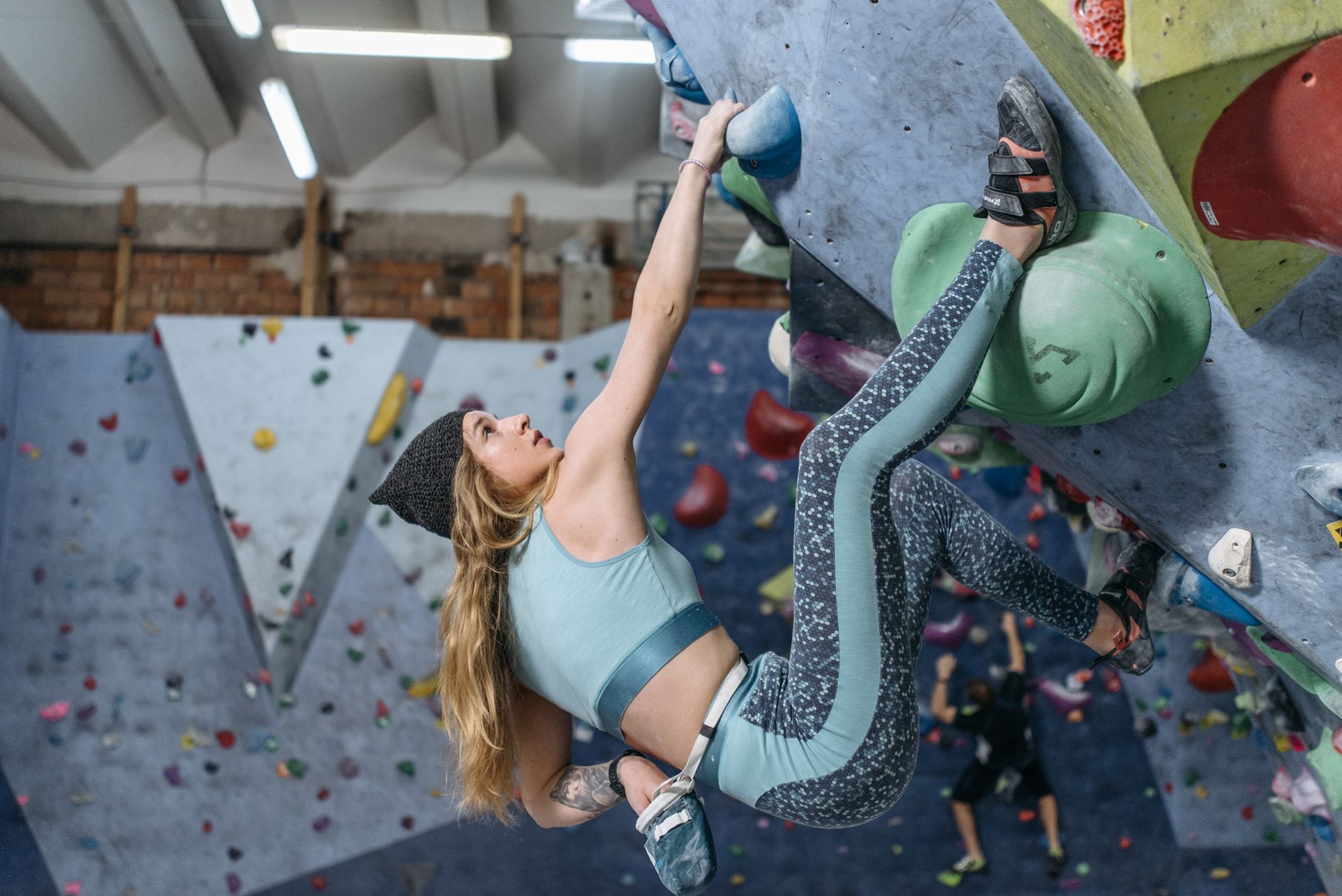
Photo by Pavel Danilyuk
Steady Endurance Climbs
Steady climbs grow capillaries in your muscles. They deliver steady oxygen for hours on route. Pick easy walls or slabs at your limit minus two grades. Climb nonstop for 10 to 30 minutes without full pump.
Focus on smooth breaths. Inhale deep on rest spots; exhale as you match holds. Relax your grip between jams; let fingers open fully. Stem or layback into chicken-wing rests to shake out forearms.
Start with three sessions weekly. Warm up first, then hit 15-minute circuits. Picture fog rolling up a Yosemite crack; you flow smooth, lungs even, arms tireless. Add one minute each week. Track progress in a log: note pump time and breathing ease.
Key benefits include:
- Bigger aerobic base for 200-foot pitches.
- Better energy use on runouts.
- Less forearm swell after multi-pitch days.
Gym treadwalls shine here. Check Brewer’s Ledge Treadwall Training Guide for protocols that build this base fast.
High-Intensity Interval Sessions
Trad pitches spike hard: crux jams, then easy traverses. Intervals train this mix. They save your arms by letting full recovery on chill sections.
Climb a hard half-route near your limit. Drop to easy terrain for equal time. Repeat four times per set; do three sets with 10-minute rests between. Total workout runs 45 minutes.
Example on a 60-foot wall: power up the steep jam crack for three minutes, then cruise slabs for three. Lower, rest forearms on knees, sip water. Repeat. Feel the pump build, then fade as oxygen floods back.
Add cardio three to four days weekly. Run hills or bike steady for 30 minutes. This ties climbing power to whole-body stamina.
You push the final rep, calves screaming, fingers numb. One more match; anchors appear. That’s pitch simulation. See interval training for endurance to tweak for your fitness level. Do these twice weekly after steady sessions warm your base.
Sharpen Movement Skills and Flexibility
Trad routes twist through cracks and dihedrals that demand sharp movement. You need precise feet and a body that flows with the rock. Poor positioning drains your power fast on long pitches. Train these skills to place gear clean and rest deep. They fit right into how to train for trad climbing, turning awkward jams into smooth progress.
Perfect Footwork and Body Positioning
Quiet feet win on trad cracks. Focus on static, controlled moves instead of wild dynos. Keep your weight centered over your feet. This saves arms and lets you spot pro without barn-dooring off.
Use edges for tiny footholds on faces next to cracks. Smear rubber on blank slabs to trust friction. Practice on varied terrain: granite slabs, sandy sandstone, pocketed limestone. Wear comfy shoes with soft soles at first. They mold to smears and protect toes in jams.
Plan your sequence two moves ahead. Spot the next edge or smear before you commit. Train on top-rope to drill patterns without fear. Stem wide in dihedrals; push opposite feet against walls while hands rest. Picture fluid stemming up a granite corner: feet torque out, hips square, body glides like water down a chute.
Laybacks suit flared cracks. Lean back on hands or jams, feet scissored on edges. Twist your torso to stay balanced. Hit mixed terrain weekly. Boulder low cracks ground-up, then lap a 40-foot top-rope stem.
To master basics, check rock climbing techniques. Build habits that stick on lead.
Quick footwork drills:
- Edge tiny holds for 20 moves, eyes on feet.
- Smear up a 20-foot slab, no hands above waist.
- Stem a corner 10 times, focus on heel-toe push.
These sharpen precision for real routes.
Daily Stretches for Better Reach
Tight hips kill high steps and stems. Daily routines open your range for gear spots in awkward cracks. Start warm with light jogs or arm circles. Hit hips and hamstrings to twist free on overhanging jams.
Hip openers first: Stand in a deep lunge, front knee bent 90 degrees. Drop back knee; lean forward till you feel the stretch. Hold 30 seconds per side. This preps stems and high feet on dihedrals.
Pigeon pose follows. Cross one shin over the other thigh, fold forward. Breathe deep; target outer hips. Do both sides daily. Hamstrings get frog stretches: sit wide, heels in, knees out. Lean chest down.
Hold wide splits 20-30 seconds. They boost reach for distant cams or nuts. Add lizard pose: hands inside front foot, elbow to ground. This aids gear placements low in splits.
Spend 10 minutes morning and night. Feel looser stems after a week. Your body reaches past pump to bomber pro. High steps flow natural; rests come easy. Pair with climbs for full gains.
Practice Gear Placement Like a Pro
Clean gear placements form the heart of safe trad leads. You slot a nut or cam, tug hard, and trust it holds your whip. This skill turns sketchy cracks into solid protection. As part of how to train for trad climbing, master it through drills that build speed and confidence. Start simple on the ground. Progress to moving placements on top-rope. Finish with aid work on steep terrain. Your rack stays organized; your belayer cleans fast. Picture a bomber cam locked in a parallel granite crack, lobes biting firm as you clip the draw.
Ground and Top-Rope Drills
Hunt real cracks at boulders or low crags. Fiddle nuts and cams into every fissure you spot. Twist stoppers deep until they seat snug. Rotate cams to align lobes with the rock’s angle. Yank down hard; feel the difference between marginal and solid.
Move to top-rope routes next. Climb at half your max grade. Pause mid-move to place pro without downclimbing. Rack cams on one hip, nuts on the other for quick grabs. Use long slings to cut drag and keep the rope straight.
Key steps to nail this:
- Seat nuts fully: Push till the wire pinches tight; no wobble.
- Check cam direction: Point the trigger away from fall force to fight walking.
- Practice while pumped: Climb 20 feet, place three pieces, repeat up.
Top-rope lets you test falls without risk. Bounce on each piece. See how to place trad gear for pro tips on common mistakes. Do this twice weekly. Placements speed up; you spot spots fast.
Aid Climbing for Confidence
Aid takes you vertical on steep cracks rated 5.10 to 5.12. Clip etriers to your gear. Step up in them to hop pieces into pin scars or thin seams. This builds trust in pro that looks dubious.
Rig a top-rope setup first. Place a cam high, then work down. Bounce-test each one. Expect it to catch clean. Steep walls force precise seats; nuts wedge deep, cams expand just right.
Pro habits to lock in:
- Extend every piece with a 48-inch sling.
- Watch for cam walk on flares; twist lobes perpendicular.
- Clean and replace as you go.
Your mental edge sharpens for leads. No hesitation when runouts loom. Check aid climbing to boost trad skills for real-world examples. Hit one steep crack per session. In weeks, leads feel secure. Gear holds true; you climb free.
Train Your Mind and Follow a Weekly Plan
Trad leads test your head as much as your muscles. Pump hits, wind howls, and pro looks thin. Train your mind to stay sharp. Pair that focus with a simple weekly plan. This combo fits right into how to train for trad climbing. You build habits that last pitches and whole days. Calm breaths keep you clear. A steady schedule stacks gains without burnout. Let’s break it down.
Breathing and Rest Techniques
Panic spikes your heart rate on runouts. Slow breaths drop it back. Try nose-to-nose breathing: inhale through your nose for four counts, exhale longer through your mouth for six. This calms nerves mid-crux. Picture fog clearing as oxygen floods your brain. You spot holds and pro spots you missed.
Practice on hard boulders. Climb near failure, then force the rhythm. Long exhales flush lactic acid from pumped forearms. Your arms recover faster; you push one more move.
No-hands rests save energy on cracks. Stem wide in corners; push feet apart while hands shake out. Chicken-wing an arm into a crack for forearm relief. Twist hips to match jams, free both hands. Hunt these spots on top-rope laps. Hold 20 seconds, breathe deep, scan for gear.
Do this weekly. Stress fades; you lead steady. Check this breathing guide from Climbing for drills that stick.
Your 4-Week Starter Schedule
Consistency beats intensity. This plan mixes prior skills: endurance, footwork, gear drills. Climb 3-4 days, add cardio. Rest or stretch others. Adjust reps down if you’re new; add if fit. Target weak spots, like thin pro if cracks scare you. Progress to multi-pitch by week four.
Daily: 10 minutes hip stretches from earlier.
| Week | Monday | Tuesday | Wednesday | Thursday | Friday | Saturday | Sunday |
|---|---|---|---|---|---|---|---|
| 1: Build Base | Rest/stretch | Steady endurance (15 min) | Gear drills (top-rope) | Cardio (30 min run) | Interval climbs (3 sets) | Single-pitch trad | Rest |
| 2: Add Volume | Rest/stretch | Steady (20 min) | Aid practice | Cardio (hill run) | Intervals (4 sets) | Crack laps | Rest |
| 3: Mix Skills | Footwork drills | Endurance (25 min) | Gear + rests | Cardio/bike | Intervals + stretch | Mock multi-pitch | Rest |
| 4: Peak | Light cardio | Full endurance (30 min) | Aid + gear | Rest | Hard intervals | Real multi-pitch | Active recovery |
Track pump time and placements in a notebook. Feel stronger cracks by week three. Rack flows smooth. Hit your local crag now. That first full trad day waits, rack heavy but mind light. You’ve got this.
Conclusion
You’ve got the roadmap for how to train for trad climbing. Master basics like gear racks and easy cracks first. Build endurance with steady climbs and sharp intervals to handle those endless pitches. Hone movement through footwork drills and hip stretches for fluid stems. Nail gear placements on top-rope and aid walls so pro holds firm. Train your mind with breaths and a tight weekly plan to stay cool on runouts.
Stick to the schedule. Practice week after week. Safe leads follow; fear fades into focus. Picture that granite crack again. Wind in your face, cams biting deep, top-out grin wide.
Back to Trad Climbing Basics
Recommended Products for Trad Climbing
These products can support safer climbing, belaying, rappelling, and emergency readiness.
Affiliate disclosure: As an Amazon Associate, TradClimbers may earn from qualifying purchases at no additional cost to you.