
Trad Climbing Helmet Choice for Safety
Trad climbing packs serious risks. Rockfall often strikes leaders from above. Loose gear drops hit followers below. Leader falls swing heads into walls at odd angles.
Head injuries make up 8.7% of trad climbing mishaps. That’s almost double the rate in sport climbing. A good helmet cuts those odds.
Smart trad climbing helmet choice safety makes a big difference. It absorbs impacts and blocks sharp rocks. Pick one that fits tight and meets top standards.
This post breaks it down. You’ll learn key standards like EN-12492 and UIAA-106. See must-have features for side and rear hits. Get top picks that hold up. Plus tips to match your routes and style.
Why Trad Climbing Demands Top Helmet Safety
Trad routes expose you to hits that sport climbing rarely matches. Loose rock tumbles down cracks. Gear bounces off walls. Falls swing your head sideways into ledges. That’s why trad climbing helmet choice safety starts with coverage for these exact threats. A helmet built for trad absorbs side and rear impacts better than basic models.
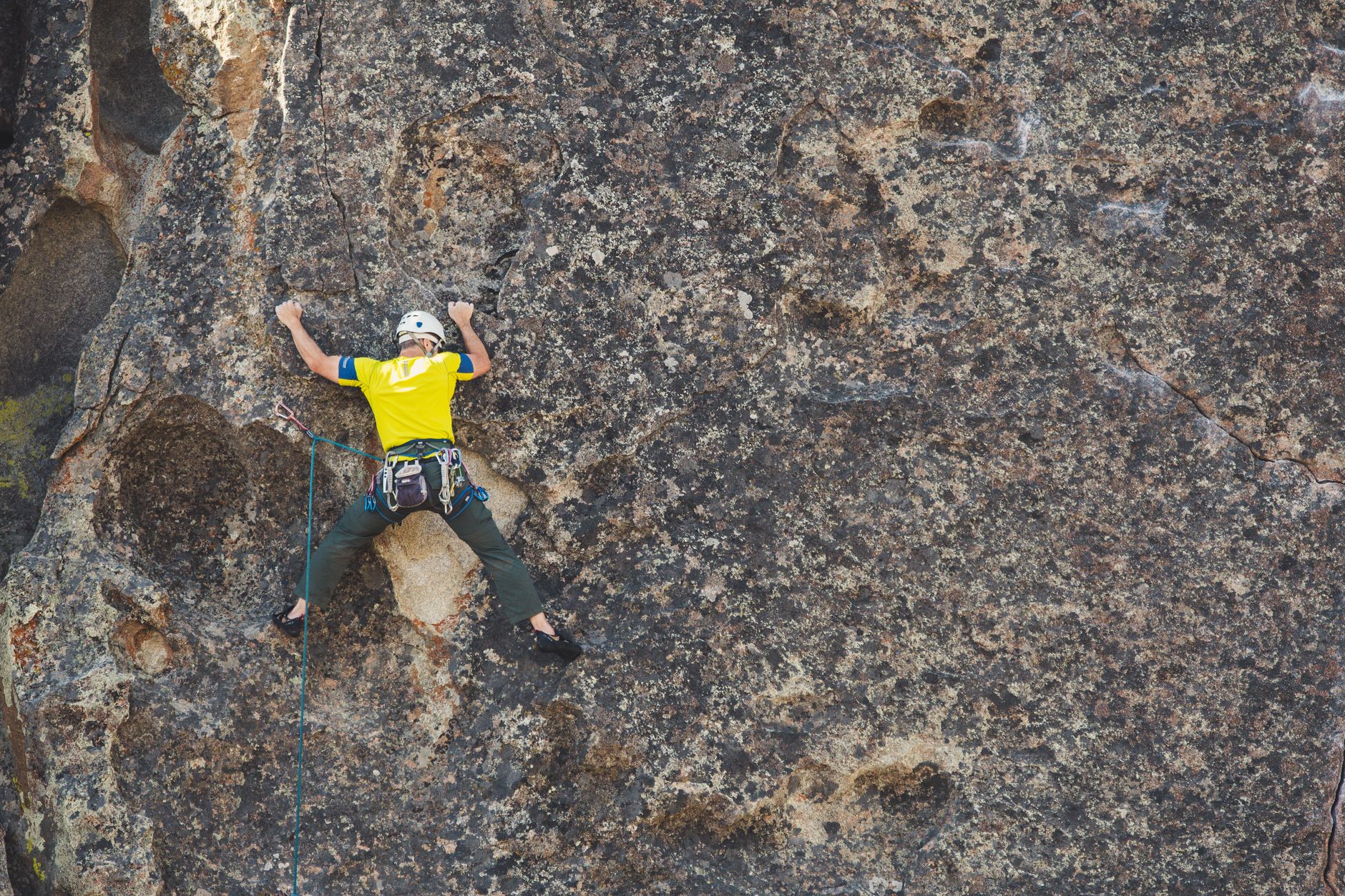
Photo by Brett Sayles
Rockfall and Gear Drop Risks in Trad
Loose rocks hide in cracks on trad lines. You or the leader above kick them free. They strike from above or glance off walls from the side. Followers take the worst blows since they climb below heavy racks.
Dropped cams and nuts add to the danger. A carabiner fails. A piece zips out of a crack. Metal hits hard at speed. Helmets with extended rear coverage and reinforced sides spread the force. They stop cracks from sharp edges too.
Trad setups make these risks common. Consider these scenarios:
- Following a pitch: You jug a heavy rack of 20 cams and stoppers. One slips free mid-move and drops straight onto your helmet.
- Leading cracks: You chimney up a wide fissure. Rocks rain from above as your partner follows and brushes loose flakes.
- Multi-pitch belays: Wind gusts shake boulders from ledges. They tumble down the rope line toward your head.
- Offwidth struggles: You fist jam a grueling corner. Gear pops out sideways and pings off the wall before hitting you.
Studies back this up. The British Mountaineering Council notes rockfall causes most head injuries outdoors. Pick helmets tested for 2-meter side drops under UIAA standards. They outperform sport lids here.
Leader Fall Angles Unique to Trad Routes
Trad gear spaces out far. Falls turn into pendulums. Your body swings out from the wall, then slams back at sharp angles. Heads hit ledges, protrusions, or the main face with twist.
These impacts create rotational forces. Your neck whips. The brain jolts inside the skull. Vertical drops matter less in trad. Oblique hits from swings do the damage.
Sport falls drop straight down. Gear sits close. Trad routes run longer with wandering lines. A factor-2 fall off runout terrain arcs you 10 feet sideways. Helmets shine at these angles. Thick foam layers crush on impact. MIPS liners reduce spin.
Key differences show in tests. Helmets handle 55-degree blows better than pure top-down forces. Check Climbing.com on safe falls for real examples. They stress oblique protection for leaders.
Choose trad helmets with low rear profiles. They stay put during swings. Wide brims block glancing rocks too. Your head stays safe when the rope yanks you off-line.
Key Safety Certifications for Climbing Helmets
Your trad climbing helmet choice safety hinges on solid certifications. These labels show a helmet survives drops, rock strikes, and strap yanks common on trad routes. Skip them, and you risk weak protection. Top standards like EN 12492 and UIAA 106 target climbing threats head-on. Others add useful overlap.
What EN 12492 Means for Your Protection
EN 12492 forms the core standard for climbing helmets. It demands tests on multiple zones to mimic trad hits.
Labs drop helmets from two meters onto a flat anvil. They target the top, front, and sides. Peak acceleration stays under 8g across five spots. This spreads force from falling rocks or leader drops.
A 3kg pointed striker then tests penetration resistance. It strikes at five kN force without denting the shell more than 6mm. Sharp trad flakes won’t punch through.
Retention straps face two checks. First, a static 50kg pull holds without snapping. Second, a dynamic test drops an 8kg weight three times from one meter. The strap locks tight, so it won’t slip in a swing fall.
This standard beats bike or ski rules. Those focus on road crashes. EN 12492 fits climbing drops and side glances. Check details at bikulov.net on EN 12492 standards.
UIAA 106 Adds Extra Assurance
UIAA 106 takes EN 12492 further with harsher tests. It demands three drops per zone instead of one. Side and rear impacts get flat and kerb anvils for real rock edges.
Side tests hit from larger drop heights. Rear coverage faces extra drops too. Acceleration caps drop to 6g on average. This handles trad pendulums and boulder tumbles better.
Retention gets dynamic strain. Straps endure 100kg pulls and repeated shocks without stretch over 3cm. Helmets stay secure on multi-pitch whips.
Many trusted models pass UIAA 106 alongside EN 12492. Examples include:
- Black Diamond Vapor
- Petzl Sirocco
- Black Diamond Half Dome
These shine on loose cracks and runouts. See test breakdowns at Weigh My Rack on certifications.
Bonus Certs Like EN 1077 for Side Hits
EN 1077 covers ski helmets but boosts trad protection. It stresses peripheral side impacts at 2.5-meter oblique drops. Energy hits 95 joules, higher than EN 12492 sides.
This matches trad rocks that skim walls before striking. Helmets with both EN 12492 and EN 1077 layers handle glancing blows from gear drops or ledges.
You gain rotational force reduction too. MIPS systems often pair with it. Pick dual-certified lids for routes like Yosemite cracks. Full specs appear at Helix Operations on helmet standards.
Features That Make Trad Helmets Safer
Your trad climbing helmet choice safety depends on features tuned for loose rock, gear drops, and swing falls. Basic helmets fall short on trad routes. Top models offer extended coverage, tough shells, and impact tech that match real threats.
Coverage: Sides, Rear, and Temples Matter Most
Trad hits strike from odd angles. Rocks tumble from above and clip the back. Gear glances off walls into temples. A low rear brim drops down to shield the base of your skull. It catches falling cams or nuts that basic helmets miss.
Temple wraps curve around the sides. They block ledges during pendulums or chimney scrapes. Full coverage spreads force over a wider area. Tests show these designs cut peak acceleration by 20% on side blows.
Look for helmets with wraparound temples and low rear profiles. Models like those tested at Outdoor Gear Lab score high here. They prevent common trad injuries where partial lids fail.
Durability for Rough Trad Abuse
Trad gear wears helmets hard. Packs rub against shells on long approaches. Rocks scrape in offwidths. Chimneys grind foam edges raw. Thick polycarbonate shells take this abuse without cracking.
These outer layers resist punctures from sharp flakes. They flex under repeated bangs instead of shattering. Foam-only designs dent easy from carabiner drops or ledge taps. Avoid them for multi-pitch hauls.
Thick shells last seasons longer. Petzl’s Boreo uses one-inch thick poly for rock resistance, as noted in Treeline Review tests. Pair it with reinforced edges for chimney routes.
Key traits include:
- Abrasion-resistant shell: 2-3mm polycarbonate outer.
- No exposed foam: Prevents quick wear from packs.
- Impact-tested edges: Holds up to 5kN strikes.
MIPS and Foam Tech Explained
Rotational forces twist your brain in swing falls. MIPS layers slide 10-15mm on impact. This cuts shear by up to 40%, per lab data. It sits between shell and foam without adding bulk.
Foam choice matters too. EPS crushes once for high single impacts. It works well for big drops but doesn’t rebound. EPP compresses and bounces back. It handles multiple low-energy hits from rockfall better.
Compare them directly:
| Foam Type | Best For | Drawback |
|---|---|---|
| EPS | One big hit | Crushes permanently |
| EPP | Repeated strikes | Slightly heavier |
See Epsole’s breakdown for details. MIPS with EPP suits trad’s mix of threats. Check Climbing.com reviews for MIPS-equipped picks that pass UIAA side tests.
Top Helmets for Trad Climbing Safety
Your trad climbing helmet choice safety boils down to models that handle rockfall, gear drops, and swing impacts. These picks meet EN 12492 and UIAA 106 standards. They offer full coverage and tough builds for loose cracks and multi-pitch routes. Each stands out for trad demands.
Black Diamond Capitan: Built Tough for Trad
The Black Diamond Capitan uses a hybrid shell. It blends polycarbonate outside with EPS foam inside. This setup provides full coverage from front to rear.
UIAA enhanced tests boost its edge. It passes three drops per zone on side and rear strikes. The durable shell resists scrapes from packs and chimney grinds. Thick edges hold up to repeated rock taps.
Weight sits at 402 grams for medium size. Ventilation slots keep air moving on hot approaches. The fit dial adjusts quick for gloves. Straps stay secure under 100kg pulls.
Users praise its balance of protection and comfort. Outdoor Gear Lab’s review scores it high on durability at 9.0. It suits heavy racks and offwidths where gear bounces.
Key specs include:
- Shell: Hybrid poly/EPS, 2mm thick.
- Coverage: Wraparound temples, low rear brim.
- Certifications: EN 12492, UIAA 106.
This helmet absorbs sharp flakes without denting.
Black Diamond Vision MIPS: All-Angle Protection
Black Diamond Vision MIPS delivers high coverage across all angles. MIPS liner slides on impact to cut rotational force by 40%. It targets trad swings into walls.
Top safety scores come from UIAA side tests. Rear and temple zones handle 6g peaks. The shell extends low for base-of-skull protection against falling cams.
At 399 grams, it feels light yet robust. EPP foam rebounds from multiple hits. Wide brim shades eyes from sun glare on ledges.
Weigh My Rack specs confirm its low profile. It fits under hoods and helmets packs snug.
Standout features:
- MIPS system: Reduces shear in oblique falls.
- Foam: EPP for repeated rockfall.
- Weight: 399g medium.
Leaders trust it on runouts.
Petzl Boreo: Safe and Affordable Choice
Petzl Boreo offers a rugged hybrid shell at a low price. Good coverage wraps temples and drops low in back. It blocks side glances from loose gear.
The one-inch polycarbonate outer shrugs off abrasion. Foam core crushes on impact but stays intact for next pitch. UIAA certification covers dynamic strap pulls.
Weighs just 365 grams. Soft padding wicks sweat on long days. Headlamp clips hold firm for night descents.
Budget climbers pick it for value. It passes all EN 12492 zones without frills. Durability matches pricier options on cracks.
Main perks:
- Price: Under $70.
- Build: Thick poly shell, EPS foam.
- Fit: Soft, adjustable.
Solid for followers under heavy rockfall.
Mammut Wall Rider and Petzl Meteor Options
Mammut Wall Rider keeps it light at 285 grams with solid coverage. Temple wraps and rear extension shield against pendulums. Hybrid shell uses EPP foam for bounce-back.
Petzl Meteor adds ski certification with EN 1077. It handles 95-joule side impacts from glancing rocks. At 230 grams, low weight aids all-day leads. Both pass UIAA for climbing drops.
Wall Rider’s slim profile slips under packs easy. Meteor’s brim cuts sun and rain. Straps lock tight on whips.
Choose Wall Rider for alpine trad mixes. Meteor fits ski-mountaineering crossovers. Treeline Review tests rate them high on protection-to-weight.
Quick compare:
| Helmet | Weight (g) | Key Bonus |
|---|---|---|
| Wall Rider | 285 | EPP rebound |
| Meteor | 230 | EN 1077 ski cert |
These options prioritize coverage without bulk.
How to Choose, Fit, and Maintain Your Helmet
Your trad climbing helmet choice safety extends beyond picking a model. You must fit it right and keep it in top shape. A loose helmet shifts on impact and fails. Poor maintenance lets cracks spread. Follow these steps to lock in protection for rockfall and swings.
Perfect Fit Tips for Comfort and Safety
Start with your head size. Grab a soft tape measure. Wrap it around your head, one inch above your eyebrows and ears. Keep it level. Note the circumference in centimeters. Match it to the brand’s size chart. For example, 55-59 cm often fits medium.
Weigh My Rack’s fit guide stresses this first step. Brands vary, so check each chart.
Try the helmet on next. It should sit level and snug. No wobble when you shake your head side to side or up and down. Skin touches the padding all around. Gaps mean too big. Pinches signal too small.
Dial adjusters fine-tune the fit. Twist the rear dial clockwise to tighten the cradle. It cups the back of your head. Counterclockwise loosens it. Test on different hair styles. Wet hair compresses; dry puffs up.
Padding plays a key role. Removable pads let you swap thicknesses. Add thicker ones inside for a smaller head. Thinner ones expand the fit. Thick, moisture-wicking pads prevent sweat buildup on long pitches. Replace worn pads yearly.
Here is a quick fit checklist:
- Measure head circumference.
- Align with size chart.
- Sit level over forehead.
- Dial for snug cradle.
- Check no pressure points.
- Shake test: no movement.
A perfect fit stays secure during belay swings and chimney grinds.
Inspection and Replacement Rules
Inspect your helmet before every trip. Hold it to bright light. Look for cracks in the shell. Check dents or gouges deeper than 1mm. Squeeze the foam liner. Compressed spots won’t rebound.
Examine straps closely. Frayed edges or stretched webbing weaken retention. Buckles must click firm. No rust or burrs.
Petzl’s inspection tips cover these points. Do a full check monthly.
Post-fall rule stays simple: retire it. Any impact counts, even minor bangs. Foam crushes inside. You can’t see it. Sharp rocks or walls dent fibers. Replace after ground falls too.
Set a time limit. Swap every three years. UV light fades shells. Sweat degrades padding. Store in shade, away from heat.
Regular checks catch issues early. They keep your trad climbing helmet choice safety reliable on loose routes.
Conclusion
Trad climbing helmet choice safety rests on EN 12492 and UIAA 106 certifications. These ensure helmets handle top drops, side strikes, and strap pulls from rockfall and swings. Look for extended rear coverage, wraparound temples, thick polycarbonate shells, and MIPS liners to cut rotational forces.
Top picks like the Black Diamond Capitan excel in durability for chimney grinds and gear abuse. Its E version exceeds UIAA side tests. Black Diamond Vision MIPS adds rotational protection for pendulum falls. Petzl Boreo delivers solid value with deep back coverage at low weight.
Pick a certified helmet that fits snug and matches your routes. Check yours today for cracks, dents, or foam crush. Replace after any impact or every three years. Gear up now. Your next crack demands it.
Back to Trad Climbing Safety Tips
Recommended Products for Trad Climbing
These products can support safer climbing, belaying, rappelling, and emergency readiness.
Affiliate disclosure: As an Amazon Associate, TradClimbers may earn from qualifying purchases at no additional cost to you.