
Yale Cordage Ropes: Top Picks for Arborist Climbing
Back to Trad Climbing Gear Reviews
Thrill and risk come with every heartbeat when you’re working up high in a tree or tackling tough jobs that demand real focus and steady hands. In those moments, the right rope makes the difference between a graceful move and a hard, scary setback. That’s where yale cordage ropes come into play, trusted tools made in the USA since 1950 for high stakes work like arborist climbing.
These ropes aren’t just strong they’re also lightweight, thanks to advanced synthetics that include options like Dyneema. The aim is simple: more strength with less weight so climbers can move efficiently and stay safer as they reach for the next cut, throw, or placement. Yale Cordage also emphasizes custom braiding and safety features that keep workers protected without slowing them down.
If you’re evaluating gear for tree work, you’ll notice the focus is squarely on arborist climbing rather than rock or trad climbing. This specialization means the ropes are designed to perform in the vertical, crowded environments where tree work happens, with material science and construction tailored to durability, flexibility, and grip. The result is a line of ropes that’s known for reliability on long days aloft and in demanding conditions.
For readers curious about how gear choices shape performance, the post will walk through Yale Cordage’s history, notable features, and a few popular models for arborists. You’ll also find practical tips on selection, care, and safety that align with real job-site needs. For broader context on rope management and drag reduction, check this guide to rope drag solutions. Transitioning now to the history and what’s behind Yale Cordage’s enduring reputation.
The Story of Yale Cordage: From 1950 to Today’s Tough Ropes
As you reach for the next cut high in the canopy, it helps to know the rope you trust has a story of innovation behind it. Yale Cordage ropes have progressed from a small Maine shop to a nationwide leader in life-safety and heavy-lift synthetic rope. This journey isn’t just a timeline; it’s a testament to reliability, smart design, and a steady push for better performance in real-world jobs. Below are the key milestones that shaped Yale’s rope innovations and why they matter to arborists and other professionals.
Key Milestones That Shaped Yale’s Rope Innovation
- 1950: Founding in Saco, Maine — A small operation launched with a bold idea: combine synthetic materials with advanced braiding to create stronger, lighter ropes. This foundation set the stage for durable, high-performance lines used in demanding industrial settings. The move to synthetics isn’t just about strength; it’s about consistency under load, weather, and long days aloft.
- Early growth and diversification: New markets and materials — Yale Cordage expanded beyond fishing and general use, embracing rope for heavy lift, utilities, marine, and eventually arborist work. The adoption of innovative fibers and tailored braiding built trust across industries that rely on life-safety performance.
- Manufacturing expansions: Maine and North Carolina facilities — To meet rising demand, Yale added a second factory in North Carolina while keeping core production in Maine. These dual sites improved delivery times, ensured quality controls, and supported customization for sector-specific needs like utility rope and climbing lines.
- 2020: River Associates acquisition — The private equity partnership brought capital for continued innovation while preserving leadership and manufacturing in America. The change reinforced a long-term commitment to reliability and service for life-safety ropes.
- 2024: Slingmax Group joining and strategic collaborations — Joining forces with Slingmax Group, I&I Sling, and related partners created a broader platform for high-performance rope and slings. This alignment strengthens end-to-end solutions for lifting, rigging, and arborist applications, helping ensure safer, more efficient work at height.
- Recent partnerships shaping rope ends and wind energy (Applied Fiber and PelaStar) — Collaborations focused on better ends and wind-energy applications illustrate Yale’s ongoing push to optimize grip, durability, and load path across sectors. For arborists, these partnerships translate into improved durability and safer handling on long job days.
For more context on how rope management and drag reduction improve performance, explore practical rope drag solutions. And if you want to see how Yale’s innovations align with broad industry needs, the company’s own materials outline why these improvements matter for life-safety rope users. Trad climbing rope drag solutions guide
Standout Features That Make Yale Cordage Ropes Unbeatable
Arborists trust Yale Cordage ropes not just for raw strength but for how they perform in the real world. In this section, we break down what makes these ropes stand out on the job—how they handle, how they wear, and how their safety ratings translate to everyday climbing.
Strength, Durability, and Safety Ratings Explained
Yale Cordage ropes deliver high strength with smart design. A common range for standout arborist lines is around 5,600 to 6,500 pounds of break strength, which pairs with a 10:1 design factor to provide a safe working load in the neighborhood of 560 to 650 pounds for a single rope. In practice, that means you can rely on a rope to hold a typical branch rigging or ascent setup without pushing the limits.
For energy absorption, these ropes show solid capacity during dynamic loads, helping dampen bounce when you’re moving over irregular branches or catching a sudden shift in weight. A simple calculation helps visualize safety margins: if your rope breaks at 6,500 pounds, the safe working load is 6,500 ÷ 10 = 650 pounds.
These ropes benefit from low stretch, which keeps motion predictable on long climbs, and smooth covers that resist snagging during frequent movement between branches. They’re designed to perform in MRS (Moving Rope System) and SRS (Stationary Rope System) setups, offering steadier handling when you’re dealing with complex rigging. For arborists, the combination of modest elongation, reliable energy absorption, and solid construction translates to less bounce, more control, and safer work aloft.
A quick note on certifications and safety standards: many Yale Cordage arborist lines are built to meet or exceed common safety requirements, which adds confidence when you’re planning a day of work at height. For practical reading, explore Yale’s Arborist catalog and safety guides to confirm exact certifications for your chosen rope. Whether you’re selecting a double braid or a kernmantle-style rope, the goal is the same—reliable performance that keeps you secure on longer days aloft.
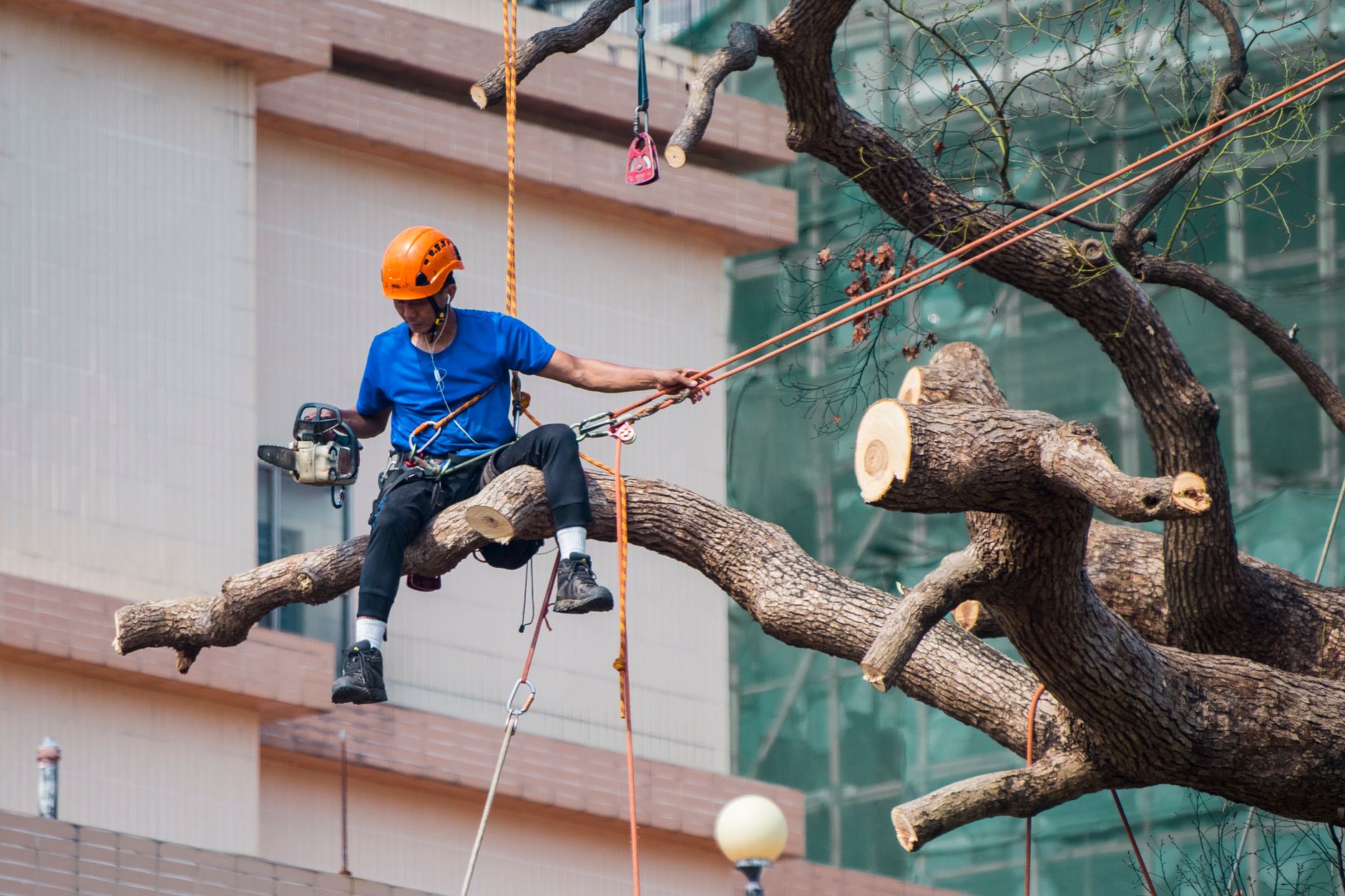 Photo by Jimmy Chan
External references you may find useful:
- Arborist products and climbing lines from Yale Cordage: Arborist Products by Yale Cordage
- XTC-24 Arborist Climbing Line details: ArborMax | XTC-24 Arborist Climbing Line
Note: For broader context on Yale Cordage’s arborist offerings, you can refer to their Arborist Catalog and guide materials:
Best Yale Cordage Ropes for Arborist Climbing Adventures
When you’re up among the canopy, the rope you choose matters as much as your harness and helmet. Yale Cordage has built a robust line of arborist ropes that balance grip, low stretch, and durability for long days aloft. In this section, we zoom in on two everyday workhorses and then explore the more specialized options that can give you an edge on technical climbs and competitions.
Blue Moon and Blaze: Favorites for Everyday Tree Work
Blue Moon feels thicker in hand but remains surprisingly lightweight on the body. Its 11.7 mm diameter gives a solid sense of security as you move through tight limbs, yet the construction keeps the rope flexible enough to handle without fatigue.
Climbers praise its predictable performance in dynamic loads, which translates to steadier ascents and easier rope management in complex rigging. Blaze, at 11 mm, focuses on grip and low stretch. It runs smoothly through ascenders and hardware, delivering crisp feedback under load so you can place each hand and foot with confidence. In real-world use, Blue Moon shines when you need a dependable all-round rope that stays manageable after a long day.
Blaze earns points for responsiveness and comfort, especially when you’re hustling through knots and adjustments on a crowded path of branches. For routine work like limb pruning, rope repositioning, and short rigging tasks, both ropes pair well with common climbing setups, delivering reliable control without adding unnecessary weight.
As you branch out for more aggressive rigging, consider how Blue Moon’s grip and Blaze’s low stretch can complement each other in a two-rope system or a primary/backup pairing. Blue Moon on Yale Cordage’s site and Blaze highlights from Yale.
 Photo by Zak Bentley
Sunburst, Prism, and More Specialized Options
Sunburst is a competition-grade option that emphasizes high strength with notable elongation characteristics. Its 11.7 mm diameter and CE-certified profile make it popular in events where every centimeter of rope stability matters and where you may be weighing MRS versus SRS setups. Prism is known for low elongation, which helps when you need a predictable return on dynamic moves and precise control during long drops or intricate placements.
Kernmaster stands out with its 48-strand sheath and a high-strength core designed for stationary work and rescue scenarios. It grips well in tensioned setups and tends to wear in a steady, predictable way, which can be a benefit when you spend hours feeding rope through hardware and knots. Other noteworthy options like XTC-16 and Imori bring their own strengths—XTC-16 offers a robust 12 mm feel in a 16-strand construction that reduces fatigue in DdRT systems, while Imori brings a different balance of weight and handling that some climbers prefer for daily tasks.
Here’s a quick snapshot to compare at a glance:
- Sunburst: 11.7 mm, high strength, competition-friendly, CE certified for MRS/SRS
- Prism: low elongation, steady performance, strong for precise moves
- Kernmaster: 11 mm, high-sheath strength, great grip in stationary setups
- XTC-16: 12 mm, 16-strand construction, durable and grippy for DdRT
- Blue Moon: 11.7 mm, strong all-around grip, reliable in dynamic work
- Blaze: 11 mm, smooth feed, excellent response through hardware
For quick reference, you can explore deeper specs and application notes on Yale’s arborist line pages. If you’re weighing where to start, Sunburst delivers top-end competition performance, Prism is your accuracy-focused option, and Kernmaster gives you rugged reliability in stationary tasks. To see how these options fit into a broader arborist kit, Yale’s arborist guide and product pages can be a helpful companion. Sunburst on Yale Cordage | Arborist Product Guide 2023
If you want a compact guide to core specs across these ropes, a recent, real-world summary from climbers highlights how Sunburst’s strength and Prism’s low stretch translate to day-to-day climbing. For a practical view, check out community reviews and product sheets linked above.
How Yale Cordage Ropes Stack Up Against the Competition
When you’re up in a tree, the rope you trust is a quiet but crucial partner. Yale Cordage ropes have earned a strong following among arborists for their balance of grip, low stretch, and rugged durability. In this section, you’ll see how Yale holds its own in real-world climbing, rigging, and rescue scenarios, with practical takes on where the brand shines and where it might not be the first pick. We’ll also point you to handy resources to compare options side by side and make an informed choice for your toolkit.
Custom work ropes give Yale an edge for arborist specifics
Yale’s strength lies in its ability to tailor rope construction to the demands of tree work. The company leans into proprietary braids and a heavy emphasis on industrial, life-safety performance that translates to reliable handling in tight spaces, long days aloft, and complex rigging. Unlike some rock-focused brands, Yale’s USA-made heritage and focused arborist division mean ropes are designed with arborist workflows in mind—lower stretch, predictable performance, and smooth feeding through devices matter as much as raw strength.
The result is lines that feel confident in the hands of professionals who depend on them for precise moves and steady control during ascent, lowering, and rigging tasks. If you value consistency under load and well-supported splices, Yale cords up as a dependable partner for tree work.
For readers who want to see how these strengths play out in the field, Yale’s arborist catalog and product guides provide concrete details on construction, fibers, and safety testing. You can explore the practical side of their custom options and learn how different braids suit specific tasks.
Arborist Catalog and guides offer a clear look at the lineup, while practical notes on device compatibility help ensure your gear plays nicely together. If you’re curious about how Yale’s approach stacks up in real climbing scenarios, you’ll find anecdotes and spec sheets that confirm what many technicians already experience on the job.
Durability and certifications meaning on the job
On the job, durability translates to fewer rope changes, less downtime, and more time aloft. Yale cords are built to withstand the wear and tear of daily arborist use, with low stretch and resilient covers that resist snagging as you move through dense canopies. Certifications and standards are a reassuring baseline, signaling that the rope can meet safety expectations across varied tasks, from limb pruning to heavy rigging. For climbers, that translates into predictable performance from dawn patrol to late-day fatigue.
If you want a quick, practical read on how these attributes translate to day-to-day reliability, you can glance at Yale’s core arborist resources and product sheets. For broader context on how rope choices affect performance in the tree, the internal resources and guides linked in this article provide actionable insights and real-world notes from seasoned climbers. Arborist Product Guide 2023 and the Yale Arborist Catalog are solid starting points. For pragmatic context from the field, see the overview of rope drag solutions and how drag reduction ties into choice and handling. Rope drag solutions guide
Practical strengths for everyday climbs and tough rigging
In everyday climbs, Yale cords shine with smooth feeding through hardware, minimal snagging, and consistent behavior under dynamic loads. People appreciate low elongation, which helps keep moves predictable on long ascents. Grip and weight balance also come into play, with sizes around 11–13 mm offering a comfortable hand feel without weighing you down on extended climbs. In rigging and branch removal work, the ability to hold a steady line through knots and hardware reduces fatigue and helps you place loads more confidently.
For rigging pros who juggle multiple lines, Yale’s design focus supports efficient rope management. The covers hold up well against abrasion in busy canopies, and the splicing quality ensures reliable eye terminations for statics and live-load operations. If you rely on devices like ascenders or self-rescue gear, these ropes tend to feed cleanly, with less hitching or jamming. To see how Yale’s rope options map to common arborist tasks, check the brand’s product pages that highlight specific lines built for tree work. Blue Moon product page and Blaze product page
When Yale is the right pick, and when you may look elsewhere
Yale earns its keep in professional arborist settings where you need a durable, work-ready rope with dependable performance across a range of tasks. If your priorities are low stretch, smooth handling, and strong splicing for daily tree work, Yale often delivers.
The trade-off is price; these ropes can sit at a higher end of the spectrum, reflecting their specialized construction and USA-based manufacturing. They also skew toward work-specific use rather than sport climbing, so if your primary focus is sport routes or fast ascents in a purely recreational context, you might compare lighter, sport-oriented brands.
In practice, pick Yale when you want a rope that stands up to long days aloft, heavy rigging, and consistent handling across devices. For broader versatility that includes sport climbing prowess, you may supplement with additional lines from other brands to cover all scenarios.
If you’re researching further, consider starting with Yale’s flagship arborist lines and then cross-checking with independent reviews and supplier notes to confirm how the rope feels in your hands on your typical routes and rigging tasks. For a quick reference on how Yale cords compare in the field, look at the practical summaries and real-world notes in the linked guides and product pages. XTC-24 CE Sunburst review page
Choosing, Using, and Caring for Your Yale Cordage Rope
Selecting and caring for Yale Cordage ropes is about matching the rope to your climbing style, then treating it as the critical tool it is. The right rope, properly used and maintained, can last longer and perform more reliably under load. Here’s a practical guide to help you pick, use, and look after Yale cordage ropes in everyday arborist work.
Diameter and system choice: MRS vs SRS, and what it means for you
When you’re choosing a rope, diameter often signals tradeoffs between weight, grip, and wear. Lighter lines around 11 mm are easy to handle through long days, but may wear faster in heavy rigging. At about 11.7 mm, many climbers report a comfortable balance of grip and durability, with strong break strength to support dynamic loads. If you work primarily in moving rope systems (MRS), look for ropes with robust abrasion resistance and a sleeve structure that holds up in frequent device feeding.
For stationary rope systems (SRS), a lower stretch profile helps you maintain control during long ascents and static rigging. For example, Blue Moon and Blaze are popular everyday options, while XTC-16 suits more controlled, static setups. See product pages for precise specs and intended systems: Blue Moon, Blaze, XTC-16, and XTC-24 ArborMax. When in doubt, pick a rope that complements your hardware and input from the manufacturer. Blue Moon | XTC-24 ArborMax Blaze ArborMax | XTC-24 Arborist Climbing Line
Choosing ends, splices, and how to finish
End finishes matter because a well-spliced end reduces slippage and protects core fibers. If you’re using spliced terminations, ensure the splice is tested and compatible with your hardware. The Arborist Product Guide and related guides from Yale highlight recommended splicing methods and compatible hardware for both MRS and SRS workflows. When you’re setting up a new line, confirm the end treatment matches your tethering, prusik, and hitch configurations.
Routine care, inspection, and life-extension tips
Inspect before every climb. Look for glazing, flat spots, core exposure, fraying, or cut fibers. Retire the rope if you notice significant abrasion or structural damage. Regularly clean with water and dry fully away from heat or direct sun; avoid harsh soaps that can degrade fibers.
For longer life, store dry in a cool, shaded place and rotate ropes in use to even out wear. Proper loading and keeping the rope clean helps prevent early retirement due to preventable wear. Mild fade or minor fuzzing is common but should not progress to exposed core. For specific maintenance steps, refer to Yale’s arborist resources and product guides. Arborist Catalog
Safety reminders and practical takeaways
- Always pair rope with manufacturer-approved hardware and devices.
- Use a consistent 10:1 safety factor when estimating working load.
- Keep ropes dry, away from chemicals, and out of direct sunlight when not in use.
- Retire rope at the first sign of substantial damage or after hitting wear milestones tied to your workload.
- Have a quick-reference check routine: diameter, system type, end treatment, and inspection status before each climb.
For quick reference on common Yale cords, see the product pages mentioned above.
Conclusion
Yale Cordage ropes stand out for their blend of history, durability, and practical performance in arborist work. From their American-made roots in 1950 to today’s focused lines, the brand has built ropes that handle long days aloft, heavy rigging, and precise moves with confidence. The core strengths you’ll notice are low stretch, smooth feeding through devices, and robust abrasion resistance that stay reliable under repeated use.
Key models like Blue Moon and Blaze deliver dependable everyday handling, while specialized options such as Sunburst and Prism offer tailored advantages for competition, accuracy, and static work. The company’s emphasis on custom braids and life-safety standards translates to familiar, predictable behavior when you’re navigating tight canopies or complex rigging setups. Recent developments, like the Blue 32 rope introduced in 2024, show Yale’s ongoing push to improve grip, weight, and load paths without sacrificing safety.
If you’re choosing ropes for tree work, consider how you move and rig on a typical day. Pairing the right ends, splices, and diameter with your gear is essential. Review Yale’s arborist guides to confirm specifics for your tasks, then pick the rope that best fits your routine. With Yale Cordage ropes, you gain a reliable partner for climbs, rigging, and rescue scenarios at height.
Back to Trad Climbing Ropes
Recommended Products for Trad Climbing
These products can support safer climbing, belaying, rappelling, and emergency readiness.
Affiliate disclosure: As an Amazon Associate, TradClimbers may earn from qualifying purchases at no additional cost to you.