
How trad climbers train for strength and endurance (fingers, pump control, and long-pitch stamina)
You’re midway up a long crack pitch. Calves burn from constant tension. Forearms tighten into pumps as you pause to place gear. Panic won’t help; calm focus will.
Trad strength isn’t just pulling hard. It’s holding awkward positions, managing forearm pump, and staying steady while you work. That’s the real test on runouts and multi-pitch days.
This guide shows how trad climbers train for strength and endurance. You’ll get a simple map that fits real life, just 2 to 4 days a week. No gym marathons required.
The big idea stays straightforward. Build finger and pulling strength first. Then add pitch-style endurance and efficiency. All while dodging injuries that sideline you.
What trad climbing demands from your body (and why gym strength isn’t enough)
Gym sessions build raw power. You crank pull-ups and crush fingerboards. That works for quick boulder problems or sport clips. Trad climbing hits different. You spend longer on the wall, face more isometric holds in awkward spots, and pause often to place gear. Gym strength fades fast on a 30-minute pitch.
Sport routes let you clip bolts mid-move. Trad forces you to stop, lock off one arm, and fiddle with cams. Your body fights pump while you scan for cracks. That’s why a balanced plan matters. Focus on these key areas: finger strength for hand jams, pulling strength to hang while placing gear, core and hips for stemming corners, forearm endurance (aerobic for steady efforts, anaerobic for bursts), and movement efficiency to save energy on laybacks. Tie them to real moments, and random workouts won’t cut it.
A smart setup beats scattershot hangs. You’ll train what trad actually demands.
Strength vs endurance for trad, what each one feels like on the rock
Strength shows up in sharp bursts. Picture locking off one arm to clip a nut deep in a crack. Your bicep and fingers scream for 10 seconds. Or you match hands in a tight hand jam, pulling past a bulge. Fail here, and you barn-door off the wall.
Endurance kicks in over time. You stay in control for 25 to 40 minutes without your forearms exploding. Mid-pitch, that steady burn builds. Short-power handles cruxes. Mid-length pump fights 10-minute sections. All-day stamina gets you through multi-pitch hauls.
Check yourself next time you fail. Do fingers give out first on small edges? Forearms balloon early? Core quits on overhangs? That points your training. Fingers need max hangs. Forearms call for intervals. Core demands planks with twists. Studies back this split; lead climbers excel in endurance over pure strength.
The hidden skill, holding positions while placing gear
You cruise up easy terrain. Then you pause for a cam. Boom, pump hits hard. That’s the gear stance trap. Motion keeps blood flowing. Stop, and muscles clamp down.
Isometric strength saves you. Hold a lock-off with one arm while your free hand slots gear. Push hard with feet to stay stable. Brace your core to avoid swinging. Without this, stances turn into rests you can’t afford.
Train it right. Hang in lock-offs for 10 to 20 seconds per arm. Do core tension drills like front levers or hollow holds. Climb intervals: ascend 4 minutes, stop 30 seconds to mimic placing, repeat. Long holds build the base; check isometric training tips for climbers. Practice on the wall too. Place nuts on toprope laps. Your body learns to fight the stall.
Common trad weak links, forearms, calves, hips, and head
Trad exposes weak spots fast. Forearms swell on laybacks, turning fists into softballs. Calves cramp on slabs from endless edging. Hips jam in wide stemming, like squeezing two walls together. Fear spikes at exposed stances, freezing your breath.
Spot these on your next lead:
- Forearms: Pump kills rhythm after 15 minutes.
- Calves: Burn locks you on low-angle runs.
- Hips: Tightness blocks corner moves.
- Head: Doubt creeps in on runouts.
Fix them step by step. Build forearm endurance with later sessions on aerobic hangs. Add calf raises and mobility for slabs. Open hips with stretches and stems. Mental reps tame fear through visualization. You’ll link pitches smoother.
Build trad-specific strength, fingers, pulling, core, and legs
Trad climbers train strength to handle cracks and long routes. You need power that lasts through awkward jams and gear placements. Stick to 1 to 2 strength sessions per week. Do finger work when fresh, after you build a base from regular climbing. Always warm up fully. Chase quality reps and leave one or two in the tank. Hangboards and campus boards shine here, but only with that foundation.
Finger strength for cracks and small edges, hangboard basics that don’t wreck your tendons
Cracks demand finger strength on jams and edges. Small holds tire fast on runouts. A simple hangboard plan builds this without wrecking tendons.
Start with a warm-up. Climb easy routes or do light pulls. Pick a comfortable edge size, like 20mm for beginners. Use timed hangs, not max efforts.
Try this beginner protocol: 6 to 7 hangs of 7 to 10 seconds on a medium edge. Rest 3 minutes between hangs. Do 3 to 4 sets. Hit it 1 to 2 times per week.
Follow these rules:
- Stop at sharp pain.
- Keep shoulders engaged, not shrugged.
- Progress slow: add time or weight, never both.
Many use timer apps for steady protocols. Skip “ego hangs” that push too hard. Check this beginner hangboard guide for visuals.
Pulling strength that carries over to trad, lock-offs, rows, and shoulder stability
Pulling power lets you lock off for gear in off-vertical cracks. It fights barn-doors on laybacks. Shoulder stability keeps you solid when twisting in corners or reaching high.
Focus on these key moves:
- Strict pull-ups: Build base pull.
- Lock-off holds at 90 degrees: Mimic gear stances, 10 to 20 seconds per arm.
- Ring rows or dumbbell rows: Strengthen back for sustained pulls.
- Scapular pull-ups: Control shoulder blades first.
- Band external rotations: Guard rotator cuffs.
Do 3 sets of 4 to 6 reps for strength. Add 2 to 3 lighter sets for shoulder health. Balance with push-ups to keep shoulders even. See lock-off training plans that fit home setups.
Core and legs for stemming, chimneying, and staying relaxed on stances
Core locks your body so feet stick and hands stay light on stances. Legs power stems and chimneys without early fatigue. Control beats heavy weights here.
Build a short circuit:
- Plank variations: Front, side, hold 30 to 60 seconds.
- Hanging knee or leg raises: 3 sets of 8 to 12, slow tempo.
- Slow step-ups or split squats: 3 sets of 6 to 8 per leg.
Don’t skip calves. They burn on slabs. Add calf raises and long wall-sits (2 to 3 minutes). This setup transfers to trad stances. For leg ideas, try simple climber leg workouts. Stay relaxed; tension kills endurance.
Train endurance like a long pitch, aerobic base, pump tolerance, and recovery on the wall
Trad endurance splits into two main parts. First, you stay below your redline for long stretches. That’s aerobic work, like holding a steady pace up a 40-minute pitch. Second, you handle quick pump bursts without falling apart. That’s anaerobic, for cruxes or gear fumbles. Train both through climbing time on the wall. Skip heavy weights; focus on sessions that feel steady, not like a fight to the finish. Keep intensity right: easy enough for clean form, hard enough to leave forearms full.
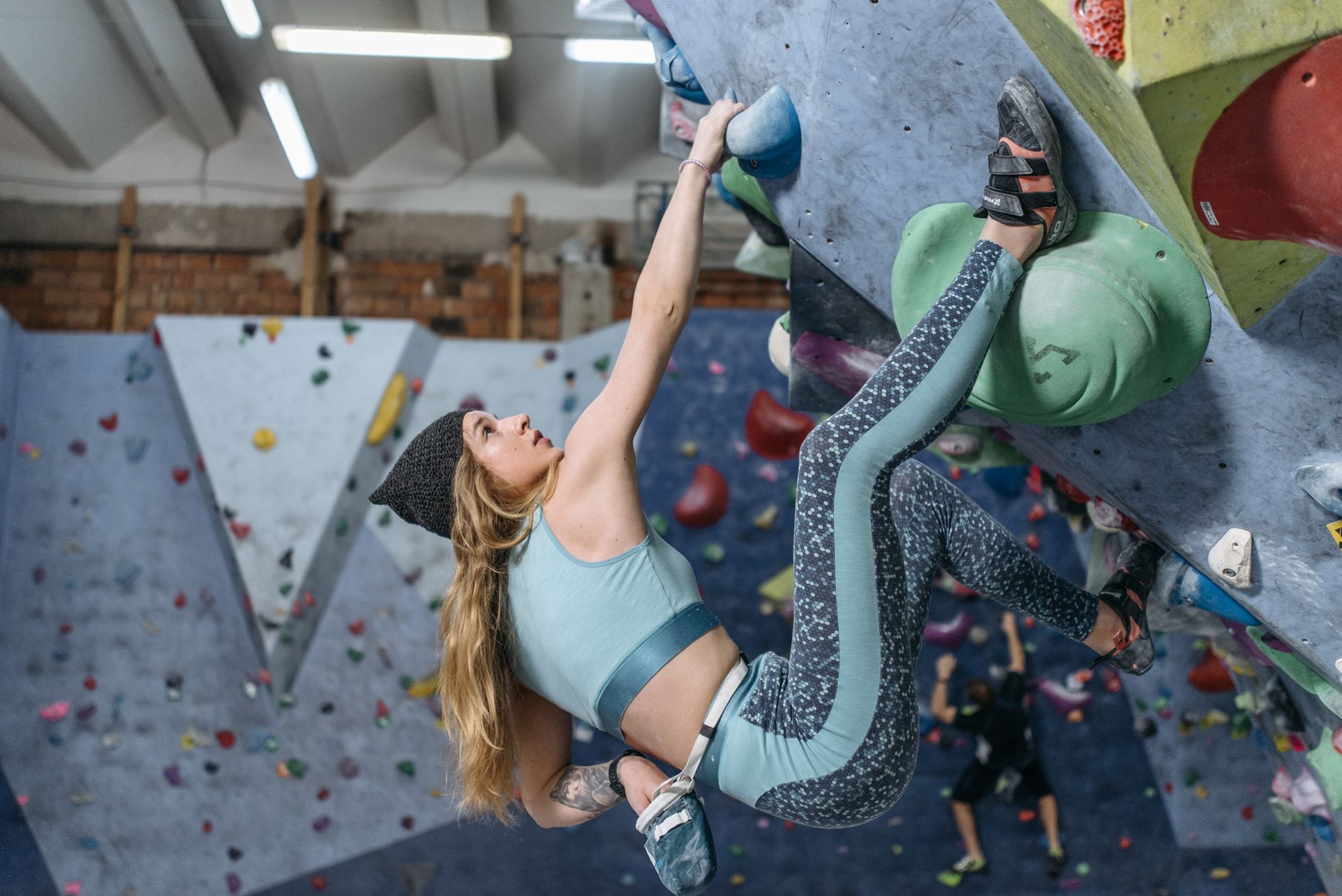
Photo by Pavel Danilyuk
Easy volume that builds all-day stamina, continuous laps and steady mileage
Stack easy time on the wall to grow your aerobic base. Aim for 10 to 30 minutes of nonstop climbing at low effort. Stay relaxed; fight any pump by breathing deep and moving smooth. This builds the all-day gas you need for multi-pitch links.
Pick your setup based on where you train:
- Gym options: Low-angle traverses, easy routes (one grade below your limit), or auto-belay laps. Circle the spray wall if you have one.
- Outdoor spots: Toprope easy cracks or slabs. Boulder low problems in a loop.
Target technique to make every minute count. Keep feet quiet for better balance. Use straight arms on rests to save power. Shake out on big holds without dropping tension.
Progress simple. Add 2 to 5 minutes per week, or tack on one more lap. Always keep it easy; if form slips, dial back. Do this 1 to 2 times weekly after warm-up. Over weeks, you’ll cruise longer without fade. For more on aerobic foundations, see Steve Bechtel’s endurance rules.
Intervals for pitch-style endurance, train the pump, then learn to clear it
Intervals mimic trad pitches: build pump on hard bits, recover at stances, repeat. Pick a route or traverse one grade below redpoint. Climb a moderate section until pump hits but you won’t fail. Downclimb or shift to easier terrain for recovery. Do 4 rounds per set. Rest 10 minutes between sets, then hit 2 to 3 sets total.
This matches real trad. Short cruxes lead to gear stances. Then you push on. A simple rule guides you: stop the set if movement turns sloppy. Form first.
Use recovery smart. Practice deep breaths to flush lactate. Shake forearms loose. Open hips if stems follow. Sessions like this boost your ability to clear pump mid-pitch. Check this guide on climbing endurance intervals for tweaks.
Make endurance more trad-specific, add planned gear stops and awkward stances
Turn basic endurance trad-ready with built-in pauses. Every minute, stop for 10 to 20 seconds. Find a stance: lock off one arm, match feet, brace hips. Mime gear placement (clip a sling or rack a quickdraw). Use a gear board if available.
Layer in footwork to match cracks:
- High steps for slabs and jams.
- Stemming holds against walls or corners.
- Jam switches from hand to fist.
Stops spike pump, just like real routes. Motion hides fatigue; pauses expose it. Train this weekly in your volume or interval sessions. You’ll handle the “stop equals pump” shock without whipping.
Power endurance and short bursts, when campus board work makes sense for trad
Campus boards build power endurance for trad cruxes before stances. Go cautious. Save them for experienced climbers with solid finger strength. Newbies risk elbows and pulleys.
Keep sessions short: 1 time per week, 3 to 5 sets. Use ladder patterns like 1-3-5-3-1 (rungs numbered bottom to top). Bump fast but controlled. Rest 3 minutes between reps. Most climbers stick to feet-on versions for safety.
Watch form close. Shoulders stay packed; no kipping. Stop at twinges in fingers or elbows. This hones quick bursts without long hangs. For safe starts, read this campus beginner guide. Pair it with your main climbing; don’t overdo.
Put it together, a simple weekly plan for how trad climbers train for strength and endurance
You have the pieces: finger hangs, lock-offs, intervals, and easy laps. Now stack them into weekly plans that fit your life. These schedules run strength early in the week and shift to endurance later. Stick to one for 6 to 8 weeks. Progress slow, then deload with light days. Consistency beats fancy tweaks. Pick your level based on time.
Two-days-per-week plan, the busy climber plan that still works
Life crowds your calendar. This minimal setup delivers gains if you show up steady. Hit Day 1 midweek when fresh. Save Day 2 for weekends or lighter evenings. Add an optional 15-minute micro-session on a third day for mobility and calves.
Here’s the breakdown:
- Day 1: Strength (45-60 minutes). Warm up easy. Do 4-6 hangboard hangs (7-10 seconds on 20mm edge, 3-minute rests). Add 3 sets of 4-6 lock-offs or pull-ups. Finish with core: 3 rounds of 30-second planks and hanging knees.
- Day 2: Endurance (60 minutes). Climb continuous laps or 4×4 intervals (4 minutes on, 4 off) on moderate terrain. Stop every minute to practice gear stances.
- Optional Day 3: Micro-session (15 minutes). Flow through hip openers, shoulder circles, and 3 sets of 20 calf raises.
Run this for 8 weeks. Add 1-2 seconds to hangs or one lap weekly. Why it works? Short, focused hits build neural drive and capillary density without overload. You’ll lock off longer and pump less on pitches. For similar minimal plans, check Lattice Training’s trad guide.
Three-days-per-week plan, the balanced trad build
You want steady progress without gaps. Space days like Monday, Wednesday, Friday. Keep one full rest day between each. This hits all bases: strength, intensity, volume.
Follow this flow:
- Day 1: Finger and pulling strength (50 minutes). Hangboard protocol plus 3 sets of rows and scap pulls. Core circuit at end.
- Day 2: Intervals plus technique (60-75 minutes). 3 sets of 4-minute climbs with 30-second gear stops. Focus straight arms, quiet feet.
- Day 3: Easy volume or outdoor mileage (60 minutes). Nonstop laps on cracks or slabs. Or head outside for toprope jams.
Progress rule: Bump one thing each week (hang time, reps, or route difficulty). Deload week 7 with half volume. Rest fully between days to recover pulleys and forearms. You’ll link 30-minute pitches smoother. Bodies adapt best this way; see Climbing’s weekly training outline for proof.
Four-days-per-week plan, the pre-trip push without burning out
Ramp up before a big objective. Train Monday to Friday, save weekends for outdoor trad. Keep hard days hard (full effort, short rests) and easy days easy (conversational pace, long shakes). Rest or climb light between.
Sample week:
- Monday: Strength. Hangboard, pulls, core (60 minutes).
- Tuesday: Rest.
- Wednesday: Power or short intensity. Lock-offs into quick campus ladders (feet on), 30-45 minutes.
- Thursday: Rest.
- Friday: Endurance. Intervals or laps with stances (75 minutes).
- Weekend: Outdoor practice. Easy multi-pitch or crack laps.
Taper before trips: Cut volume in half last week. Keep sharp hangs or short intervals so you arrive fresh. This builds without burnout. Push 6 weeks, deload, repeat.
Tracking progress without overthinking, simple metrics that matter on trad
Ditch complex logs. Watch these 5 metrics weekly. Test on training days, confirm outdoors.
- Hang time or added weight: Track max on your edge (aim +5% over 8 weeks).
- Continuous minutes climbed: From 15 to 30 without pump fail.
- Pump clear speed: Seconds to shake out on intervals (cut by 20%).
- Gear stops handled: 10+ pauses per set without rush or fall risk.
- Stance calm: Rate tension 1-10; drop from 7 to 4.
Outdoor days prove it all. A spreadsheet guides, but redpointing that splitter pitch seals the deal. Stay patient; real strength shows on rock.
Stay healthy and calm, recovery, mobility, and mental reps for long leads
Long leads test your body and mind over hours. You fight pump, place gear under strain, and push past fear on exposed terrain. Strength and endurance mean little without recovery habits, fluid movement, and a steady head. Skip these, and tweaks turn into months off. Build them in from day one to link pitches without breaking down.
Recovery basics that keep your fingers and elbows working
Recovery fuels progress. Treat it like a session, not downtime. Aim for 8 hours of sleep most nights; it repairs tendons and clears fatigue. After hard efforts, eat protein and carbs within 30 minutes, like a shake with whey and banana. Drink steady all day; dry skin and headaches signal low hydration.
Space finger sessions 48 hours apart. Elbows and pulleys need time to rebound. Every 4 weeks, deload: cut volume in half, climb light or rest. This resets your system.
Sore fingers? Rest first. Ice gently for 10 minutes, elevate, and use a rice bucket for light twists. No aggressive hangs. Lasting pain demands a doctor; check this guide to finger injuries for pulley red flags. Consistent basics keep you climbing strong.
Mobility for trad movement, hips, ankles, and thoracic rotation
Tight joints kill efficiency in cracks. Loose hips let you stem wide. Flexible ankles handle high steps on slabs. Free thoracic spine helps you twist for gear clips.
Spend 10 minutes daily on this routine. Hold each 20 to 30 seconds per side, breathe deep, no bounce.
- Hip openers: Pigeon pose or lizard lunge. Picture dropping a knee deep in a corner; this unlocks that range.
- Ankle rocks: Sit and roll your foot over a round edge. It preps for edging on runouts.
- Thoracic rotations: On all fours, thread one arm under the other. Twist smooth to spot hidden cracks.
Do them post-climb or mornings. You’ll move lighter, save energy. For hip specifics, see these climber exercises.

Photo by Allan Mas
Mental endurance, practice calm breathing, decision speed, and safe systems
Fear spikes your heart rate and drains forearms fast. Calm wins long leads. Train it like pulls.
On rests, breathe slow: Inhale 4 counts, exhale 6. Flush the pump. Rehearse gear on the ground: Scan cracks, pick cams, visualize clips. Lead low-stress routes; focus smooth placements over hard grades.
Use this checklist at stances:
- Solid stance.
- Breathe out.
- Clip slack.
- Place gear.
- Tug test.
- Move up.
Reps build speed without panic. You’ll stay cool when runouts loom.
Conclusion
Trad climbers train for strength and endurance by blending finger power, lock-offs, and core stability with steady laps, pump intervals, and gear-stop drills. This mix builds efficiency for those long crack pitches where calves ache and forearms fight back. Start simple: one or two strength days, one or two endurance sessions, plus outdoor practice with planned pauses.
Commit for four weeks. Watch your lock-offs hold longer and pitches flow smoother.
Back to Trad Climbing Basics
Recommended Products for Trad Climbing
These products can support climbing-specific strength, technique, and conditioning.
Affiliate disclosure: As an Amazon Associate, TradClimbers may earn from qualifying purchases at no additional cost to you.