

Ever feel stuck on a route with a razor-thin crack staring back at you? That’s where small nuts shine in clean climbing. A nut acts as passive protection; you wedge it into a constriction, and it holds falls through friction alone, no cams needed.
The Metolius Astro Nut stands out because its silicon bronze construction bites rock hard yet molds softly into place. Its double curve and transverse taper create three-point contact, perfect for irregular spots. Sizes run from micro 1 up to 10, with color-coded collars for quick grabs.
Climbers love them in thin cracks, pin scars, and flared features on routes like those at Smith Rock. They mix well on free climbing racks, big walls, or aid lines where every gram counts.
In this guide, you’ll learn how these nuts work, proven placement tips, smart rack setups from sizes 1-5 or full sets, and easy care to keep them reliable. Stick around; your next lead will thank you.
What the Metolius Astro Nut is, and what makes it different from other nuts
Passive protection keeps climbs safe without springs or moving parts. You slide a nut into a crack constriction, and it grips through friction alone. The pull direction stays outward along the cable, so friction locks it in place. Most nuts work this way, but the Metolius Astro Nut sets itself apart with silicon bronze that bites rock firmly while flexing just enough to fit odd spots.
Its standout feature is the double curve shape, with convex arcs on two faces, flat rails, and a transverse taper. This design creates three stable contact points, even in shallow or flared cracks. Other nuts often have straight edges or single tapers that slip in irregular rock.
Astro Nuts stay put better because they match rock features like crystals or edges. Plus, their straight steel cables make them 30% lighter than bulkier curve nuts, and color-coded collars speed up racking.
How the shape helps in thin cracks and flared placements
Small nuts often fail to seat because cracks run shallow or taper unevenly. You tug, and they pop out before gripping. The Astro Nut’s profile changes that. Its double curve lets rails snag shallow constrictions for a solid bite.
Take granite seams at Smith Rock. The nut’s arcs hug crystals and edges, creating stable contact points that hold firm. Pin scars work the same way; the taper fills narrow spots without wobbling. In limestone pockets that narrow toward the back, it grabs irregular lips effectively. Basalt features, with their rough textures, also suit it well because those curves distribute force across three points.
Small sizes, big impact: where these pieces earn their keep
Micro nuts like Astro sizes 1 through 5 shine on tough sections. They protect crux moves where cracks pinch to nothing. Picture a desperate slab; one small piece lets you clip early and focus.
Builders use them as anchor backups too. Stack a few micros behind a bigger nut for redundancy on sketchy belays. They also cut rope drag. Place one high in a wandering crack, and your line runs smoother.
However, micros have limits. They demand clean rock and precise seats. Soft or crumbly stone ruins them fast. Always test pulls gently; rock quality trumps gear every time.
How Astro Nuts compare to micro cams and brass-style micro nuts
Choose nuts or cams based on the crack. Astro Nuts beat micro cams on weight and cost. They excel in weird constrictions or shallow seams, where cams might not expand enough. Nuts also avoid “walking” out under load, and they place without fiddling lobes.
Cams win in parallel cracks, though. They set fast and hold bigger falls there. Brass-style micro nuts use soft metal that mushrooms into flares or pockets, biting differently than bronze. Astros last longer and grip harder overall, but brass cleans easier in some pins.
In short, rack Astros for featured rock on leads. Pair with cams for straight cracks, or brass for max offset needs. Each fits specific hands-on scenarios.
How to place an Astro Nut so it feels solid (not just “good enough”)
A shaky nut placement can turn a fun lead into a nightmare. You need every Metolius Astro Nut to lock in tight, especially the tiny sizes. Follow these steps, and you’ll build confidence fast. Always learn with a mentor first. Back up small pieces with bigger ones. Never skip a test tug on marginal spots.
A simple placement checklist: seat it, set it, then test it
Start with the right size. Pick a Metolius Astro Nut that matches the narrowest part of the crack. Look for a real constriction where the crack pinches.
Next, slide it in. Aim for three-point contact with the double curves. If it wobbles, rotate or flip the nut. The rails should hug rock edges.
Tug in the expected direction of pull. That’s key. Say the crack sits above your head; pull straight down. If it’s at waist height on a traverse, yank sideways and down. Feel it bind without popping.
Check stability last. Give a firm bounce. It should stay put. Beginners often rush this and skip the tug. That leads to walkers. Always extend with a sling or alpine draw. This stops lift-out when the rope shifts.
Here’s the quick checklist in order:
- Choose the size for the pinch.
- Find the constriction.
- Insert and rotate for contact.
- Tug in fall direction.
- Bounce test; extend if needed.
Practice this every time. Solid seats save runs.
Reading the rock: constrictions, flares, and when to walk away
Spot a true constriction first. It narrows inside the crack, not just a surface scratch. Run your finger along; feel the taper.
Flares pose risks. They widen toward the outside with no inner narrowing. Nuts slip because force pulls them out. Metolius Astro Nuts handle mild flares better thanks to curves, but skip wide ones.
Check rock quality too. Tap nearby; avoid hollow flakes that sound dead. Steer clear of crumbly edges or sandy seams. They fail under load.
Unsure? Walk away. Place two pieces nearby or grab a cam. Common mistake: forcing a nut into iffy rock. It crumbles, and you whip anyway. Solid granite or limestone works best. Feel the difference.
Test every spot. Good rock plus constriction equals bomber protection.
Keeping tiny nuts from lifting out: rope drag, extensions, and stance choices
Rope drag wiggles small nuts loose. It pulls side to side on wandering routes. Tiny Metolius Astro Nuts feel this most.
Extend every placement. Clip to a sling or quickdraw. This keeps the rope straight and reduces motion.
Manage the line too. Place nuts in line with the crack when you can. Straight runs last longer.
Watch your stance. Step up, and the angle changes. Rope yanks outward; nuts lift. Pause and re-seat if needed.
Nut tools help here. Use one to nudge loose pieces or clean stuck ones. But don’t over-cam in soft rock. It mushrooms and binds forever.
Beginners forget extensions. Rope piles up, and pieces walk. Clip direct first, then extend. Stay mindful on runouts.
Practice drills you can do at the base of the climb
Build judgment on the ground. No falls needed. Grab a low boulder or crack at the crag base.
First drill: Place one nut in three ways. Try different orientations. Remove and repeat. Feel what binds.
Second: Bounce test by hand. Tug down and side to side. Does it hold? Note good versus bad seats.
Third: Partner check. Let them judge your placements. Ask, “Solid or skip?” Swap roles.
Snap photos of winners. Review later on rainy days. Keep it simple.
These drills sharpen eyes fast. Do them before every lead. Safety comes from skill, not luck.
Building a smart rack with Astro Nuts: which sizes to carry and why
You rack gear to match the rock, not just haul extras. Metolius Astro Nuts fill narrow spots where cams skip, but most climbers leave them unused. Start light. Carry sizes 1 through 6 first because they hit pin scars and thin seams often.
Double up on 2 through 4 if your area demands it. This setup weighs little yet covers cruxes. Full sets from 1 to 10 suit aid or big walls, but test routes before buying all. Local beta guides choices. Check guidebooks for crack sizes. Ask climbers at the crag what sticks most. Northwest granite favors micros, while wider cracks elsewhere skip them. Pair Astros with brass offsets or RPs to avoid gaps. Save cash; borrow a set to try.
A practical starting point for most climbers
Grab one each of sizes 1 to 6. These cover shallow pin scars and tight cracks best. Sizes 1 through 4 see action most because their curves grip irregularities. Bigger ones overlap with standard nuts you likely own.
If you chase small-gear routes often, buy a full set right away. Otherwise, stick to middle micros if your rack already holds other passives. Test them first. Place nuts on practice boulders before leads. Partner checks help too.
Research pays off. Flip through local guidebooks for placement notes. Chat with regulars; they know which sizes bomb on home turf. For example, Smith Rock seams love 2s and 3s. Adjust from there. This keeps your rack lean.
When to double up, and when one set is enough
Doubles shine on long pitches packed with small placements. You run through micros fast there. Routes riddled with repeated pin scars need extras too. Build anchors with redundancy; two size 3s back each other up.
Redundancy saves whips. However, skip doubles on sport-to-trad links. Those routes rarely need micros. Short crags work fine with singles because runouts stay brief. Cam-heavy lines ignore nuts altogether.
One set suits most days. It cuts weight and fuss. Add pairs only after scouting beta. Climbers report size 2-4 doubles get pulled most, so prioritize those. Still, over-racking wastes space. Feel the route style first.
How to organize and carry them so you can actually place them fast
Group by size always. Clip size 1 alone on a tiny ‘biner. Pair 2s and 3s together. Keep micros away from standard nuts. Use colored carabiners for quick spots; orange for smalls, blue for mids.
Rack on your harness back loop. This keeps hips free. Place draws behind on the same loop. Cables stay neat this way. Practice your order at home. Consistent spots build speed.
Fumbling kills flow. You hunt a size 2 at crux, rush the seat, and it walks. Grouped racks prevent that. Use a gear sling for aid if pitches stretch long.
Smart racking turns panic into precision.
Care, inspection, and knowing when to retire small nuts
Small Metolius Astro Nuts take a beating in thin cracks, so treat them right. Good habits keep them bomber and you safe. Check them often because wear sneaks up fast. Clean after every trip, inspect before you rack up, and retire pieces without doubt. Follow Metolius guidelines plus your own eyes. This routine takes little time but pays big.
What to check before every trip (it takes less than a minute)
Grab each Metolius Astro Nut and scan quick. First, eye the wire for frays or kinks. Bend it gently; it should spring back smooth. Next, squeeze the swage where cable meets head. No crush marks or looseness allowed.
Run your thumb over the nut head. Feel for sharp edges that cut ropes or gloves. Look close for deep grooves from rock bite. Also, shake out grit and salt buildup because they grind metal over time.
After wet days, dry everything fast. Wipe with a cloth, then air dry fully. Corrosion starts slow but weakens holds. Do this check at the crag base or home. It builds trust in your rack.
Here are the key looks:
- Frayed or kinked wire: Tug light; strands stay tight.
- Crushed swage: Press firm; no give.
- Sharp edges or deep grooves on head: Smooth them out or retire.
- Looseness anywhere: Tight is right.
Clean grit helps too. Swish in hot soapy water, brush stiff, rinse, and dry. Simple steps save nuts.
Stuck gear, nut tools, and how not to damage the wire
Stuck Metolius Astro Nuts happen in tight spots. Don’t yank the wire; that frays strands quick. Grab a nut tool instead. Hook the head and pry slow.
Tap light with the tool or a carabiner. Work from the entry direction first, then reverse it. Small, controlled hits loosen grip without stress. Patience wins here.
Repeated hard cleaning fatigues wires over time. So go easy always. After removal, check for new kinks right away. Clip the rope before whipping if needed.
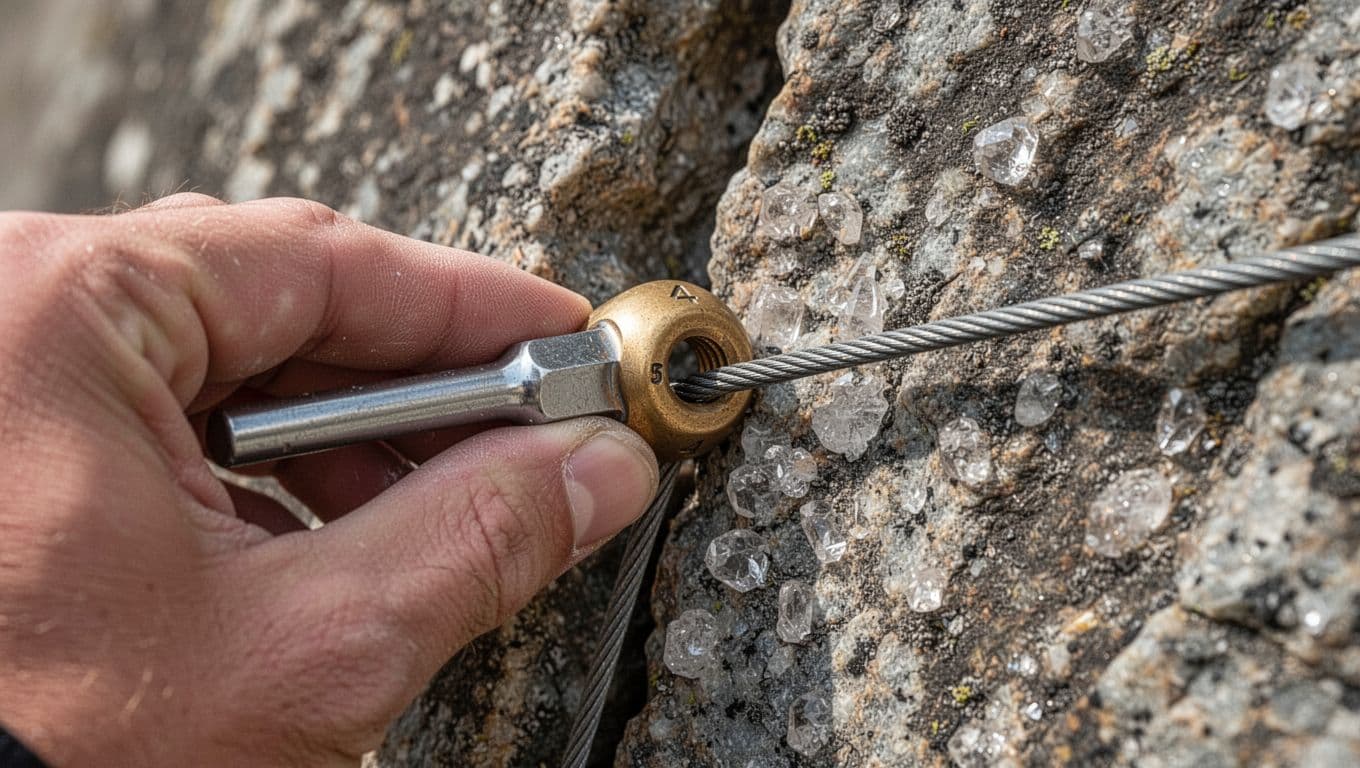
In short, protect that cable. It carries all the load.
Red flags that mean it is time to replace it
Know when to ditch a Metolius Astro Nut. Wire strands breaking top the list. Count them; missing ones spell trouble. Major kinks that won’t straighten out next.
Swage damage shows as crush or slip. Head deformation from a fall warps the bite. Severe corrosion pits bronze deep; light rust cleans with steel wool, but heavy means gone.
Heavy impacts dent or bend too. Mark suspect pieces with tape right away. Pull them from the rack until you judge. Better safe on the ground than sorry mid-lead.
Retire without second thoughts:
- Broken wire strands: No fix works.
- Unfixable kinks: They weaken fast.
- Damaged swage: Load shifts wrong.
- Deformed head: Grip fails.
- Severe corrosion: Strength drops.
Follow Metolius tips and use good sense. New nuts cost less than risks. Your partners count on sharp gear.
Conclusion
Metolius Astro Nuts excel in thin cracks, pin scars, and flared spots because their double curve bites rock with three solid contact points. You place them right by picking the pinch, rotating for grip, tugging in the fall direction, and bouncing to test. Smart racks start with sizes 1 through 6; double 2s to 4s on micro-heavy routes. Care means quick wire checks for frays, gentle nut tool cleans, and retiring damaged heads without hesitation.
In short, these nuts boost safety on sketchy leads. Practice placements at the crag base first. Grab a starter set, then build judgment pitch by pitch. Always learn from experienced partners, and back up small pieces on anchors.
Back to Climbing Nut Reviews
Recommended Products for Trad Climbing
These products can support safer climbing, belaying, rappelling, and emergency readiness.
Affiliate disclosure: As an Amazon Associate, TradClimbers may earn from qualifying purchases at no additional cost to you.
Keep exploring helpful trad climbing, gear, safety, and technique resources.
- A Climber’s Guide to Rock Climbing in Thailand
- A Trad Climber’s Guide to the Isle of Skye Ridge
- Hueco Tanks Rock Climbing: hueco tanks rock climbing Essentials
- A Climber’s Guide to The Nose of El Capitan
- The Top 8 Unforgettable Climbing Routes El Capitan Has to Offer in 2026
- Yoga for Climbers: Boost Strength, Flexibility, and Recovery | yoga for climbers