

Seeking more information regarding what is the best low wattage coffee maker for camping? Going camping doesn’t mean you have to give up your morning coffee. But with limited power sources, you’ll want to find a low wattage coffee maker for camping. These portable brewers are designed to be energy-efficient, so you can enjoy a hot cup without draining your batteries. We’ll look at what makes a good camp coffee maker and some top picks that won’t leave you in the dark.
Key Takeaways
- When choosing a low wattage coffee maker for camping, consider how much coffee you need and how quickly you need it brewed.
- Look for portable coffee brewers with features like light weight, compact size, and durable materials suitable for outdoor use.
- Wattage is important for battery life; aim for lower power consumption to extend your available energy.
- Different brewing methods require different coffee grind sizes, so be prepared with a grinder or pre-ground beans.
- Popular low wattage coffee maker for camping options include pour-over devices, single-serve makers, and compact French presses.
Choosing A Low Wattage Coffee Maker For Camping
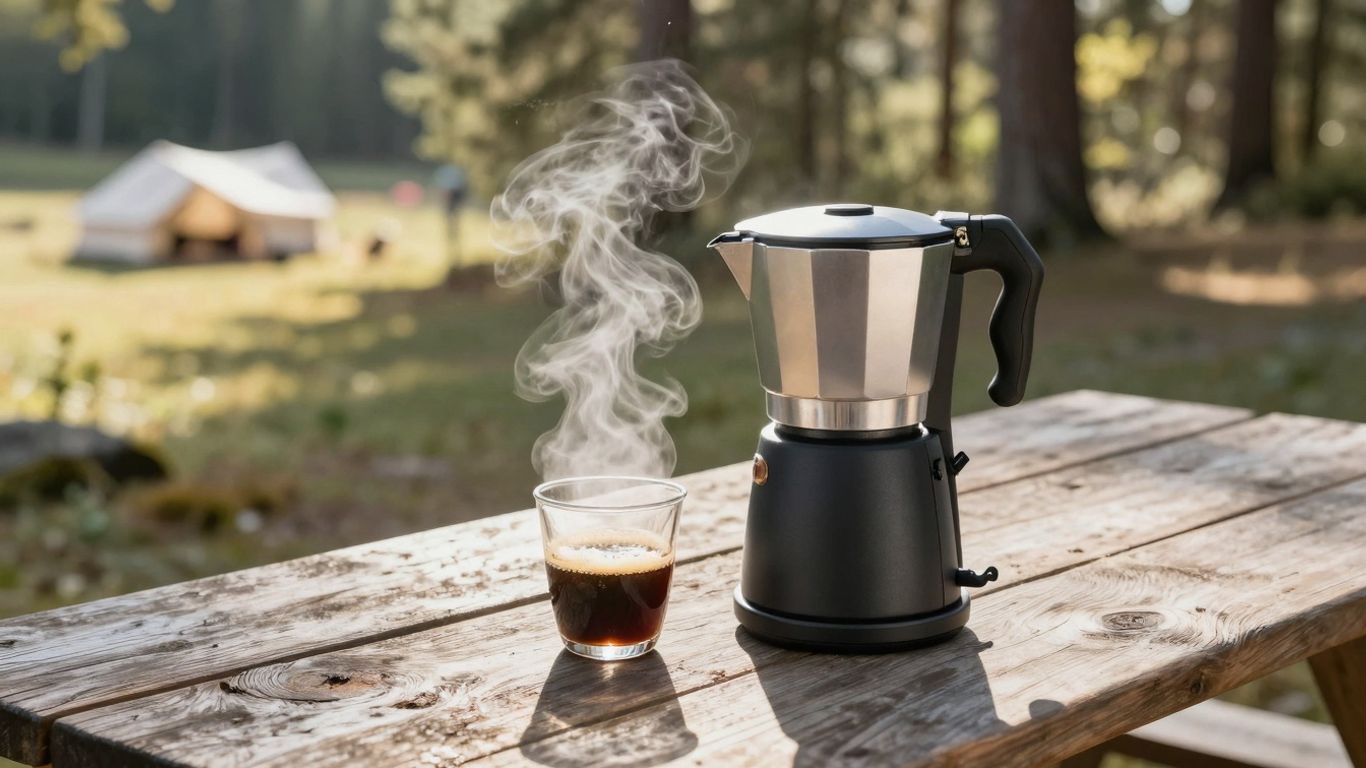
When you’re heading out into the great outdoors, the thought of a hot, fresh cup of coffee can be a real game-changer. But powering that morning ritual can be tricky, especially if you’re relying on battery packs or limited solar setups. That’s where understanding your needs and the coffee maker’s requirements comes into play. It’s all about finding that sweet spot between convenience, taste, and power consumption.
Understanding Your Camping Coffee Needs
Before you even start looking at coffee makers, take a moment to think about how you actually drink coffee when you’re camping. Are you the first one up, needing a quick jolt before hitting the trail? Or do you prefer a more leisurely morning, savoring the process? This will help determine the type of brewer that’s right for you. Consider these points:
- Speed: Do you need coffee in under a minute, or can you wait a few minutes for a more involved brew?
- Quantity: Are you brewing for one, or for a whole group?
- Effort: Do you want something super simple, or do you enjoy the ritual of making coffee?
- Taste Preference: Are you happy with a basic cup, or do you crave that rich, espresso-like flavor?
Key Features For Portable Coffee Brewers
When looking for a coffee maker that can handle the rigors of camping, a few features really stand out. Portability is obviously key, but so is durability. You don’t want something that’s going to fall apart after one trip. Look for:
- Compact Size: It needs to fit easily into your pack or vehicle without taking up too much space.
- Lightweight Materials: Every ounce counts when you’re hiking, so lighter is usually better.
- Durability: Materials like stainless steel or robust plastics can withstand bumps and drops.
- Ease of Cleaning: Nobody wants to spend precious camping time scrubbing complicated parts.
Evaluating Coffee Maker Wattage
This is where things get specific for low-power setups. The wattage of a coffee maker tells you how much electricity it uses. Higher wattage means it draws more power, which can drain your batteries faster. For camping, especially with portable power stations or smaller solar setups, keeping wattage low is a smart move.
For instance, a typical K-cup style brewer might use around 800 watts, which is manageable for some portable power stations, but it’s still a significant draw. Simpler methods, like pour-over or French press, use no electricity at all, relying solely on your camp stove to heat water. If you’re looking at electric brewers, aim for models that are specifically designed for lower power consumption. This might mean sacrificing some speed, but it’s a trade-off that can be well worth it for extended trips.
Campers and hikers not only need the proper drinking equipment but also hiking equipment like a descent backpack like the Osprey Talon 44.
Compact Coffee Makers For The Trail
When you’re heading out into the wilderness, every ounce counts. Lugging around a bulky coffee maker just isn’t practical. Luckily, there are plenty of super compact options designed specifically for campers and backpackers. These brewers focus on minimizing size and weight without sacrificing that essential morning cup.
Lightweight Pour-Over Options
Pour-over coffee makers are fantastic for camping because they’re generally very simple and lightweight. Many are made from durable stainless steel or heat-resistant plastic, meaning they won’t add much bulk to your pack. The MiiR Pourigami, for instance, is a great example. It’s made of three interlocking stainless steel panels that fold flat for easy packing. It’s a bit heavier than some plastic alternatives, but the quality of the brew and the fact that you’re not pouring hot water over plastic is a big plus for many. Plus, it packs down incredibly small, making it a top choice for quality brews on the go.
Espresso Style Portable Brewers
If you’re an espresso lover, don’t despair! There are portable espresso makers that can deliver a strong shot even miles from civilization. These often work by manual pressure. You add hot water and finely ground coffee, then pump a lever or piston to force the water through the grounds. The Wacaco Minipresso GR is one such device that can produce a surprisingly good shot with crema, much like you’d get from a cafe machine. It’s a bit more involved than a simple pour-over, but for those who crave that concentrated coffee kick, it’s worth considering.
Collapsible And Packable Designs
Beyond just small size, some coffee makers are designed to collapse or fold down even further. Think about the GSI Outdoors Collapsible Java Drip. It’s a mesh pour-over that literally folds down to almost nothing. It doesn’t require paper filters, which is another bonus for backcountry trips where packing out trash is important. Another clever design is the ESPRO Ultralight Travel Press Bottle. It functions like a French press but is built into a travel mug, so you can brew and drink from the same container. It’s leak-proof and can even clip onto your pack, making it super convenient for hiking.
Here are a few things to keep in mind when looking at these compact brewers:
- Material: Stainless steel is durable and doesn’t retain flavors, but can be heavier. BPA-free plastics are lighter but some people prefer to avoid them.
- Filter Type: Some use mesh filters (reusable), while others require paper filters (disposable). Mesh is more eco-friendly and convenient for long trips.
- Ease of Cleaning: How easy is it to rinse out after use? This is important when water is scarce.
When choosing a compact coffee maker, think about your typical camping style. Are you car camping where weight is less of an issue, or are you backpacking where every gram matters? Your answer will guide you toward the best fit for your adventures.
Brewing The Perfect Cup On The Go
Making good coffee while camping isn’t just about the machine; it’s about how you use it. Even the fanciest low-wattage brewer can turn out a sad cup if you don’t pay attention to a few key things. Think of it like cooking – the ingredients and how you prepare them matter just as much as the stove.
Grind Size Matters For Camping
The size of your coffee grounds is a big deal, especially when you’re not using a fancy espresso machine. Too fine, and your coffee can taste bitter and over-extracted, like you’ve boiled it for too long. Too coarse, and the water just rushes through, leaving you with weak, watery coffee. For most portable methods like pour-overs or French presses, a medium grind is usually the sweet spot. It looks a bit like coarse sand. If you’re using an instant coffee, well, that’s already ground, so you don’t have to worry about this part!
- Coarse Grind: Best for French Press, Cold Brew. Looks like sea salt.
- Medium Grind: Good for drip coffee makers, pour-overs. Looks like sand.
- Fine Grind: Best for espresso, but can clog filters. Looks like table salt.
Coffee To Water Ratios Outdoors
Getting the coffee-to-water ratio right is pretty important for a tasty cup. A common starting point for a good brew is about 1:15 to 1:17. That means for every gram of coffee, you use 15 to 17 grams of water. If you don’t have a scale with you camping (most of us don’t!), you can use tablespoons and cups as a rough guide. A good rule of thumb is about 2 level tablespoons of coffee for every 6 ounces of water. Experimentation is key here; your preference might be a little stronger or weaker.
| Brew Method | Coffee per 6oz Water | Water per 6oz Coffee |
|---|---|---|
| Pour-Over/Drip | 2 Tbsp (approx. 10g) | 6 oz (approx. 180ml) |
| French Press | 2.5 Tbsp (approx. 12g) | 6 oz (approx. 180ml) |
| Instant Coffee | 1 packet | 6-8 oz (as directed) |
Achieving Gourmet Flavor While Camping
So, you want that coffee shop taste, but you’re miles from anywhere? It’s totally doable. First, use good quality beans. Freshness really does make a difference, even if you’re just using instant. If you’re grinding your own beans, do it right before you brew. Water temperature is another factor; you want it hot, but not boiling. Let boiling water sit for about 30 seconds to a minute before pouring. For pour-over methods, try to pour the water evenly over the grounds. It doesn’t have to be perfect, but a slow, steady pour helps extract the best flavor.
Don’t underestimate the power of a clean coffee maker. Even a little bit of old coffee residue can make your fresh brew taste off. A quick rinse after each use goes a long way, especially when you’re out in the wild.
Finally, remember that camping coffee is often about the experience as much as the taste. Enjoy the process, the fresh air, and the fact that you’re making a great cup of coffee with limited resources.
Power Considerations For Camp Coffee
When you’re out in the wild, every watt counts. Unlike your kitchen, where outlets are plentiful, camping often means relying on portable power sources like battery packs or even your car’s electrical system. Understanding the wattage of your coffee maker is key to managing your power supply and ensuring you don’t end up with a dead battery when you need it most.
Assessing Wattage For Battery Life
Most standard coffee makers can draw a significant amount of power, often between 550 and 1200 watts [78ce]. This is fine at home, but on a camping trip, that kind of draw can quickly drain a portable power station or a car battery. You need to think about how long you plan to run the coffee maker. A quick single-serve brewer will use less total energy than a larger pot that runs for several minutes. It’s a good idea to check the specifications of your portable power source and compare it to the coffee maker’s requirements. Some devices are designed for lower power draw, which is a big plus for off-grid adventures.
Low Power Consumption Brewers
Look for coffee makers specifically designed for camping or travel. These often prioritize low wattage. Manual methods like pour-over drippers or French presses use zero electricity, relying on your camp stove for hot water. If you prefer an electric option, single-serve machines or those with smaller heating elements tend to be more energy-efficient. Some models are even designed to run off USB power, which is a huge advantage if you have a good power bank. Always check the product details for wattage information before you buy.
Inverter Capabilities For Coffee Makers
If you’re using a car’s electrical system or a generator, you might need an inverter. An inverter converts the direct current (DC) power from your battery into the alternating current (AC) power that most coffee makers use. The size of the inverter you need depends on the wattage of your coffee maker. Make sure your inverter’s continuous wattage rating is higher than your coffee maker’s peak wattage to avoid overloading it. For example, if your coffee maker pulls 800 watts, you’ll want an inverter rated for at least 1000 watts, preferably more, to give it some headroom. It’s also worth noting that inverters themselves consume some power, so there’s a slight efficiency loss in the conversion process.
Top Rated Low Wattage Coffee Makers
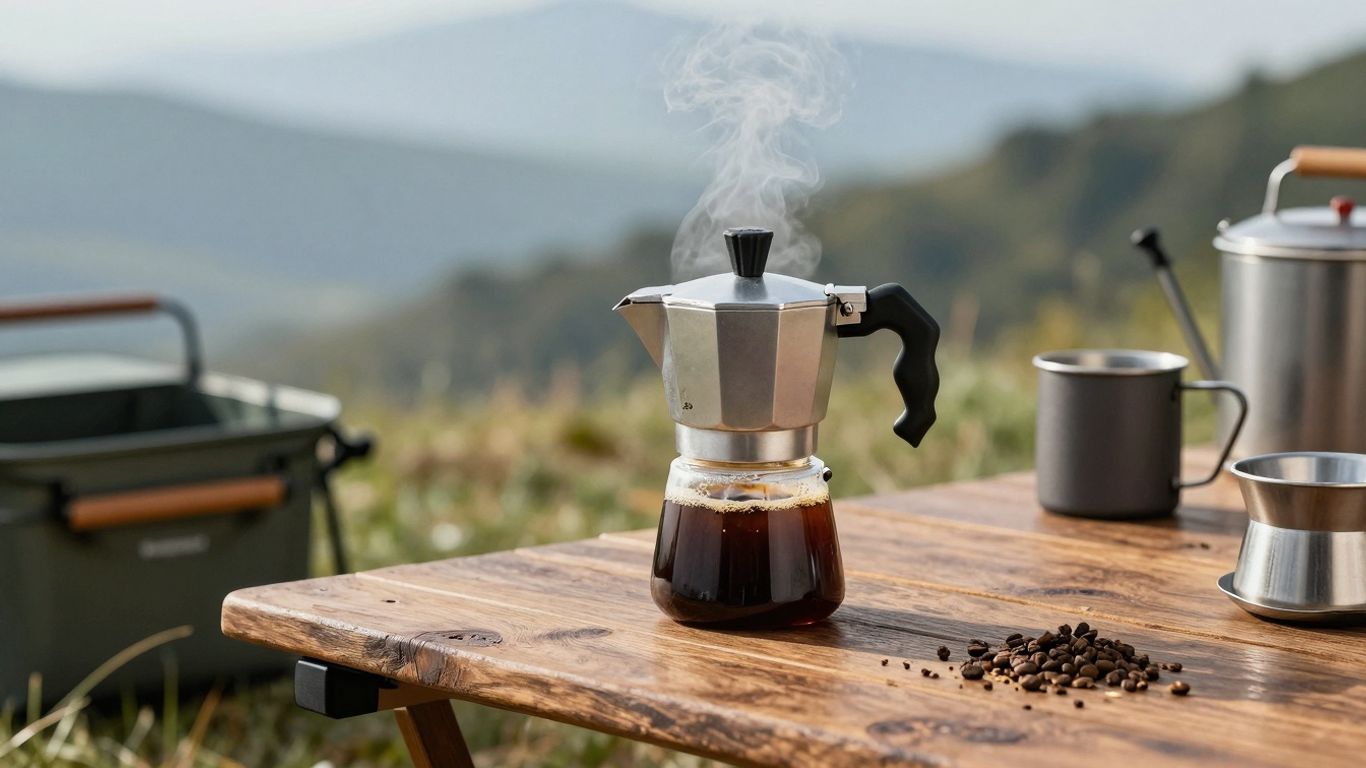
Alright, so you’ve figured out your camping coffee needs and what features matter most. Now for the fun part: picking out a coffee maker that won’t drain your battery or your wallet. We’ve looked at a bunch, and a few really stand out for making a great cup without hogging power.
MiiR Pourigami For Quality Brews
This little guy is pretty neat. It’s a pour-over style brewer that folds flat, making it super easy to pack. It’s designed for quality, aiming to give you a really clean and flavorful cup. You’ll need your own mug and a way to heat water, but that’s standard for most camping setups anyway. It’s made of durable stainless steel, so it should last a good long while on your adventures. It’s a solid choice if you appreciate a good pour-over and want something that packs down small.
GSI Outdoors Ultralight Java Drip
If weight is your absolute top concern, the GSI Outdoors Ultralight Java Drip is worth a look. It’s incredibly light and simple. You just place it over your mug, add grounds and hot water, and let gravity do the work. It’s not fancy, but it gets the job done and adds almost no weight to your pack. It’s a no-frills option for when every ounce counts.
Chulux Single Serve Coffee Maker
Now, if you’re looking for something a bit more automated and don’t mind a tiny bit more bulk, the Chulux Single Serve Coffee Maker is a decent option. It’s a compact machine that can brew a single cup quickly. It’s compatible with K-Cups or grounds, giving you flexibility. While it does require a power source, its draw is generally lower than larger machines, making it manageable for car camping or places with hookups. It’s a good pick if you want convenience and a quick cup without a lot of fuss. You can find this type of compact coffee maker for home or travel on Amazon.
When choosing, always double-check the wattage. Even “low wattage” can vary. Look for models that are under 1000 watts, and ideally closer to 500-700 watts if you’re running off a battery pack. This will make a big difference in how long your power source lasts.
Here’s a quick comparison of some popular portable options:
| Coffee Maker | Type | Wattage (Approx.) | Weight | Portability | Ease of Use |
|---|---|---|---|---|---|
| MiiR Pourigami | Pour-Over | N/A (Manual) | 6 oz | Excellent | Moderate |
| GSI Outdoors Java Drip | Drip | N/A (Manual) | 1 oz | Excellent | Easy |
| Chulux Single Serve | Single Serve | ~600-800W | 2 lbs | Good | Easy |
| AeroPress Go | Press | N/A (Manual) | 11.5 oz | Excellent | Moderate |
Wrapping Up Your Camp Coffee Quest
So, there you have it. Finding the right low-wattage coffee maker for camping doesn’t have to be a huge hassle. Whether you’re all about speed with instant coffee or prefer a more hands-on brewing experience, there’s definitely an option out there that fits your needs and your campsite’s power situation. Remember to think about how much time you have, how many people you’re brewing for, and what kind of coffee you like best. With a little planning, you can make sure your mornings in the great outdoors start with a delicious, hot cup of coffee, just the way you like it.
Frequently Asked Questions
What makes a coffee maker good for camping?
A good camping coffee maker is usually small, light, and doesn’t need a lot of power. It should also be easy to clean up after you’re done. Think about how much coffee you need and how much space you have in your backpack.
Why is low wattage important for camping coffee makers?
Many campers use batteries or portable power sources. Low wattage means the coffee maker uses less electricity, which helps your batteries last longer. This is super important when you’re out in the wild and can’t easily plug into an outlet.
What’s the difference between a pour-over and an espresso maker for camping?
A pour-over is like making coffee with a funnel; you pour hot water over coffee grounds. It’s simple and light. An espresso maker is usually a bit more complex and might need more pressure or power, but it makes a strong, concentrated shot of coffee, like you’d get at a coffee shop.
How much coffee should I use when camping?
A good starting point is a ratio of about 16 parts water to 1 part coffee. So, for a standard mug (around 300 grams of water), you’d use about 16 grams of coffee. You can adjust this based on how strong you like your coffee.
Do I need a special grinder for camping coffee?
It depends on your coffee maker. Some makers, like espresso machines, need a fine grind. Others, like French presses, need a coarse grind. If you want the best taste, a small, portable grinder is a great idea so you can get the right grind size wherever you are.
Are there coffee makers that don’t need electricity at all?
Yes! Many camping coffee makers are manual. Things like pour-overs, French presses, and some portable espresso makers work without any power. You just need hot water, which you can heat up on a camp stove.
Recommended Approach and Hiking Gear
These products match the equipment and gear topics covered in this article.
Affiliate disclosure: As an Amazon Associate, TradClimbers may earn from qualifying purchases at no additional cost to you.
Keep exploring helpful trad climbing, gear, safety, and technique resources.