

Kong chocks save the day. These wide-crack tools come from KONG, an Italian company that’s built climbing gear for almost two centuries. They’re simple metal wedges on wires, no springs or moving parts to fail. Climbers love them because they fit spots where nuts feel too small and cams seem sketchy or too heavy.
You see them shine in off-widths, where the Gipsy model jams its extendable legs securely. Tube chocks handle parallel cracks just as well. They also work great on roofs, keeping your rope from yanking gear loose, and in flaky desert sandstone that hates cam pressure. For example, pair a few in odd shapes for a bomber setup.
In this guide, you’ll learn the types like Gipsy and tube chocks, plus safe placement tricks, such as twisting the Gipsy vertically or bounce-testing every piece. We’ll compare them to big cams and nuts, so you know when Kong wins on weight and reliability.
Most importantly, find tips to pick the right size for cracks up to 9 inches wide. After all, solid pro lets you focus on the climb, not the fear. Stick around; your next wide crack adventure gets easier.
So what exactly are Kong chocks, and how do they hold a fall?
Kong chocks offer passive protection for trad climbers. These simple devices from KONG include curved wedges, extendable Gipsy models, and tube styles. You jam them into cracks, and they stay put through friction and shape alone. No springs or cams mean nothing breaks mid-route.
When you fall, the rope tugs the attached sling. This force drives the chock deeper into the constriction. Solid rock grabs it tight, so it resists pull-out. You clip your rope to the durable sling, and you’re set. However, they demand good rock features; flaky stone or smooth walls won’t hold.
Picture a Gipsy chock in action. Its legs spread to brace wide spots securely.
Most importantly, Kong chocks shine where precision matters. They suit tapering flares or pinches up to 9 inches wide.
Chocks vs cams in plain English
Chocks rely on passive holding. You wedge them in place, and rock shape does the rest. Cams use moving lobes that expand on load.
Passive gear like Kong chocks has zero parts to fail. That builds trust, especially in sketchy rock. Yet, they need constrictions for bite. Smooth parallels? Skip them.
Cams grab anywhere with parallel walls. However, lobes can walk upward under bounce. Springs add weight and risk in sand.
Check this side-by-side view.
In short, chocks feel reliable for static holds. Cams excel in dynamic falls.
Why wide and off-width cracks change the game
Wide cracks, from 4 inches up, laugh at standard nuts. Those tiny wedges bounce out fast. Off-widths get worse; your body jams in, but gear fights to stay.
Cams handle some widths, but big ones walk under tension. Poor constrictions mean slippage. Plus, your chicken-wing moves bump pro loose.
Kong chocks target this zone. Gipsy legs brace vertically. Tube models fill parallels like a rod. They ignore body shifts better. Solid edges prevent that too-big feeling.
As a result, you gain calm in hand-cramming hell.
Where Kong chocks fit in a modern trad rack
You pack nuts and cams for most cracks. Small nuts snag pinches. Medium cams cover parallels.
Then add wide specialists for 4-inch-plus terrain. Kong chocks join big cams or tubes. They save weight on long routes.
Niche? Yes. But on desert towers or off-width classics, they prove essential. One Gipsy backups your monster cam.
See a sample rack laid out.
Carry two to four for versatility. They slot in without bulk overload.
Meet the main Kong chocks you will actually see on routes
Kong chocks break down into a few key types that handle wide cracks best. You won’t find dozens of models on shelves. Instead, focus on Gipsy chocks for off-widths, tube chocks for parallels, and the Mini Chock for gear storage.
Each fits specific spots where cams or nuts fall short. Climbers grab these for desert routes or roofs because they stay put under wild moves. Let’s break them down so you pick the right one fast.
Kong Gipsy chocks for off-widths (including the well known Gipsy 6)
Press the button on a Gipsy chock, and its two legs snap out like a pocket knife. Place those legs against one wall of the crack. Then, push the central point into the opposite side. It grips through friction, and a fall cams it deeper, just like a brace locking in.
People love Gipsy chocks in roofs because the legs resist upward pulls from rope drag. In wide desert cracks, they handle sandy rock without walking. Most importantly, they shrug off bumps when you thrash your body inside the off-width.
The Gipsy 6 covers 3.62 to 8.07 inches, holds 15 kN, and weighs just 17 ounces. Smaller sizes like the 4 work for slightly tighter spots. As a result, you get bomber pro without extra bulk.
Set it vertically for best hold. Twist if the crack flares. Bounce test every placement. Then, clip and climb on.
Kong tube chocks for parallel cracks and pods
Tube chocks act like a sturdy curtain rod for cracks. A spring pushes the inner tube out until the locking collar stops it at your set width. Jam it into a parallel-sided pod or crack, and it expands to fill the space snug.
Good placements resist pulls in any direction because the tube cams against both walls evenly. Models span about 3 to 12 inches, so check sizing charts before your trip. For example, smaller ones fit pods; larger handle chimney starts. They shine where walls stay uniform, unlike tapering off-widths.
In addition, tubes weigh less than huge cams. Yet, always preset the collar outside the crack first. Tug hard to confirm grip. This setup keeps you protected on long traverses.
Mini Chock is for organization, not protection
Don’t mix up the Kong Mini Chock with crack pro. It’s a small plastic holder that clips small nuts together. Rack your tiny wired pieces in it, and they stay tidy on your harness.
On long pitches, organization saves time. You grab the right nut fast without digging through slings. Clipping prevents drops into voids. Therefore, pair it with your Kong chocks rack for smooth runs. It’s light and clips anywhere, so clutter stays gone.
How to place Kong chocks safely (and when to walk away)
You’ve got your Kong chocks racked and ready. But placement makes or breaks protection. Rush it, and you risk a bad fall. So take a breath. First, scout the rock and crack. Then follow these steps for Gipsy and tube models. Always test every piece. If it feels off, back off and find another line. Solid pro builds confidence on those committing leads.
Before you place anything, read the rock
Good rock holds your Kong chocks tight. Look for solid stone that doesn’t flake or ring hollow when you tap it. Avoid loose blocks that shift under touch. Sandy edges peel away easy, so skip them too.
Crack geometry matters just as much. You need parallel walls with a pinch or constriction for grip. Plenty of surface contact prevents slipping. Flared or smooth spots won’t bite.
Use this quick checklist before you commit:
- Tap test: Knock the walls. Solid sound? Good. Hollow echo? Walk away.
- Visual scan: Check for cracks in the rock, sandy layers, or loose flakes.
- Finger poke: Press edges. Firm resistance means go. Crumbly feel? No dice.
- Width match: Crack fits your chock size snug, with opposition on both sides.
In short, trust your eyes and hands first. Bad rock turns good gear worthless.
Placing a Kong Gipsy chock step by step
Gipsy chocks excel in off-widths. Pick a spot with parallel walls and a constriction. Practice these moves low to the ground first. That builds muscle memory without risk.
Follow these steps for a bomber placement:
- Choose your spot. Find vertical walls about 3 to 8 inches wide. Ensure legs reach one side fully, center point hits the other.
- Extend the legs. Press the button. Both legs pop out even. Hold them there.
- Orient right. Place vertically. Legs flat against one wall, center lobe snug opposite. Align with your pull direction, often downward. Twist slightly if the crack angles.
- Seat it in. Push firm until it grabs. No wobble means good contact at all points.
- Clip quick. Attach your sling to the rope or draw. Keep it short to avoid flipping.
- Tug to set. Yank down hard. It cams deeper. Bounce light if needed.
Most importantly, vertical rules for roofs or traverses. Horizontal works rare, only in perfect pods. As a result, your Gipsy stays put through wild moves.
Placing a Kong tube chock step by step
Tube chocks fill parallels like a rod. They suit pods or uniform cracks from 3 to 12 inches. Set the collar outside first. Then jam it home.
Here’s the process:
- Compress the tubes. Squeeze ends to collapse springs. It shortens for entry.
- Insert deep. Push into the crack past shallow zones. Aim for a constriction midway.
- Expand fully. Release in place. Tubes spring out to touch both walls snug.
- Lock the collar. Twist it down tight. No movement now.
- Test pulls. Tug down first. Then out and sideways. Solid grip everywhere.
- Clip and go. Short draw prevents walk.
Avoid shallow spots; they pop easy. In horizontal cracks, add a slight angle or extra tug to fight shift. Therefore, tubes shine on traverses.
Testing, extending, and backing up wide protection
Every Kong chock needs a real test. Start with a firm downward tug. Feel it bite? Good. When safe, bounce your body weight on the rope. Wiggles mean pull it and try again.
Extend sketchy spots with a sling. It cuts rope drag and walking. Loop extra Dyneema around the chock body. Clip long for roofs.
Always back up wide pro. One piece rarely cuts it in runouts. Add a second Kong chock nearby. Or mix types: Gipsy with a hex above, tube beside a big cam.
Natural features help too. Thread slings over horns or through ears. In tapering cracks, nest a nut inside the chock zone.
For example, pair your Gipsy with a #4 cam in a pinch. That setup handles direction changes. In short, redundancy keeps falls short and sweet.
Choosing the right Kong chock for your routes and your budget
Kong chocks add real value to your rack, but only if they match your climbs. Buy wrong, and they gather dust. So first, figure out if you need them at all. Then pick sizes and types that fit your local crags, partners, and wallet. Start small for practice pitches. Scale up for multi-day towers. This way, you spend smart and climb confident.
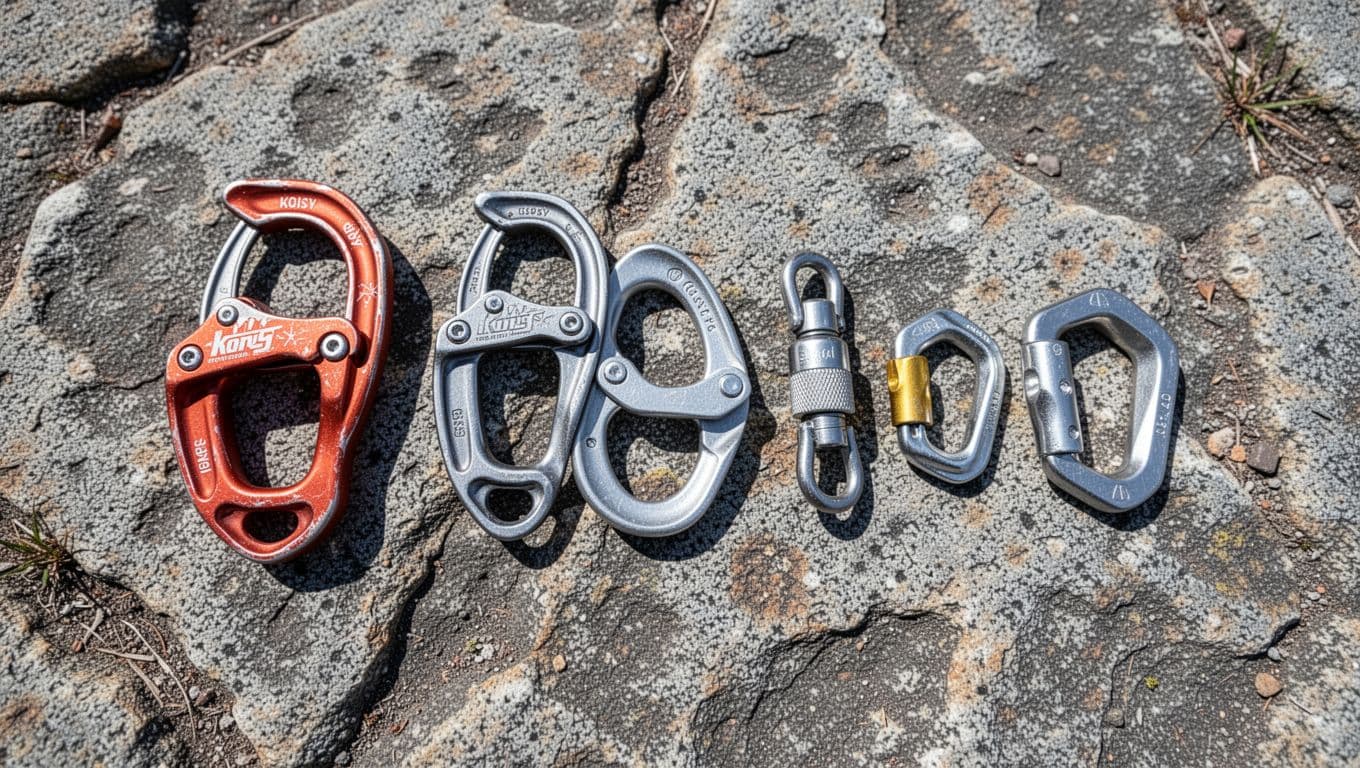 trad climbing rack selection for wide cracks, laid out flat on rough granite ground in sunny outdoor daylight, showing two Kong Gipsy chocks of different sizes, one small cam, and a few nuts organized by size progression."/>
Gipsy models handle most wide stuff. Add a tube chock if parallels dominate your lines. Prices run $50 to $100 each, so two pieces beat a single huge cam.
Questions to ask before you buy (so it does not sit in your closet)
Ask yourself these honest questions. They save regret later. Your answers point to the right Kong chock, or tell you to skip it.
- Do you climb off-widths often? If yes, grab a Gipsy. They brace those body-jam horrors best.
- Do your local crags have wide cracks? Desert towers or splitter granite? Kong chocks shine there. Skip if you stick to finger sizes.
- Do your partners lead wide? If they do, match their rack. One shared Gipsy covers the team.
- Do you already own large cams? Big ones work fine sometimes. But if they’re heavy or walk in sand, add Kong instead.
- Are you comfortable placing passive wide gear? Practice first. Kong demands feel for rock bite.
In short, if wide cracks scare your current pro, buy one Gipsy #5 or #6. Test on single pitches before big days. Otherwise, save cash for cams.
Sizing and fit, how to avoid the most common mistake
Wide gear works only in its exact range. “Close enough” fails fast. Always check KONG’s sizing chart. Gipsy #4 fits 2 to 4 inches. #5 takes 2.6 to 5.6 inches. #6 covers 3.6 to 8 inches. Tube chocks span similar, up to 12 inches on big models.
Flares shrink that range quick. Slick granite cuts it more. Practice in known cracks at the crag. Place, tug, and bounce. Feel the difference between snug and sloppy.
Most importantly, measure your routes first. Scout beta photos or ask locals. Buy one size at a time. As a result, you avoid the top mistake: gear too big or small.
Best uses by terrain: desert sandstone, granite splitters, and weird poddy cracks
Match your Kong chock to the rock. Each terrain pulls different tricks from Gipsy or tube styles.
Gipsy placements shine in wide off-widths. Set legs vertical in sandstone towers. They resist rope yanks on roofs too. Horizontal works in shallow pods. However, go gentle in soft sandstone. Place thoughtful. Avoid over-tugs that scar the rock.
Tube chocks fill parallel granite splitters perfect. Lock the collar for even bite. They handle pods where walls stay uniform.
Weird poddy cracks mix both. Twist a Gipsy creative, or expand a tube.
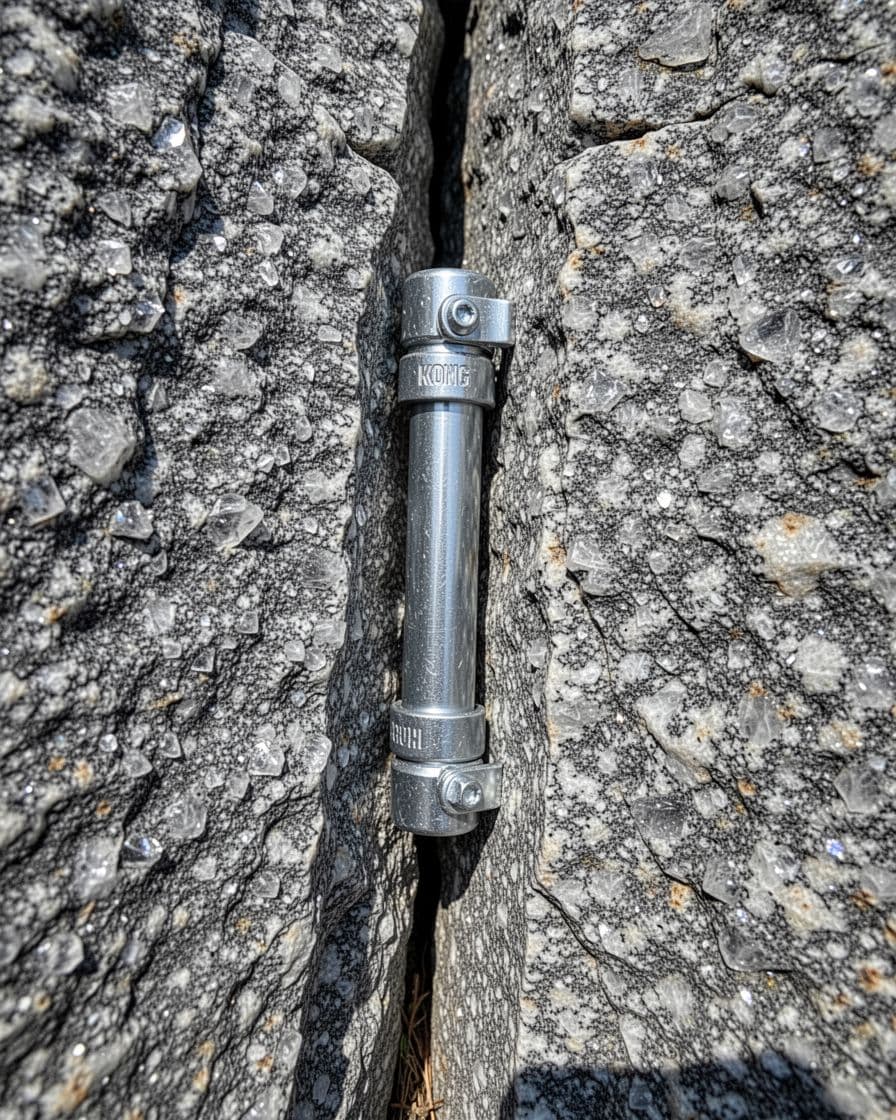
For roofs, pick Gipsy every time. Straight cracks favor tubes on granite. Sandstone routes need both, placed light. Therefore, rack #5 Gipsy for versatility. Add #6 for deep off-widths. Your budget stays lean, pro stays solid.
Kong chocks vs other wide crack gear, what to carry instead or alongside
Kong chocks handle wide cracks where other gear often fails. Climbers debate them against Big Bros, large cams, and even big hexes. Each has strengths, so pick based on the route. For example, Gipsy models brace off-widths better than some alternatives. Yet big cams speed things up in parallels. Let’s compare so you rack smart and climb safe.
Kong Gipsy vs Big Bros, the real differences on lead
Gipsy chocks set with a simple button push. Legs extend, then you brace them against one wall and push the center into the other. Big Bros expand tubes inside the crack after you preset the size. Gipsy feels quicker in flared spots because no tubes shift during placement.
On lead, stability stands out. Gipsy legs lock firm in roofs; they resist rope yanks without flipping. Big Bros hold roofs too, but tubes can rotate under awkward stances if the crack walks. I recall leading a sandy off-width where my Gipsy stayed put despite chicken-winging. The Big Bro below wiggled more from body bumps.
Weight hits different. A Gipsy #5 tips 11 ounces; Big Bros run similar or lighter in spots. Bulk wise, Gipsy racks flat, less swingy than tube expanders.
Climbers say Gipsy bumps out less because legs grip edges statically. Big Bros rely on expansion, so flares make them migrate. Therefore, carry Gipsy alongside for awkward roofs. Use Big Bros where tubes fill uniform voids perfect.
Kong chocks vs big cams, when each one is the safer choice
Big cams like Black Diamond #4, #5, or #6 place fast. You thumb-loop them in, lobes expand, done. Most climbers know this feel cold. Kong chocks take more fiddling; you hunt constrictions and twist for bite. So cams win on speed for splitter parallels.
Yet Kong chocks feel safer in wide, awkward cracks. Flares or walking-prone spots make cams rotate and slip downward. Chocks stay still through friction alone. In soft sandstone, cams scar rock or walk; chocks bite edges gentle.
For example, on a long 200-foot wide pitch, you’d rack four to eight big cams (doubles of #4-#6). That’s heavy and costly at $80-100 each. Kong chocks cost $10-20 apiece, so pack eight to twelve light.
Here’s a quick pros-cons table for those tricky cracks:
| Feature | Kong Chocks | Big Cams (#4-#6) |
|---|---|---|
| Safer in | Flares, pin scars, choss | Parallels, uniform walls |
| Pros | Light, cheap, no walk | Fast, strong (14kN+), familiar |
| Cons | Needs precise spots | Walks in flares, heavy, pricey |
Mix them: cams for mains, chocks as backups. As a result, your rack covers more without overload.
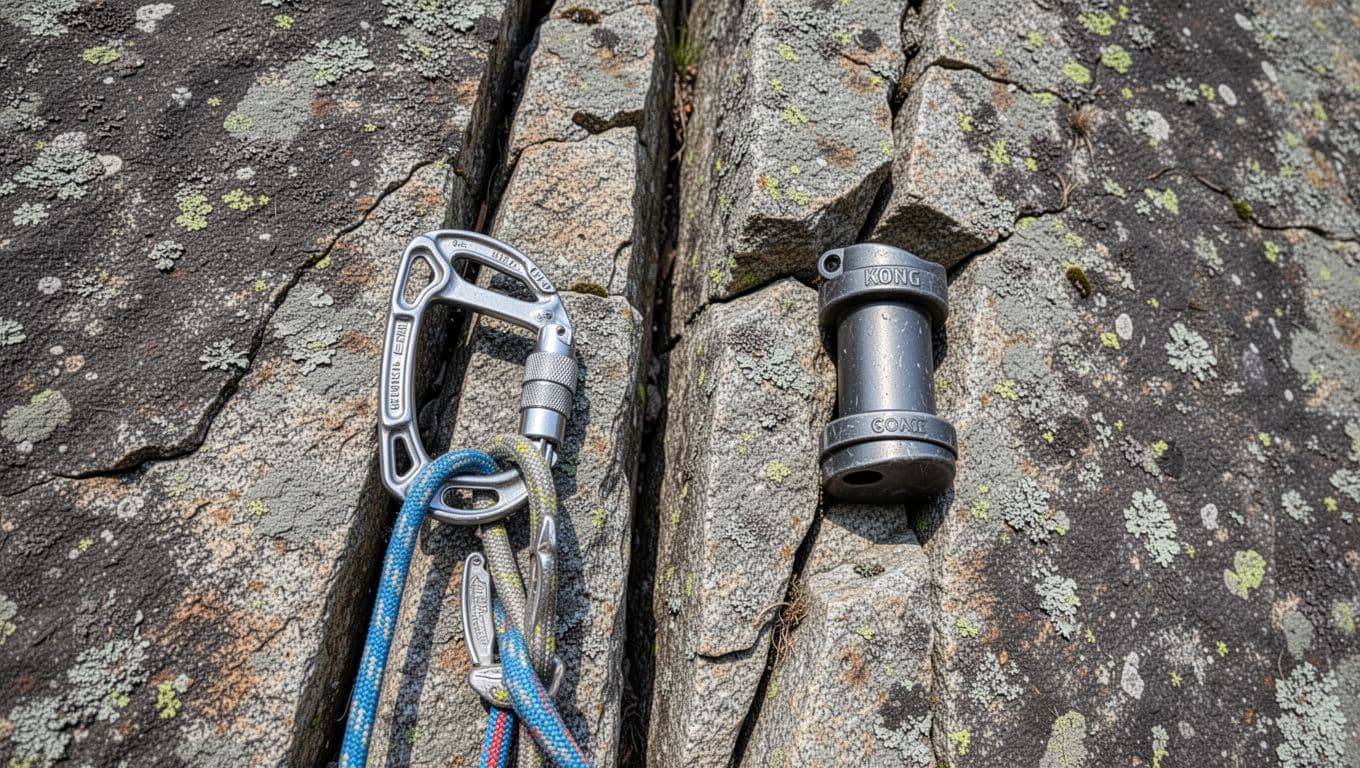
Where hexes and large passive pieces still make sense
Hexes like Black Diamond #10 or #11 snag wide spots with constrictions. You rotate them across the pinch; flat sides jam secure. They’re cheaper than Kong chocks, often under $20, and super light at 1.5-2 ounces. Carry doubles for runouts without rack bloat.
However, smooth parallel cracks beat hexes. They slide without taper for grip. Huge sizes flop too; #11 tops 1 inch wide, useless in fist-plus off-widths. Kong chocks fill those gaps better.
Still, hexes shine where constrictions pinch. For instance, a #11 beds into sandy edges cams ignore. Limits hit fast in slick granite or pods over 1.5 inches. So pair large hexes with your Kongs. Use hexes for cheap backups in flares; save chocks for pure wide.
In short, no single gear rules wide cracks. Rack Kong chocks with cams and hexes for full coverage.
Conclusion
Kong chocks turn scary wide cracks into manageable leads. These simple tools shine as backups or primaries where cams walk and nuts bounce. You now know the Gipsy models brace off-widths best with their extendable legs. Tube chocks fill parallel cracks and pods snug. Both demand solid rock and precise spots.
Practice placements low to the ground first. That builds feel without risk. Always tug hard and bounce test every piece. Back them up for short falls. As a result, you climb bolder on desert towers or granite splitters.
Back to Climbing Nut Reviews
Recommended Products for Trad Climbing
These products match the equipment and gear topics covered in this article.
Affiliate disclosure: As an Amazon Associate, TradClimbers may earn from qualifying purchases at no additional cost to you.
Keep exploring helpful trad climbing, gear, safety, and technique resources.
- A Climber’s Guide to Rock Climbing in Thailand
- A Trad Climber’s Guide to the Isle of Skye Ridge
- Hueco Tanks Rock Climbing: hueco tanks rock climbing Essentials
- A Climber’s Guide to The Nose of El Capitan
- The Top 8 Unforgettable Climbing Routes El Capitan Has to Offer in 2026
- Yoga for Climbers: Boost Strength, Flexibility, and Recovery | yoga for climbers