

Thinking about getting into indoor bouldering? It’s a great way to build strength and figure out climbing moves without needing a rope. Lots of people start here because it’s pretty straightforward. You just need some shoes and chalk. But like anything, there are ways to get better faster. This article is packed with Indoor Bouldering Tips to help you climb smarter, not just harder. We’ll cover everything from reading the routes to not hurting yourself. Let’s get you climbing better.
Indoor Bouldering Tips Key Takeaways
- Bouldering is a good starting point for new climbers because it’s simple and social, focusing on technique and power without ropes.
- Learning to read routes from different angles and planning your moves, including where to rest, helps you climb more efficiently.
- Focus on using your feet precisely and hanging with straight arms when possible, rather than constantly holding on, to save energy.
- Practice advanced moves like sit-starts and using wall features (volumes), and learn techniques for tricky holds like slopers.
- Always prioritize safety by practicing falls, climbing with people you trust, and listening to your body to avoid injuries.
Mastering Indoor Bouldering Fundamentals
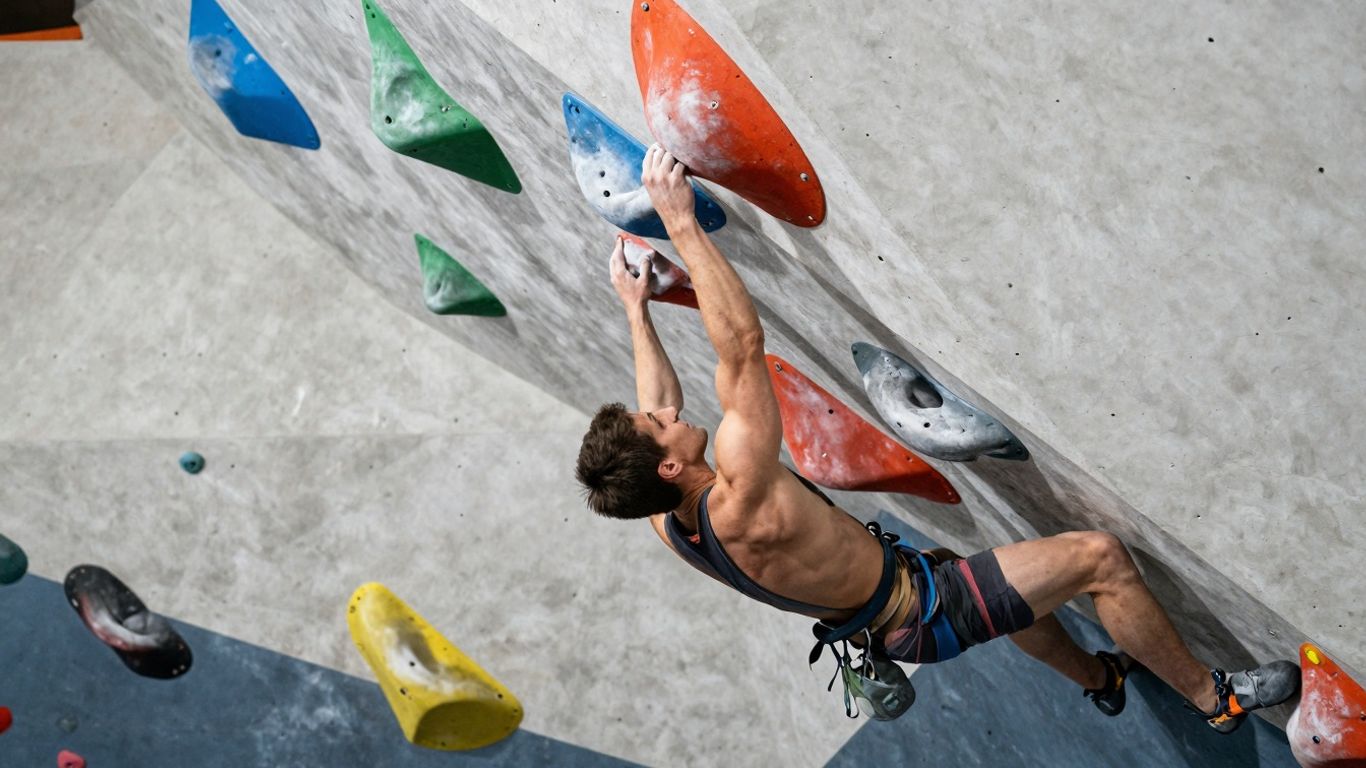
Starting out in bouldering can feel a bit like stepping into a new language. You hear terms like ‘problems,’ ‘beta,’ and ‘dynos,’ and it’s easy to feel a little lost. But don’t worry, everyone starts somewhere. Bouldering is a fantastic entry point into climbing because it’s relatively simple to get into. You don’t need a partner to belay you or a whole rack of gear. Just some climbing shoes, chalk, and a willingness to try.
Embrace Bouldering As A Starting Point
Think of bouldering as the training ground for all things climbing. It’s where you build raw strength and figure out how your body moves on a wall. Because the walls are shorter and there’s no rope, you can focus purely on the movement and the physical challenge. This makes it ideal for learning the basics without the added complexity of rope management or partner coordination. You’ll quickly learn what feels good and what doesn’t, and how to use your body in ways you might not have expected.
Understand The Social Aspect Of Bouldering
One of the coolest things about bouldering gyms is how social they are. People tend to hang out, watch each other climb, and offer advice. It’s common to see groups gathered around a particular problem, cheering each other on and working together to figure out the sequence of moves.
Don’t be shy about asking for help or offering your own thoughts. Most climbers are happy to share what they’ve figured out, and you’ll learn a ton just by observing and talking to others. It’s a great way to meet people and build a climbing community.
Focus On Power And Technique Development
While bouldering is often associated with brute strength, it’s really a game of technique and efficiency. You’ll see climbers making big, powerful moves, but often, the real secret is how they use their feet, body position, and grip. Learning to climb with straight arms when possible, keeping your hips close to the wall, and precise foot placements are all part of developing good technique. It’s not just about pulling hard; it’s about climbing smart. This focus on technique will pay off massively as you progress to other forms of climbing.
The best way to get better is to climb regularly and pay attention to how your body moves. Don’t be afraid to try different things and see what works for you. Every climb is a chance to learn something new about yourself and the wall.
Here’s a quick look at what to focus on:
- Footwork: Make sure your feet are placed precisely on holds. Try to place them silently and without scraping the wall.
- Body Tension: Learn to keep your body tight and controlled, especially on steeper walls. This often means twisting your hips into the wall.
- Grip: Avoid squeezing holds as hard as you can all the time. Learn to use just enough grip to stay on, which saves energy.
Strategic Route Reading For Success
Before you even touch a hold, taking a moment to look at the problem is super important. It’s like planning your attack before a big game. You wouldn’t just run onto the field, right? Same idea here. Spending a few minutes on the ground can save you a lot of energy and frustration on the wall.
Identify All Holds From Multiple Angles
When you’re looking at a boulder problem, try to see it from different spots. Stand back, move to the side, maybe even get a little lower. This helps you spot every single handhold and foothold. Sometimes a hold looks different from one angle than another. You want to know what you’re getting into.
Look for chalk marks – they often show where people have put their hands or feet, but be careful, sometimes those marks can be misleading. Also, notice any holds that look like they’re meant for your feet, even if they’re small. They might be the key to making the next move.
Plan Hand And Foot Sequences Meticulously
Once you’ve seen all the holds, start thinking about how you’ll use them. What’s your first hand move? Where will your feet go for that move? Then, what’s the next hand move, and how do your feet set up for that? It’s like putting together a puzzle. Try to visualize the whole sequence in your head. Think about which holds feel best for your hands and which foot placements will give you the most stability. Planning your moves ahead of time makes your actual climbing much smoother.
Recognize Rest Positions For Endurance
Some problems have spots where you can take a little break. These might be larger holds where you can shake out your arms, or positions where you can use your body in a specific way to relieve pressure. Learning to spot these ‘rest’ positions is a game-changer, especially on longer or harder problems. It’s not just about moving up; it’s about managing your energy so you don’t get too tired too quickly. Think of it as finding little moments to catch your breath and get ready for the next section.
Don’t just look at the obvious holds. Sometimes the best way to solve a problem is to use less obvious features or to combine hand and foot moves in a way that isn’t immediately apparent. Experimentation on the wall is good, but having a plan from the ground helps a lot.
Refining Your Climbing Technique
Okay, so you’ve got the basics down, but now it’s time to really start making those climbs feel smoother. It’s not just about brute strength; it’s about working smarter, not harder. This is where technique really shines.
Precise Footwork Is Paramount
Seriously, don’t underestimate your feet. They’re not just there to hang out; they’re your primary support system. Learning to trust your feet and place them accurately is a game-changer. Think about it: if your feet are solid, your hands don’t have to work as hard. This means less fatigue and more energy for those tricky moves.
- Toeing-in: This is about using the very tip of your climbing shoe on a hold. It’s super precise and lets you stand on smaller edges. You’ll need good core strength to keep your foot from wiggling off.
- Smearing: This is when you use the flat sole of your shoe on a surface, like a volume or a slab section, to create friction. It’s all about trusting that rubber and leaning into the wall.
- Edging: This involves using the side edges of your shoe. It’s great for standing on tiny ledges and really helps keep your hips close to the wall, which is usually a good thing.
Master The Art Of Hanging, Not Holding
This might sound a bit weird at first. We often think climbing is about gripping as hard as possible. But experienced climbers know that hanging on straight arms is way more efficient than constantly bending your elbows. When your arms are bent, your muscles are working overtime to keep you there. Straight arms let your skeleton take most of the load, saving your muscles for when you actually need to move.
The goal is to let your body weight hang from your skeleton, not to constantly fight gravity with your muscles. Think of it like hanging a picture frame – you let gravity do the work of keeping it on the nail.
Avoid Over-Gripping For Longevity
This is a big one, especially when you’re starting out. It’s easy to get psyched and just squeeze every hold like your life depends on it. But that’s a fast track to getting pumped out and having your forearms feel like they’re going to explode. Try to use just enough grip to stay on the hold. You’ll be surprised how little you actually need sometimes. This conserves energy and helps prevent injuries. It’s a skill that takes practice, but it’s totally worth it for longer climbing sessions and better performance.
Advanced Bouldering Maneuvers
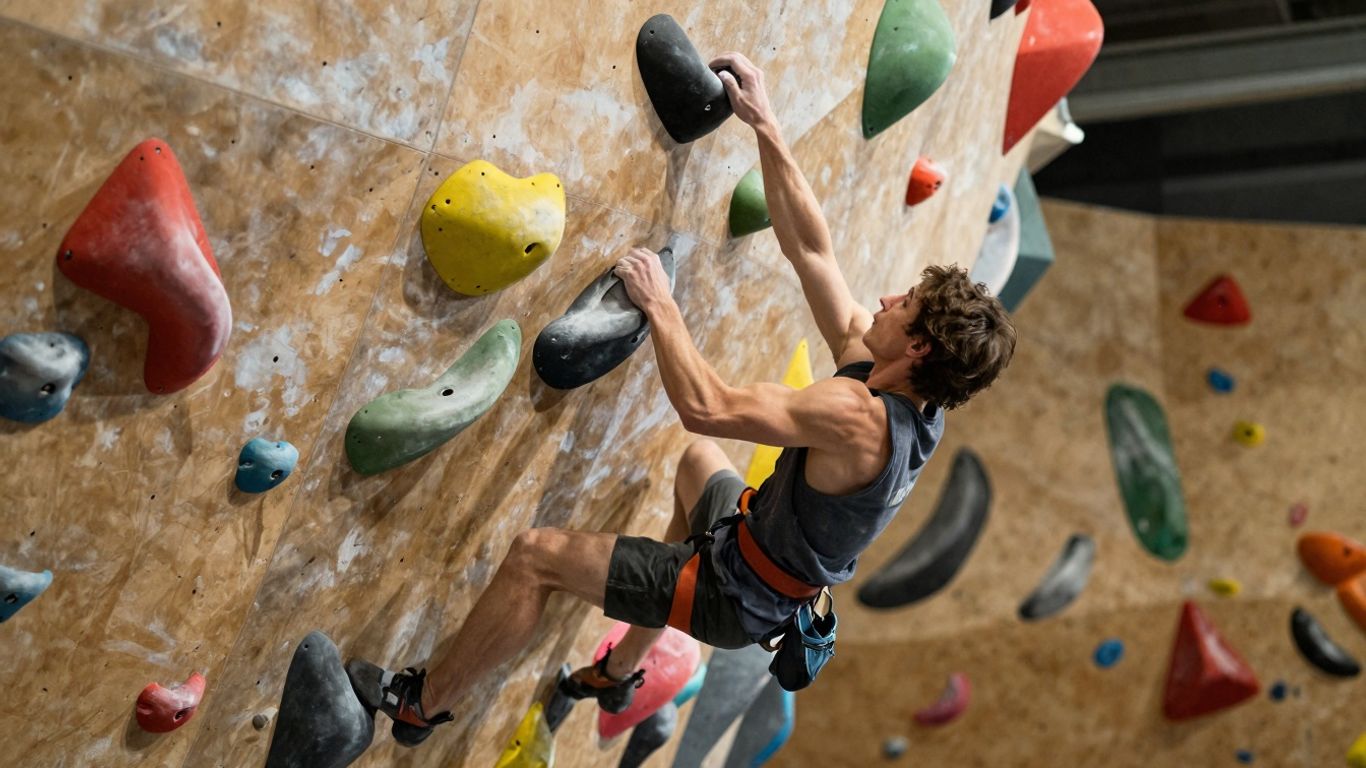
Execute Sit-Starts With Proper Hip Positioning
Sit-starts can feel awkward at first, but they’re a common way to begin many bouldering problems. The key is getting your hips close to the wall. Instead of just sitting there, try to actively pull your hips in using your core. This makes the first move much more controlled. Think about driving your knees up and in, almost like you’re trying to hug the wall with your legs. This hip engagement is what gives you the power to push off and reach for that first hold.
Utilize Volumes For Dynamic Movement
Volumes are those big, often geometric shapes attached to the wall. They’re not just there to look cool; they’re designed to create different angles and opportunities for movement. On steep walls, volumes can be used to generate momentum.
You might push off a volume with your foot to launch yourself towards a distant hold, or use them to change your body position mid-climb. Learning to use volumes effectively opens up a whole new world of dynamic moves. It’s all about timing and using the surface to your advantage, not just as a place to grab.
Conquer Slopers With Smearing And Grip
Slopers, those rounded holds that offer little in the way of positive edges, are a real test. Trying to grip them hard often just makes your fingers tired. Instead, focus on smearing. This means using the sticky rubber of your shoe to press against the wall or the sloper itself, creating friction. For your hands, think about wrapping your fingers around the hold as much as possible, using the fleshy part of your palm and the base of your fingers to create a larger contact area. Sometimes, a slight downward pressure on the sloper, combined with good footwork, is all you need to stay on.
Here’s a quick rundown on dealing with slopers:
- Footwork is key: Find the best possible footholds to keep your body tight to the wall.
- Body tension: Engage your core to maintain stability and prevent swinging.
- Grip technique: Experiment with different hand positions – sometimes a full crimp isn’t possible, so try a half crimp or an open-handed grip.
- Momentum: If the move requires it, use a controlled swing to reach the next hold, but be ready to stick it.
When you encounter a sloper, don’t just grab it and hope for the best. Think about how you can maximize the contact between your skin and the hold, and how your feet can help you maintain tension. It’s a puzzle that requires a bit of finesse.
Building Confidence And Safety
Climbing can feel a bit intimidating at first, and that’s totally normal. Building up your confidence on the wall goes hand-in-hand with making sure you’re climbing safely. It’s not just about sending the hardest problems; it’s about feeling secure and in control while you do it.
Practice Falling Safely From The Wall
Falling is a natural part of bouldering, especially when you’re pushing your limits. Instead of dreading it, learn to embrace it as a learning opportunity. Start by practicing controlled falls from lower heights. Get comfortable with the sensation of leaving the wall and landing on the mats. This practice helps your brain trust the process and reduces anxiety when an actual slip happens. Remember, most beginners tend to over-grip, which can actually make falling harder to avoid. As you get better, you’ll naturally start falling more as you tackle tougher routes.
Climb With Trusted Partners
Your climbing partners are your safety net, literally. Whether you’re spotting a friend or being belayed, trust is key. Never climb with someone you don’t feel completely comfortable with. If you’re unsure about someone’s belaying skills, it’s perfectly okay to ask to watch them first or to have a conversation about safety procedures. A good partner is attentive and communicates well, making the experience safer and more enjoyable for everyone. Building a reliable climbing crew means you can focus more on your climb and less on worrying about what’s happening below setting up rappel anchors.
Listen To Your Body To Prevent Injury
Your body will tell you when it’s had enough. Pushing through pain is rarely a good idea in climbing. Pay attention to any aches or sharp pains, especially in your fingers, elbows, or shoulders. Rest days are just as important as climbing days. They allow your muscles to recover and get stronger.
Don’t be afraid to take a break if you’re feeling fatigued or sore. It’s better to rest for a day or two than to push through and risk a more serious injury that could keep you off the wall for weeks or even months. Proper warm-ups and cool-downs also play a big role in preventing strains and sprains.
Common Indoor Bouldering Pitfalls
Even experienced climbers run into issues sometimes. It’s totally normal! But knowing what to look out for can help you get past them faster and keep climbing safely.
Address Foot Scuffing And Over-Reaching
One of the most common things you’ll see, especially with newer climbers, is scuffing feet on the wall or making huge, awkward reaches. This usually happens when you’re not quite sure where to place your feet or when you’re trying to stretch too far for the next hold. It wastes energy and can throw you off balance. Instead of reaching wildly, focus on finding solid footholds and using them to push yourself up. Think about moving your feet deliberately, almost like you’re stepping onto tiny ledges. This keeps your body closer to the wall and makes your movements more controlled.
Improve Balance On Steep Walls
Steep walls can feel like a whole different beast. Your instinct might be to bend your arms and try to pull yourself up, but that’s a quick way to get tired. On these kinds of walls, your hips play a huge role. Try to keep your hips closer to the wall, almost like you’re trying to hug it. This shifts your weight and makes it easier to stay balanced. Sometimes, you might even need to do a bit of a dynamic move, like a controlled jump, to reach the next hold. It feels a bit scary at first, but with practice, you’ll get the hang of it.
Recognize And Correct Hand Sequence Errors
Sometimes you get up a route and realize you used your hands in a way that just felt wrong, or maybe you missed a better sequence. This often comes down to not reading the route properly from the ground. Before you even start climbing, take a good look at the holds. Are there chalk marks?
What direction do they seem to face? Sometimes, a hold that looks like a handhold is actually better for your foot, or vice versa. Planning your hand and foot moves together, even just mentally, can save you a lot of trouble and make the climb feel much smoother. If you’re unsure, it’s okay to try a move and then adjust if it doesn’t feel right. Just remember to keep your body controlled while you figure it out.
Keep Climbing!
So, there you have it. Indoor bouldering can be a blast, and with these tips, you’re all set to make the most of your time at the gym. Remember to use your feet, don’t grip too tight, and always try to read the route before you jump on. Falling is part of the process, so practice that too. Most importantly, have fun out there and keep pushing your limits safely. See you on the wall!
Frequently Asked Questions
What’s the main difference between bouldering and other types of climbing?
Bouldering is climbing on shorter walls without a rope. You just need climbing shoes and chalk. Other types, like top-roping or sport climbing, involve taller walls and ropes for safety. Bouldering is a great way to start because it’s simpler and you can focus on building strength and learning moves.
How do I read a climbing route before I try it?
Before you climb, look at the wall from different spots to see all the handholds and footholds. Think about the order you’ll use them, like a puzzle. It helps to plan where your hands and feet will go. Some climbers even practice the moves in their head!
Why is footwork so important in bouldering?
Your legs are way stronger than your arms! Using your feet well helps you climb longer without getting tired. Good footwork means placing your feet carefully and precisely on the holds, almost silently. This uses less energy and keeps you balanced.
What does ‘hanging, not holding’ mean, and why is it useful?
Instead of always using your arm muscles to pull yourself in, try to hang straight from the wall. Your body’s structure is stronger than your muscles for holding your weight. This resting position lets you relax your arms and shake them out, saving energy for harder moves.
How can I get better at using big, rounded holds called ‘slopers’?
Slopers can be tricky! Try to get as much of your hand on the hold as possible. ‘Smearing’ your hand means pressing it firmly into the hold. Using your thumb and keeping your wrist straight can also help. It’s all about finding the best way to grip and keeping your body weight directly below the hold.
What’s a common mistake beginners make, and how can I avoid it?
A common mistake is gripping the holds way too hard out of fear, which makes your arms tired fast. Try to grip as lightly as you can while still staying on the wall. You’re often stronger than you think! Also, try not to over-reach; use your feet to climb higher instead of stretching too far.
Recommended Products for Bouldering
These products can support safer climbing, belaying, rappelling, and emergency readiness.
Affiliate disclosure: As an Amazon Associate, TradClimbers may earn from qualifying purchases at no additional cost to you.
Keep exploring helpful trad climbing, gear, safety, and technique resources.