

So, you’ve got a hammock and you’re ready to hang out in the great outdoors. Awesome! But wait, how do you actually get this thing up between two trees without damaging anything or, you know, falling on your head? Don’t worry, it’s not rocket science. This guide is all about how to set up hammock straps, making sure you get a solid, comfy hang every time. We’ll break down the whole process, from picking the right straps to making sure your hammock is good to go.
Key Takeaways
- Always pick hammock straps that are strong and long enough for your needs. Consider tree-friendly designs to protect nature.
- Before you hang, check your anchor points (like trees) to make sure they’re solid and spaced appropriately, usually 10-15 feet apart.
- When wrapping straps, aim to hang them higher than you think you’ll need, as the hammock will sag. The goal is for the lowest point to be about 18 inches off the ground when you’re sitting in it.
- Loop the strap securely through its own end, pull it tight to prevent slipping, and double-check that it’s not rubbing against anything that could cause wear.
- Before connecting your hammock, give it a good once-over for any rips or damage, and then attach it using the provided carabiners, ensuring the final hang is safe and at the correct height.
Choosing The Right Hammock Straps
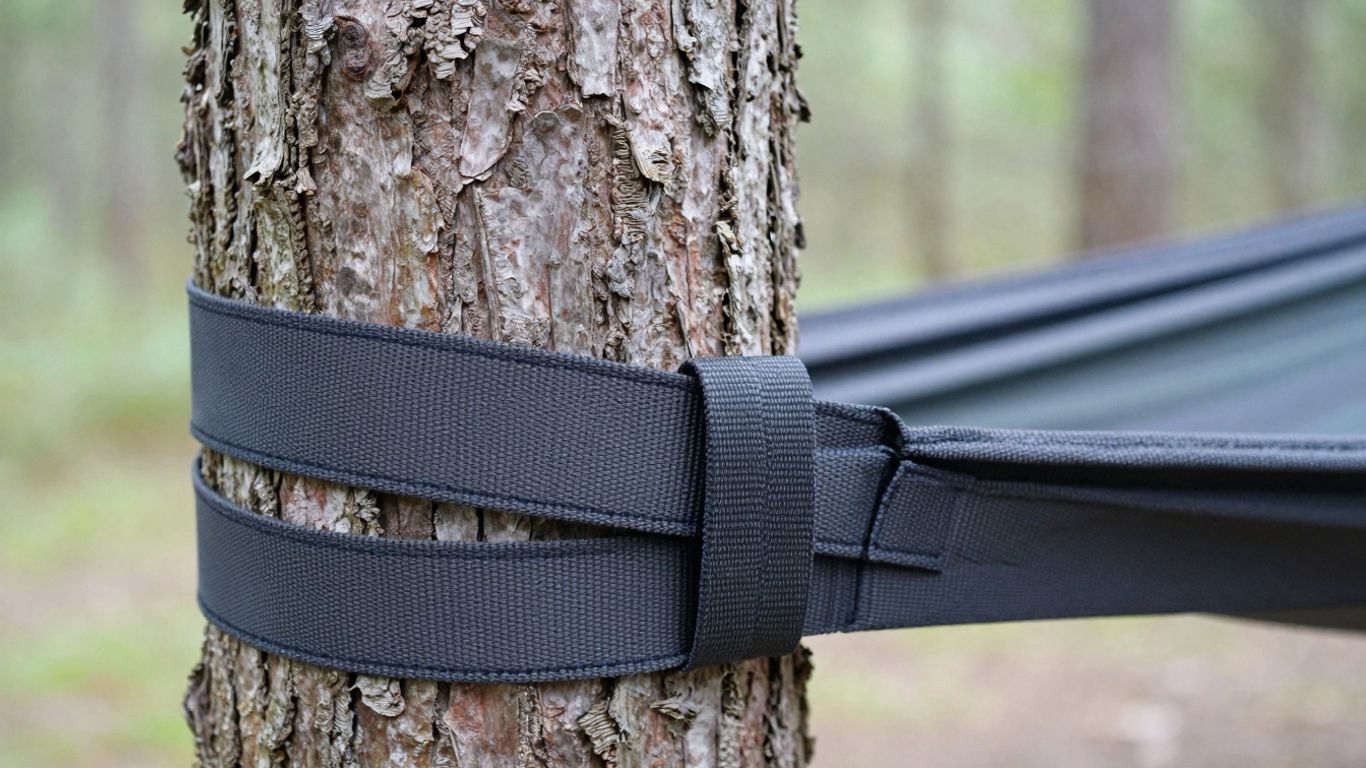
So, you’ve got a hammock, which is awesome. But how are you going to hang it up? Just tying a rope around a tree might seem like a good idea at first, but trust me, it’s usually not the best way to go. Old-school ropes can really mess up the trees, cutting into the bark and potentially causing damage that lasts for ages. Plus, they can be a pain to adjust and might not hold your weight as securely as you’d like. Many parks even have rules about using proper straps to protect the trees, often requiring them to be at least an inch wide. Investing in good hammock straps is a game-changer for both your comfort and the environment.
Understanding Hammock Suspension Systems
Basically, suspension systems are what hold your hammock up. They’re the bits that connect your hammock to whatever you’re hanging it from, like trees or posts. Think of them as the unsung heroes of your relaxation time. While some hammocks might come with basic rope, it’s often not ideal. Ropes can damage tree bark, leading to rot and disease, which is a big no-no for nature lovers. Modern straps are designed to spread the weight out, being much kinder to the trees. They’re also generally quicker and easier to set up than fiddling with knots.
Key Features To Look For In Hammock Straps
When you’re shopping around, keep a few things in mind. Length is a big one; longer straps give you more flexibility, especially if the trees are far apart or really thick. You’ll want to check the weight capacity too, just to be safe.
Material matters – some are made from really strong, lightweight stuff. Look for straps that have plenty of adjustment points; this makes getting that perfect hang much easier. And, of course, tree-friendly designs are a must. Some of the best straps out there, like the Python 10 hammock straps, use a special weave that makes them super light but incredibly strong.
Here’s a quick rundown of what to prioritize:
- Tree-Friendly Design: Wide straps distribute weight better, preventing damage to bark.
- Adjustability: Multiple loops or a buckle system make it easy to get the right tension and height.
- Length: Longer straps offer more versatility for different anchor point distances.
- Weight Capacity: Always check that the straps can safely support your weight plus any gear.
- Durability: Look for strong stitching and robust materials that will last.
Eco-Conscious Strap Options
Being mindful of nature is a big part of enjoying the outdoors, right? That’s why choosing eco-conscious straps is so important. Traditional ropes can really harm trees, but many modern straps are designed with this in mind.
They’re made to have a wider contact area, so they don’t dig into the bark. Some brands even use recycled materials. When you’re picking out your straps, look for ones that explicitly mention being tree-friendly or low-impact. It’s a small choice that makes a difference for the places we love to hang out in. You can find some great options designed for minimal environmental impact when you’re looking for hammock suspension products.
Preparing Your Hammock Straps For Setup
Alright, you’ve got your straps, maybe they came in a neat little bag or just bundled up. First things first, let’s get them ready to go. It’s not complicated, but doing it right makes the whole hanging process smoother.
Unraveling Your Hammock Straps
Just pull them out of their packaging or untie any knots. You’ll want to lay them out so you can see what you’re working with. Most straps are pretty long, so you might have a bit of a tangle to sort through, especially if they’ve been stuffed in a backpack. Give them a good once-over to make sure there are no weird snags or tears from storage. It’s better to spot a problem now than when you’re already halfway up a tree.
Assessing Anchor Point Suitability
Before you even think about wrapping straps, take a look at the trees or posts you’re planning to use. Are they sturdy? A good rule of thumb is to pick trees that are at least as thick as your wrist, preferably thicker. Avoid anything that looks dead, diseased, or has big cracks.
You’re looking for solid, healthy anchor points that can handle your weight plus a bit of extra. It’s also helpful to check the distance between them. Too close, and your hammock will be too tight; too far, and you might run out of strap. A little bit of planning here saves a lot of hassle later.
Calculating Strap Length Needs
This is where you figure out how much strap you’ll actually need. It’s not just about the distance between your trees. You need to account for the strap wrapping around the tree itself, plus any extra you might need for adjustments.
A good starting point is to measure the distance between your anchor points and add a few feet. Remember, you want your hammock to have a nice, gentle sag, not be pulled taut like a drum. A common guideline is to hang the straps higher on the tree if the anchor points are further apart. This helps achieve that comfortable curve.
A handy trick is to use a small weight, like a duffel bag, to simulate your body weight. Hang it from the straps temporarily to see how much sag you get. This gives you a real-world idea of how the straps will behave when you’re actually in the hammock.
How To Set Up Hammock Straps
Alright, you’ve got your straps, you’ve picked your trees, and now it’s time to actually get that hammock up. This part is pretty straightforward, but doing it right makes all the difference for a comfy and safe hang. Don’t rush it, and you’ll be relaxing in no time.
Wrapping Straps Around Anchor Points
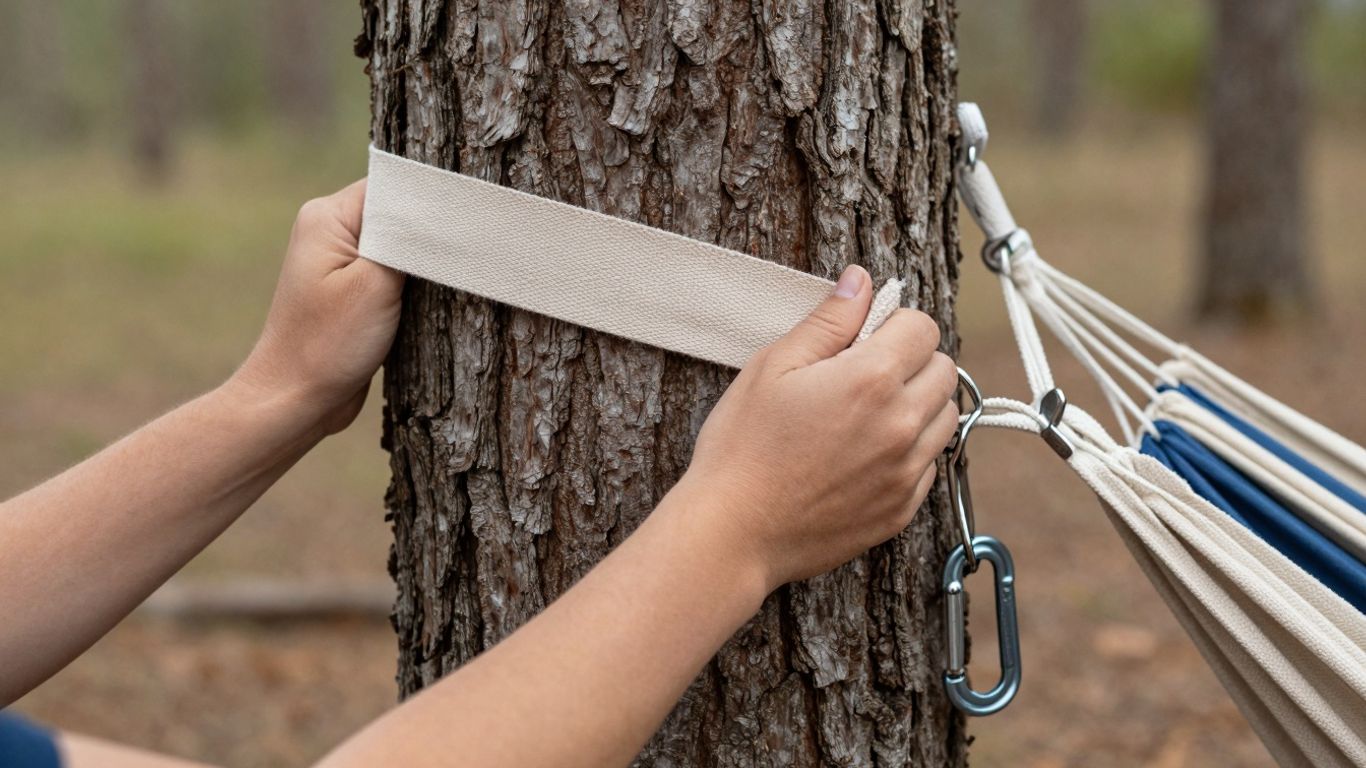
First things first, take one of your straps and wrap it around the first tree or anchor point. You want to get it snug, but not so tight that you’re strangling the tree. Think of it like giving the tree a firm handshake. The goal here is to get the strap securely around the anchor point without causing any harm to the tree itself.
Achieving The Correct Strap Angle
This is where the magic happens for that perfect hammock sag. If your trees are pretty far apart, you’ll want to hang the straps a bit higher up on each tree. This gives your hammock the space it needs to drape nicely. Too low, and your hammock will feel like a tight clothesline. Too high, and you might end up on the ground. It’s all about finding that sweet spot.
A good rule of thumb is to aim for a hang where the lowest point of your hammock, when you’re sitting in it, is no more than about 18 inches off the ground. This prevents you from sinking too low and makes getting in and out much easier.
Securing The Strap Loop
Once the strap is around the anchor, you need to secure it. Most straps have a series of loops or adjustment points. You’ll take the end of the strap with these loops and feed it through the main loop at the other end of the strap. Pull it tight.
You should feel it cinch down. Many straps have a marker, like a logo, that helps you know which loop to use for the initial connection. Just pull the strap through that designated loop until it feels snug against the tree. Repeat this whole process for the second strap on your other anchor point. You’ll want to make sure both straps are set up in a similar way so your hammock hangs evenly.
Ensuring A Secure Hammock Hang
Alright, so you’ve got your straps wrapped and looped. Now comes the part where you make sure this whole setup isn’t going to suddenly drop you. It’s all about getting things snug and checking for any weak spots before you even think about getting in.
Tightening Straps For Stability
This is where you really pull on those straps. You want them to be tight against the tree or post, no slack at all. Think of it like pulling a stubborn knot – you keep tugging until it feels solid. A loose strap is a dangerous strap. Give each one a good yank. If it slides or loosens up, you need to re-do that loop. It’s better to spend an extra minute here than to have a surprise landing.
Checking For Potential Strap Damage
Before you put your full weight on it, take a good look at the straps themselves. Are there any nicks, cuts, or frays? Sometimes branches can rub against them, or maybe they got snagged on something during setup. Even a small bit of damage can weaken the strap over time. Also, make sure the strap isn’t rubbing against anything sharp on the anchor point itself. You want a clean contact.
Verifying Ground Clearance
This is a big one for comfort and safety. When you sit in your hammock like you’re sitting in a chair, the lowest part of the hammock should be about 18 inches off the ground. Any lower, and you might be dragging your backside through the dirt or hitting your head on something if you lean back too far. Too high, and it’s just awkward to get into. You can adjust this by changing which loop you connect your hammock to on the strap, or by adjusting the strap height on the tree.
Here’s a quick guide to common heights:
- Sitting Height: Aim for the hammock to be about 18 inches off the ground when you’re sitting in it.
- Angle: The suspension (your straps) should ideally hang at about a 30-degree angle from the anchor point to the hammock.
- Anchor Point Height: If your trees are far apart, you’ll need to hang the straps higher up to achieve the right sag and clearance.
Remember, the goal is a comfortable, stable hang. Don’t rush this part. A little extra attention now means a lot more relaxation later. Check your work, give it a gentle bounce, and then you’ll be ready for the final step.
Attaching Your Hammock Safely
Inspecting Your Hammock For Defects
Before you even think about clipping your hammock to those newly set up straps, give your hammock itself a good once-over. Seriously, don’t skip this part. You’re looking for any little issues that might have popped up. Think small holes, tiny rips, or any signs of wear and tear. Even a small defect could become a big problem when you’re relaxing. A quick inspection now can save you from an unexpected drop later.
Connecting Hammock To Straps
Alright, straps are up, hammock is checked. Now for the connection. Most hammocks come with carabiners or some kind of clip. You’ll want to attach these directly to the loops or adjustment points on your hammock straps. Make sure the carabiner gate is fully closed and locked if it has that feature. It’s a simple step, but it’s the main link holding you up, so get it right.
Confirming Safe Hammock Placement
This is the final check before you settle in. First, look at where your hammock is hanging. Is it suspended over rocks, a sharp branch, or maybe a puddle? Try to adjust the straps slightly if needed to move it to a clearer spot. Also, remember that comfortable sitting height we talked about? When you sit in the hammock like a chair, the lowest part should be about 18 inches off the ground. This gives you a good starting point for comfort and safety. If it’s too high, you might have trouble getting out; too low, and you might drag on the ground or hit obstacles.
- Check for any sharp objects directly underneath.
- Ensure the hammock isn’t angled towards a hazard.
- Test the height by sitting in it gently first.
The physics of hanging a hammock mean that the anchor points bear more weight than you might expect. Always double-check that your anchor points (trees, posts) are solid and that your straps are rated for the load. It’s better to be overly cautious than to have a strap fail.
Ready to Relax?
So there you have it. Setting up your hammock straps might seem a little tricky at first, but once you get the hang of it, it’s pretty straightforward. Remember to pick good trees, get those straps snug, and always double-check that your hammock is at a safe height. Now you can finally kick back, relax, and enjoy that well-deserved downtime in nature. Happy hanging!
Frequently Asked Questions
What are hammock straps and why do I need them?
Hammock straps are like strong ropes that you use to hang your hammock. They’re super important because they hold all your weight, keeping you safe and comfy while you relax. Unlike regular ropes, good straps spread out the pressure on trees, so they don’t get hurt. They also make setting up your hammock way faster and easier!
What should I look for when buying hammock straps?
When you’re shopping, check how strong they are – they need to hold your weight! Also, think about how long they are; longer straps give you more options for hanging. Durability is key, so they last a long time. And if you care about nature, pick straps that are gentle on trees.
How far apart should the trees be for my hammock?
Ideally, the trees or sturdy posts you use should be about 10 to 15 feet apart. This gives your hammock enough room to hang nicely. If the trees are farther apart, you’ll just need longer straps. It’s always good to measure before you start setting up!
How high should I hang my hammock?
A good rule of thumb is to hang your hammock so that when you sit in it, it’s about 18 inches off the ground, kind of like sitting in a chair. Remember, the hammock will sag a bit when you get in, so hang the straps a little higher on the trees than you think you need to.
What’s the best way to attach my hammock to the straps?
First, make sure your hammock is in good shape, with no rips or tears. Then, use the carabiners (those metal clips) that came with your hammock or straps to connect them. Double-check that the hammock is securely attached and won’t slide off.
Can I use any kind of tree to hang my hammock?
It’s best to use strong, healthy trees that are at least a foot wide in diameter. Avoid trees that look sick, have loose bark, or are too small. Also, make sure the area around and under your hammock is clear of anything sharp or dangerous, just in case you happen to fall.
Recommended Climbing Products
These products can support safer climbing, belaying, rappelling, and emergency readiness.
Affiliate disclosure: As an Amazon Associate, TradClimbers may earn from qualifying purchases at no additional cost to you.
Keep exploring helpful trad climbing, gear, safety, and technique resources.