

So, you’re heading out on an adventure and wondering how to attach tent to backpack? It’s a common question, especially when you’re trying to fit everything in. A tent is usually one of the bigger items, and getting it packed right can make a huge difference in how comfortable your hike is. We’ll go over the best ways to do it, whether that means tucking it inside your pack or strapping it on the outside, and what to watch out for so you don’t end up with a sore back.
How to Attach Tent to Backpack Post Key Takeaways
- For the most comfortable hike, try to pack your tent inside your backpack (like the Osprey Kestrel 48), close to your back. This helps spread the weight evenly.
- If you must pack your tent on the outside, attaching it to the bottom or top of your pack is generally better than the rear.
- Consider taking your tent out of its bag and packing the parts separately inside your main compartment for better space efficiency.
- When attaching a tent externally, use secure straps or cords and protect it from the elements and trail hazards.
- Choosing a backpack with an internal frame is beneficial for distributing weight, especially when carrying heavier gear like a tent.
Understanding Tent Placement On Your Backpack
Alright, let’s talk about where your tent actually goes on your backpack. It might seem like a small detail, but trust me, getting this right can make a huge difference in how your hike feels. The goal is to make your tent feel like it’s barely there, not like a giant, awkward lump dragging you down. Remember, if camping or spending more time outdoors ensure you have a comfortable chair like the helinox chair zero.
Prioritize Internal Packing For Comfort
When it comes to comfort on the trail, keeping your tent inside your pack is usually the way to go. Tents, especially the more robust ones, can be pretty bulky and heavy. Stuffing them inside means they’re contained and less likely to snag on branches. Plus, it helps keep the overall shape of your pack more streamlined.
It’s all about keeping that weight close to your body. If you have a big enough pack and a tent that can be compressed, tucking it in against your back panel is a solid move. You can even disassemble the tent and pack the fabric parts loosely at the bottom, which can be surprisingly space-efficient. This way, you’re not adding extra bulk that throws off your balance.
The Risks of Exterior Tent Attachment
Attaching your tent to the outside of your pack might seem like a good idea when you’re short on space inside. However, it comes with its own set of headaches. For starters, an external tent can easily get snagged on trees or rocks, potentially damaging your shelter.
It can also be a pain to secure properly, and if it’s not strapped down tight, it can shift around, making your pack feel unbalanced. This shifting weight is a surefire way to end up with sore shoulders and a sore back. It’s generally better to try and fit it inside, even if it means a bit of Tetris-playing with your gear. If you absolutely must strap it outside, make sure it’s in a waterproof bag to keep it dry.
Weight Distribution: The Key to Avoiding Pain
This is where things get really important. Think of your backpack as an extension of your body. You want the weight distributed evenly, especially the heavier stuff. Your tent is often one of the heavier items, so where you put it matters. The general rule is to keep the heaviest items close to your back and centered.
Putting a tent on the very top or bottom of your pack can create leverage that pulls you backward or forward, leading to strain. If you’re carrying it externally, strapping it to the bottom is usually better than the top, as it keeps the weight lower. But honestly, if you can avoid external attachment altogether, you’ll likely have a much more comfortable hike. It’s all about finding that sweet spot where the weight feels balanced and supported by your core, not just your shoulders. For more on how to pack efficiently, check out how to roll your tent.
Here’s a quick rundown of placement priorities:
- Inside, close to your back: Ideal for weight distribution and protection.
- Outside, bottom of pack: A decent alternative if space is extremely limited.
- Outside, top of pack: Use only for very light tents; can affect balance.
- Outside, rear of pack: Generally avoid this position due to awkwardness and strain.
Strategic Interior Tent Packing Methods
Alright, so you’ve got your tent, and you’re wondering where on earth it’s going to fit inside your backpack. It’s often the bulkiest item, right? But trust me, getting it inside your pack is usually the way to go for a more comfortable hike. It keeps your weight balanced better and protects your tent from snags and the elements. Plus, it just feels more secure than having it strapped to the outside, potentially bouncing around.
Disassemble For Maximum Space Efficiency
This is where you really win the space game. Forget the tent bag; it’s usually just taking up precious room. Instead, think of your tent as just a collection of fabrics and poles. You can stuff the tent body and rainfly right into the main compartment. Don’t worry too much about rolling them perfectly; just cram them in. They’re flexible and can fill up those awkward empty spots. This is especially good if your tent is a bit damp from the night before – it’s going at the bottom, away from your dry stuff.
Packing Tent Components Separately
Once the main tent fabric is stashed, what about the poles and stakes? The poles are long and can be a bit unwieldy. The best spot for them is usually vertically, either along the sides of your main compartment or sometimes they’ll fit nicely in a side water bottle pocket if they’re short enough. Just make sure they’re secure and won’t poke you or fall out. Stakes are small and can usually be tucked into any little crevice you find.
Optimizing Interior Space With Tent Fabrics
When you’re packing the tent fabric itself, think about filling gaps. Instead of a neat roll, stuffing the tent body and fly can actually be more efficient. It allows the fabric to conform to the shape of your pack and fill in the spaces around your other gear, like your sleeping bag or clothes. This method helps prevent those annoying empty pockets of air that make your pack feel less stable. It’s all about making every inch count.
The goal here is to treat your tent not as one big item, but as several flexible pieces that can be molded to fit around your other gear. This makes your pack feel more compact and your load more balanced.
Exterior Tent Attachment Techniques
Alright, so sometimes your tent just doesn’t want to fit inside your pack, no matter how much you try to squish it. It happens. Maybe you’ve got a bulky sleeping bag, or perhaps you’re carrying extra food for a longer trip. Whatever the reason, strapping your tent to the outside of your backpack is a common solution. But how you do it really matters for your comfort and the safety of your gear.
Securing Your Tent To The Bottom
Attaching your tent to the bottom of your pack is often the most stable option. Think about it: you want heavier items closer to your body and lower down to help with balance. Some backpacks even have specific straps for this exact purpose. If yours doesn’t, you can usually get creative with the existing straps.
- Use the pack’s built-in straps: Look for loops or straps specifically designed for bottom attachment.
- Get creative with compression straps: If you have long compression straps, you might be able to loop them under your pack and cinch the tent down.
- Consider a “clamshell” method: Roll your tent tightly and use straps to secure it like a burrito to the base.
Always double-check that your tent is secure and won’t swing around or fall off. A loose tent is a recipe for disaster.
Attaching A Tent To The Top Of Your Pack
If the bottom is a no-go, the top is your next best bet. This is especially true if your pack has a lid or a top compression strap. You can often slide a rolled tent underneath this strap and tighten it down. This method works best for lighter tents. A heavy tent on top can make you feel like you’re going to tip over backward, which isn’t fun on uneven terrain.
- Utilize the pack lid: If your pack has a floating or fixed lid, you can often secure gear underneath it.
- Compression straps are your friend: Cinch the tent down tightly with the top compression straps.
- Consider a “stuff sack” approach: If your tent is in a waterproof stuff sack, it’s easier to manage and less likely to snag.
This position gives you easier access if you need to deploy your tent quickly, say during an unexpected downpour.
Avoiding The Rear Attachment Point
This one’s a biggie. Whatever you do, try your best to avoid strapping your tent to the very back of your pack, furthest from your body. It might seem like a convenient spot, but it’s a trap. That extra distance creates a lever effect, making the tent feel much heavier than it actually is. It pulls you backward, messes with your balance, and puts a ton of strain on your shoulders and back. You’ll feel it after just a short while.
When considering external attachment, always think about how the weight is positioned relative to your center of gravity. The further away an item is, the more it will affect your balance and perceived weight. Aim to keep as much gear as possible close to your spine.
Here’s a quick rundown of why the rear is a bad idea:
- Weight distribution nightmare: It pulls you backward, making you work harder.
- Balance issues: You’ll feel unstable, especially on tricky trails.
- Increased strain: Your back and shoulders will pay the price.
So, while it might seem like there’s space, resist the urge to strap your tent there. Your body will thank you later.
Essential Considerations For External Tent Carrying
Protecting Your Tent From the Elements
When you decide to strap your tent to the outside of your pack, you’re basically saying goodbye to its cozy, dry interior. Think of it like leaving your house keys out in the rain – not ideal. Even a little bit of moisture can add surprising weight, and over time, it can really wear down the fabric.
If you’re caught in a downpour, that tent is going to soak up water like a sponge. Using a waterproof stuff sack is non-negotiable; it’s your tent’s best defense against rain, dew, and general trail grime. Make sure the sack is sealed up tight before you strap it on. It’s also a good idea to give your tent a good shake and dry-out when you get home, even if it only felt a little damp. This prevents mildew and keeps it in good shape for your next adventure.
Ensuring Tent Security During Travel
Nobody wants to reach their campsite only to find their tent has gone walkabout somewhere along the trail. Attaching your tent externally means it’s vulnerable to snagging on branches, getting bumped around, or even just loosening up over miles of hiking. You need to be pretty deliberate about how you secure it.
Most packs have straps specifically for this, often on the bottom or top. If yours doesn’t, you might need to get creative with extra straps or even some sturdy cordage. Redundant attachment points are your friend – meaning, use more than one strap or tie-down if possible. Give it a good tug after you’ve strapped it down to make sure it’s not going anywhere. A loose tent flapping around is not only annoying but can also throw off your balance.
Keeping Your Tent Dry on the Trail
This one’s a bit of a no-brainer, but it’s worth repeating because it’s so important. A wet tent is a miserable tent. Not only does it make setting up camp a soggy affair, but it can also make your sleeping bag and other gear damp, leading to a cold night.
Even if your tent’s rainfly is waterproof, the inner tent can still get wet from condensation or splashes if it’s exposed. If you’re expecting rain, or even just a lot of morning dew, a waterproof stuff sack is your best bet. Roll your tent up tightly inside it, squeeze out as much air as you can, and then secure the sack to your pack. It’s a simple step, but it makes a huge difference to your comfort at the end of the day.
Advanced Tent Packing Strategies
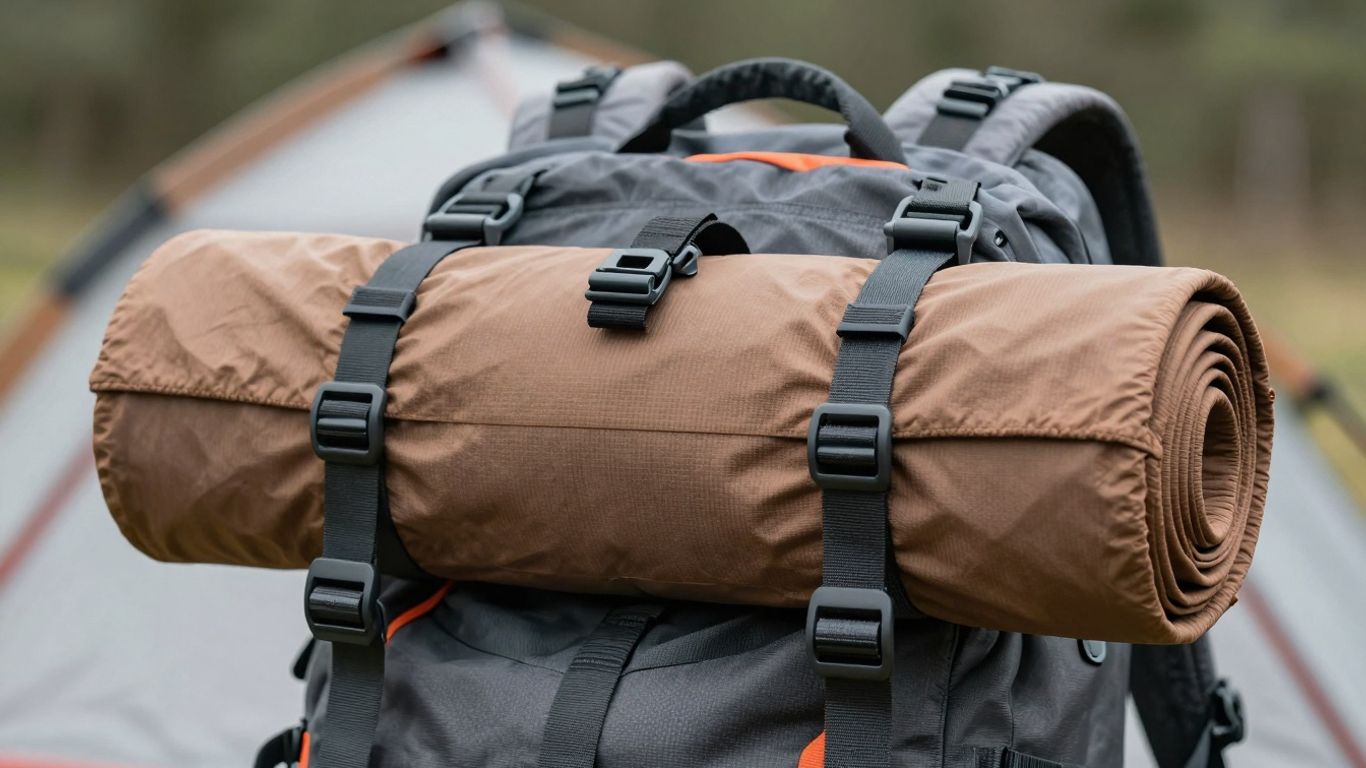
Splitting Tent Components For Load Sharing
Sometimes, your tent just won’t play nice and fit neatly into one spot inside your pack. That’s totally okay. Instead of wrestling with it, think about breaking it down. You can split the tent’s fabric parts from the poles. This is a smart move if you’re hiking with a buddy; you can each take a share of the load. Maybe one person takes the main tent body, and the other carries the rainfly and poles. It makes the whole pack feel lighter and more balanced. Don’t be afraid to get creative with how you divide things up.
Utilizing External Pockets For Tent Poles
Tent poles are often the trickiest part to pack. They’re long and rigid, and they don’t always want to conform to the shape of your backpack. A great workaround is to use those handy external pockets on your pack. Many backpacks have long, stretchy mesh pockets on the sides.
Tent poles can slide right into these. Just make sure they’re secure. You don’t want them bouncing out on a bumpy trail. Sometimes, a simple bungee cord or a strap can keep them snug. It’s a simple trick, but it frees up a lot of space inside your main compartment for other gear.
Adapting For Wet Tent Conditions
We’ve all been there: packing up a tent that’s still damp from morning dew or a sudden rain shower. It’s not ideal, but it happens. If your tent is wet, the absolute best thing you can do is pack it separately from your dry gear. Stuffing a wet tent directly into your main compartment can make your sleeping bag and clothes feel like a soggy mess.
Consider using a waterproof stuff sack or even a trash bag to contain the moisture. If you have space, you can even strap the wet tent to the outside of your pack for a while. This lets it air out a bit and prevents your other gear from getting soaked. It might add a little weight to the outside, but it’s better than a damp sleeping bag on a cold night.
Choosing The Right Backpack For Your Tent
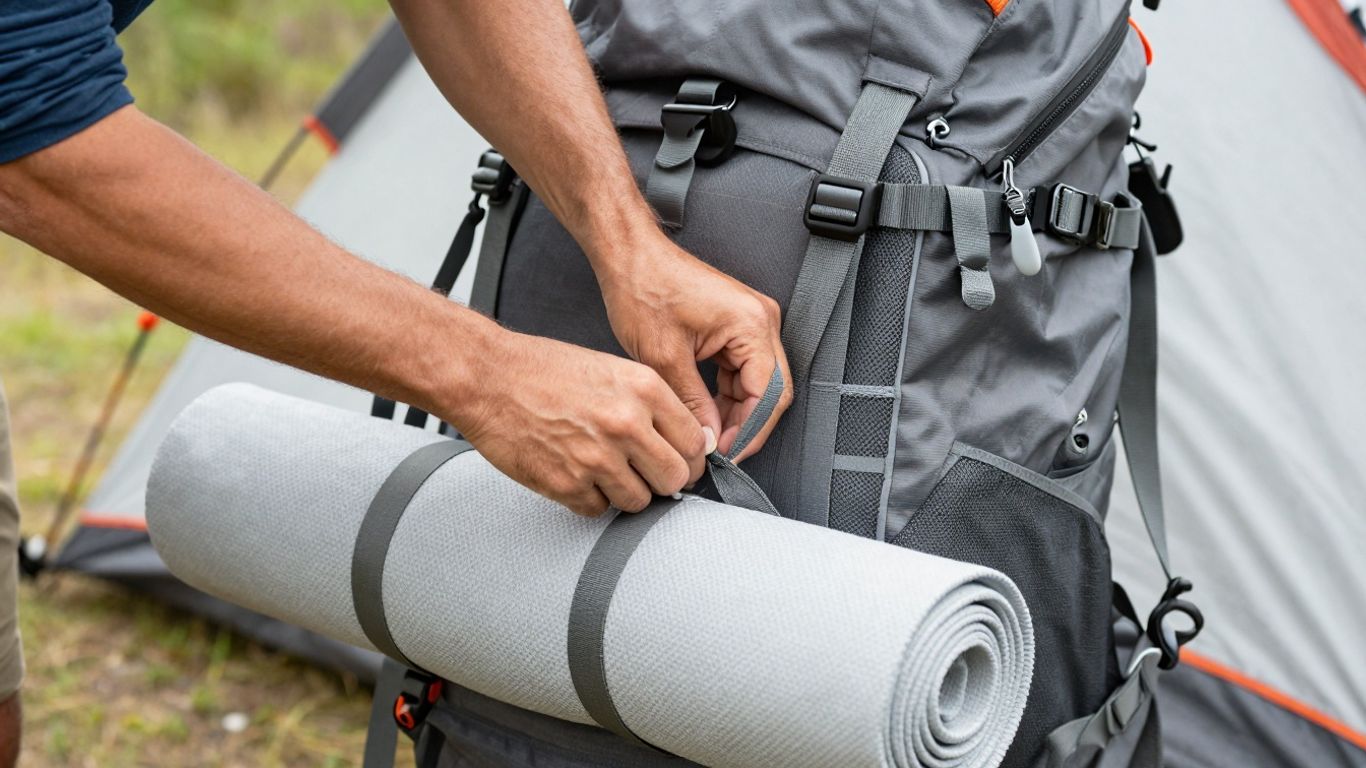
So, you’ve got your tent, and now you’re wondering about the pack itself. It’s not just about having a big bag; the kind of backpack you choose really makes a difference in how comfortable you are on the trail, especially when you’re trying to fit that tent in.
Internal Frame Backpacks For Weight Distribution
When you’re starting out, or even if you’ve been at it for a while, a backpack with an internal frame is usually the way to go. Think of it like this: the frame is built right into the pack, and it helps spread out the weight of everything you’re carrying. This means less strain on your shoulders and back.
If you have a lot of gear, or just a heavier tent, this is a big deal. Ultralight hikers sometimes get away with frameless packs because their gear is so light, but for most of us, an internal frame is a solid choice for better weight distribution. It just makes carrying your load feel more balanced.
Considering Pack Size For Tent Storage
This is a pretty straightforward one: does your tent actually fit inside your pack? Tents, especially the more robust ones, can be bulky. If you’re trying to stuff a larger tent into a pack that’s too small, you’ll end up with a lumpy, uncomfortable load, or worse, you’ll have to strap it to the outside, which isn’t always ideal. Before you buy a pack, or if you’re trying to make your current setup work, consider the volume.
A pack around 50-70 liters is often a good starting point for many backpackers, but it really depends on how much gear you bring. It’s better to have a little extra space than to be constantly struggling to fit everything. If your tent is a beast, you might need to look at larger packs or consider ways to pack it more efficiently, like disassembling it. You can find some great options for backpacking backpacks that offer different capacities.
Ultralight Setups And Pack Choice
Now, if you’re really into the ultralight scene, your gear choices will be different. Ultralight tents are designed to be small and light, so they often fit easily inside even smaller packs. In this case, you might not need a super robust internal frame, and a lighter, more minimalist pack could work just fine.
However, even with ultralight gear, how you pack it still matters. Keeping the weight close to your body is always the goal. If you’re going ultralight, you’re probably already thinking about every ounce, so choosing a pack that complements your minimalist approach makes sense. It’s all about finding that balance between weight, comfort, and carrying capacity for your specific needs.
Wrapping It Up
So, there you have it. Figuring out how to pack your tent is a big part of getting ready for any trip. While strapping it to the outside might seem like the easiest fix when your pack is stuffed full, remember that keeping it inside, close to your back, is usually the way to go for comfort. If you do end up strapping it outside, just be extra careful to secure it well and keep it dry. A little bit of planning now can save you a lot of aches and pains later on the trail. Happy hiking!
Frequently Asked Questions
Why is it better to pack my tent inside my backpack?
Packing your tent inside your backpack is usually best because tents can be heavy. Putting heavy items close to your back helps spread the weight evenly across your muscles, preventing shoulder and back pain. When your tent is on the outside, it can throw off your balance and make hiking much harder.
What’s the best place to put my tent inside my backpack?
The ideal spot for your tent is at the bottom of your backpack, right against your back. This keeps the heaviest part of your gear close to your body’s center, making it feel lighter and easier to carry.
Is it ever okay to attach my tent to the outside of my backpack?
Yes, but only if you have absolutely no space inside. If you must attach it outside, try to secure it to the bottom of your pack. Attaching it to the top can cause significant shoulder pain because it makes your pack feel top-heavy.
How can I keep my tent dry if I have to carry it outside?
If your tent is on the outside, use a waterproof bag to protect it from rain. Even if the tent material is waterproof, a wet tent can add extra weight and make setting up camp unpleasant. Make sure the bag is closed tightly so nothing falls out.
What should I do if my tent is wet when I need to pack it?
If your tent is wet, try to dry it in the sun before packing if possible. If you have to pack it wet, it’s better to put it inside your pack, especially if you’ve disassembled it. This way, the moisture won’t soak your other gear. Some hikers attach wet tents to the outside so they don’t get their other gear wet.
Should I take my tent out of its bag before packing?
Yes, it’s often better to remove the tent from its original bag. You can then pack the tent’s fabric parts (like the rainfly and inner tent) separately inside your backpack. This helps you use the space more efficiently and pack the tent closer to your back.
Recommended Approach and Hiking Gear
These products can support safer climbing, belaying, rappelling, and emergency readiness.
Affiliate disclosure: As an Amazon Associate, TradClimbers may earn from qualifying purchases at no additional cost to you.
Keep exploring helpful trad climbing, gear, safety, and technique resources.