

Have you been seeking more detailed information regarding HB offset nuts for climbing? If so, welcome to Trad Climbers. I am glad you have made it here.
These clever pieces started as small brass wonders from the HB company, earning cult status among climbers for tackling irregular spots like peg scars or shallow seams.
Now produced by DMM, HB offset nuts come in alloy and brass versions, with angled, asymmetrical shapes that provide more contact points than symmetric nuts. Because they deform slightly to match the rock, they create bomber holds in places where nothing else works.
In short, they expand your protection options without adding much weight. Climbers rave about their quick placements and reliability in flaring cracks or shallow features. For example, the brass micros shine in aid climbing, while alloy sizes handle bigger cracks up to 1.18 inches.
This post breaks it all down. You’ll get the full size range, pro tips on placement, and recent reviews from real users. Whether you’re building a rack or honing your skills, stick around to see why HB offset nuts deserve a spot in your gear quiver.
The Story Behind HB Offset Nuts: From Cult Favorite to Must-Have Gear
Hugh Banner started it all back in 1983. He ran HB Climbing Equipment and crafted the first HB offset nuts to solve real problems on tough routes. Climbers struggled with flared cracks and old piton scars. Regular nuts just touched the rock at a few spots and slipped out. These offsets changed that. Their double-taper shape wedges deep into uneven spots for solid holds.
Fans quickly spread the word. Offset nuts grabbed more rock surface, so they stuck in places nothing else could reach. They boosted micro protection on aid climbs and hard free routes. Climbers called them magical for shallow seams. As a result, they became a cult hit among trad experts.
Here’s a fun fact. Banner made early versions from soft brass with a gold-like shine. That material bites into rock perfectly, sometimes jamming so tight they stayed put for years after big falls.
HB closed when Banner stopped production. DMM stepped in and revived them. They switched to alloy for sizes 7 through 11, added holes to cut weight, and kept the core shape. Minor tweaks made them lighter yet just as strong. Today, pros rack them next to standard nuts for any flared feature.
Key Design Features That Make Them Stand Out
What sets HB offset nuts apart starts with their angled, uneven shape. They narrow from top to bottom and across the face. This double taper fits flared cracks that widen at the mouth but pinch inside. Regular nuts pop out; these stay put.
You get choices too. Brass versions bite soft rock with their malleable metal. Alloy ones last longer in abrasive granite. Both have grooved faces that grip better under pull. Soldered wire cables add strength and resist wear. Color-coding helps you grab the right size fast on the wall.
Place them two ways. Turn them side-on for parallel walls with a slight flare. Or go face-on to bridge wider openings. Either method gives more contact points.
These simple traits make offsets reliable. No wonder climbers trust them in sketchy spots.
Sizes, Specs, and Strength: Choosing Your HB Offsets
HB offset nuts fit a wide range of cracks because DMM offers brass micros for tight spots and alloy models for bigger flares. Brass bites soft rock best. Alloy stands up to grit. Colors follow DMM’s system, so you snag the right one quickly on lead. Pick based on your routes. Aid climbers love the tiniest brass. Free climbers rack midsize brass and alloys.
Start with brass sizes 0 through 5. They protect shallow seams from 3.7mm to 11.7mm. Weights stay light at 4g to 17g.
| Size | Color | Strength | Weight | Range (mm) |
|---|---|---|---|---|
| 0 | Gold | 2kN | 4g | 3.7-5.5 |
| 1 | Blue | 4kN | 7g | 4.3-6.5 |
| 2 | Red | 5kN | 9g | 5.6-7.5 |
| 3 | Silver | 5kN | 10g | 6.0-8.5 |
| 4 | Purple | 7kN | 14g | 7.5-10.2 |
| 5 | Green | 7kN | 17g | 8.6-11.7 |
Grab sizes 0-2 for aid work in peg scars. Go for 3-5 on free climbs in shallow cracks. A 0-5 set weighs just 85g.
Alloy HB offset nuts fill the gap for 12-30mm cracks. All hit 12kN strength. Grooves boost grip. Holes on larger ones trim weight.
| Size | Color | Strength | Weight | Range |
|---|---|---|---|---|
| 7 | Gold | 12kN | 27g | 12-15mm |
| 8 | Blue | 12kN | 30g | 13.5-18mm |
| 9 | Red | 12kN | 37g | 17-21mm |
| 10 | Grey | 12kN | 45g | 19-25mm |
| 11 | Light Blue | 12kN | 56g | 23-30mm |
Rack 7-11 for runouts in granite splits. Full set tips scales at 195g.
How 12kN Strength Holds Up in Real Falls
Alloy HB offset nuts boast 12kN ratings. That equals over 2,600 pounds of force. Your body weighs maybe 180 pounds. A short factor-1 fall spikes forces to 4,000 pounds or more. These nuts catch it clean.
Their offset shape self-equalizes under pull. The narrow end digs in first. Then the wide end locks tight. No need for perfect alignment. As passive gear, they shine in wet or icy cracks. Water can’t wash them out. Ice adds friction.
Pros trust single offsets in flares. They deform just enough to bite without blowing. Rest easy; 12kN covers most leader falls.
How to Place HB Offset Nuts for Solid Protection
You can nail solid placements with HB offset nuts every time. These tools shine in flared cracks, piton scars, or pods where regular nuts fail. First, scan for irregular spots. Look for places that widen at the mouth but pinch deeper. Then follow these steps for a bomber set.
- Pick the right size. Match the narrow end to the tight constriction. Go brass for micros in soft rock; alloy for granite grit.
- Go backwards for flares. Push the wide side deep into the narrow part first. Rock the narrow end against the flare. This grips best in bumpy granite crystals.
- Seat it firm. Tug the cable down hard. Feel it bind without wobble. Yank to test; it should hold steady.
- Mix with standards. Place offsets next to regular nuts for backup. They bridge weak spots perfectly.
- Rack smart. Grab the top 3-4 sizes like 7-10 alloys for free climbs. Clip them separate from symmetric nuts. Always inspect cables for kinks or bends before use.

Practice builds confidence. Soon, you’ll place them fast on lead.
Common Mistakes and How to Avoid Them
New users often flip the orientation. They shove the narrow side deep. That walks out under pull. Always lead with the wide end into the constriction. Test every placement.
Don’t force HB offset nuts into straight, parallel cracks. Save them for flares or scars. Regular nuts work better there. Forcing wastes time and wears gear.
Ignore wear at your risk. Brass deforms after big shocks. Check for mushroomed edges or kinked wires before each route. Replace damaged ones.
In granite, backwards placements rule. Crystals create bumps, so wide-deep locks them solid. Pull up sharp to bite. You’ll avoid tip-only holds that spit.
Relax; these fixes keep you safe. Most pros rack offsets as backups anyway.
Pros, Cons, and Head-to-Head Comparisons
You want the full picture on HB offset nuts before you rack up. They excel in tough spots, but they have limits too. Let’s break down the pros and cons first. Then we’ll compare them head-to-head with popular rivals. These insights come straight from testers and real-world use.
HB offset nuts shine because they:
- Fit impossible spots like flared cracks and pin scars where standard nuts fail.
- Stay light and cheap, so you rack a full set without extra bulk or cost.
- Build confidence in marginal placements; their taper grabs tight for bomber holds.
On the flip side, watch for these drawbacks:
- Brass wears fast; it deforms after big falls or repeated use.
- Cables kink easier than stiffer rivals, especially on smaller sizes.
- They don’t suit daily parallel cracks; save them for irregular features.
DMM HB offsets win on versatility overall. Their sharp bite and dual orientations handle more rock types than others.
Here’s how they stack up:
| Nut Type | Pros vs HB Offsets | Cons vs HB Offsets | Best For |
|---|---|---|---|
| Black Diamond Offset Stoppers | Easier pulls; similar quality | Less bite; subtler angles stick less | Everyday trad |
| DMM Wallnuts/IMPs | Matches colors; fills regular cracks | Symmetric only; no flare niche | Parallel cracks |
| Wild Country Rocks | Lighter smalls; great shapes | Softer wires; lacks offset taper | Narrow parallel spots |
HB takes the edge for flares and micros.
Real Climber Reviews: What Pros Are Saying
Pros love HB offset nuts for big walls and tricky micros. One tester calls the brass “one of the very best micro nuts” and a top pick for aid climbs. They hold huge in flares, even on sandstone or quartzite.
However, durability draws gripes. Brass heads deform for that grip, but wires kink with abuse. Alloy versions last longer; a Bugaboos guide raves, “WOW do these things work!” in granite scars.
Mountain Project users pair them with Wild Country Rocks for full coverage. “Awesome all sizes,” one says. Another notes grooved faces add friction in pin scars. Testers confirm top pick status for micros into 2026, mandatory for walls. You get bomber holds where nothing else bites. Rack them; climbers trust the results.
Building the Perfect Rack with HB Offset Nuts
You rack HB offset nuts to fill gaps no other gear reaches. They turn sketchy flares into solid protection. Start small. Add them to your standard nuts for complete coverage. Climbers build racks around them for granite runouts or sandstone seams. Because they stay light, you carry more without fatigue.
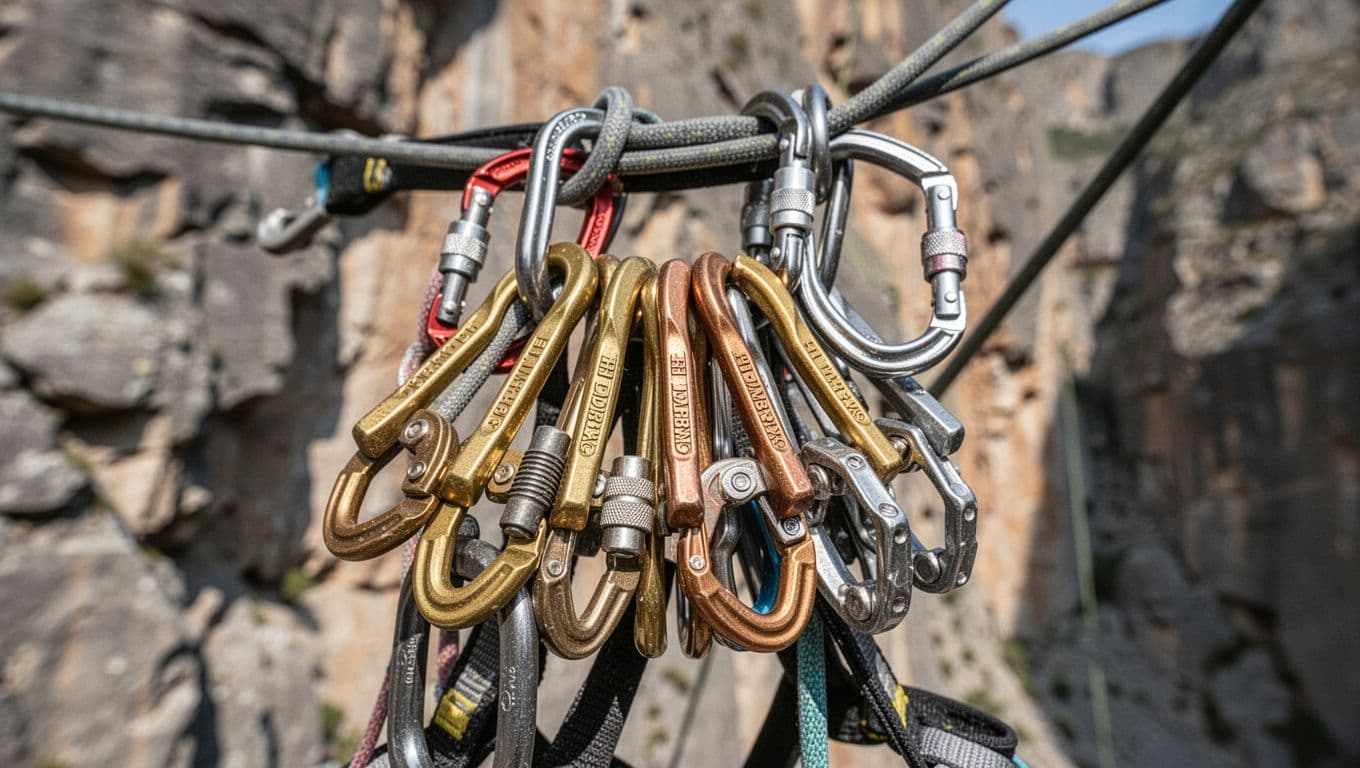
Tailor Your Rack for Trad Free Climbs
Focus on alloy sizes 7-10 for most trad routes. They handle 12-25mm flares in granite or quartzite. Pair one set with your regular nuts. For example, clip them between Wild Country Rocks. This setup catches runouts. In addition, add brass 3-5 for shallow pods. A green-red core (sizes 5 and 2) works great as backups. Pros climb full pitches with just offsets. Rack doubles in key sizes because flares pop up often.
Gear Up for Aid and Big Walls
Aid climbers need brass micros first. Take 1-2 sets of 0-5 for peg scars and tiny fissures. They bite sandstone perfectly. Then stack 1-2 alloy sets for bigger features. Complement with full-size nuts; offsets infill the odds. Total weight stays low at under 400g. Because DMM keeps them stocked everywhere, grab extras. Testers call them top picks into 2026. Your rack feels bomber now.
Mix orientations on the loop. Keep alloys separate from brass for quick grabs. Test pulls at home. Soon, you lead bolder lines.
Conclusion
HB offset nuts turn flared cracks and pin scars into reliable protection. Their double-taper design grabs uneven rock where standard nuts slip. From Hugh Banner’s brass originals to DMM’s tough alloys, they pack proven history and simple placements. Climbers trust them on granite runouts, sandstone pods, and quartzite seams.
Recent reviews back this up. Trad pros call them essential backups for marginal spots. Brass micros shine in aid work, while alloys handle free climbs up to 30mm. You get bomber holds without extra weight.
Add a set to your rack today. Start with brass 0-5 and alloy 7-10. Test them on your next flared route. You’ll place faster and lead bolder.
Picture safer adventures ahead. HB offset nuts fill the gaps, so you focus on the climb.
Back to Climbing Nut Reviews
Recommended Products for Trad Climbing
These products match the equipment and gear topics covered in this article.
Affiliate disclosure: As an Amazon Associate, TradClimbers may earn from qualifying purchases at no additional cost to you.
Keep exploring helpful trad climbing, gear, safety, and technique resources.
- A Climber’s Guide to Rock Climbing in Thailand
- A Trad Climber’s Guide to the Isle of Skye Ridge
- Hueco Tanks Rock Climbing: hueco tanks rock climbing Essentials
- A Climber’s Guide to The Nose of El Capitan
- The Top 8 Unforgettable Climbing Routes El Capitan Has to Offer in 2026
- Yoga for Climbers: Boost Strength, Flexibility, and Recovery | yoga for climbers