
Trad Climbing Heel Hook Technique: Step-by-Step Guide
Picture this: You’re midway up a granite overhang on a committing trad route. Your arms burn from constant pulling. Pump sets in as the crack narrows above. Then you spot a small edge. You swing your heel up, hook it firm, and rest. Suddenly, blood flows back to your forearms. You clip gear without strain.
The trad climbing heel hook technique changes everything. You hook your heel on a hold. Your leg pulls you close to the rock. Hamstrings and glutes take the load off your arms.
This move fights arm pump on long runouts. It shines on multi-pitch routes where fatigue builds fast. You save energy for the top. Plus, hands stay free for safe gear placement.
Heel hooks prove vital in steep trad cracks. They help on roofs where bodies swing out. Picture mantling a bulge in Yosemite granite. Your heel locks you in tight.
In this guide, you’ll get a step-by-step breakdown. Learn setup, execution, and common fixes. Master variations for cracks and overhangs. Grab tips to build hamstring strength. Soon, you’ll tackle those burly lines with confidence.
What Makes the Heel Hook Essential for Trad Climbers
You hook your heel on a hold. Your hamstrings and glutes pull your body in tight. Think of your leg as a third hand. It takes weight off tired arms. Your core stays engaged for balance. This trad climbing heel hook technique lets you rest mid-route.
In trad, hands often jam cracks or place cams. They slip in flared cracks where rock widens out. A heel hook locks you stable. You free both hands to slot gear without barn-dooring. Barn-dooring happens when your body swings away from protection. Heel hooks keep you on line.
Sport climbers clip bolts close. They rarely fight rope drag. In trad, long runouts mean careful rope management. A heel hook near a stance lets you extend draws. You avoid sharp pulls that yank cams.
Picture a Yosemite overhang like those on Manure Pile Buttress. Your heel catches a small edge. You shake out forearms while clipping. Or squeeze up a New England granite crack. Hands fist in, but a heel on a side pull holds you steady.
Hamstrings flex to lift. Glutes drive power. Adductors hug the rock. Build these with squats and deadlifts.
Heel hooks shine where steep terrain meets real risk. They save energy on multi-pitch pushes.
Spotting Heel Hook Opportunities on Trad Gear
Scan trad walls for heel hook gold. Look for bumps on slabs. A slight ripple or horn works. Twist your heel over it for purchase.
In roofs, seek edges and flakes. Small quartz crystals or lichen patches hold rubber. Check this guide on roof climbing for tips on spotting them amid the pump.
Flares in cracks offer side pulls. Place your heel high where the crack bells out. Hands jam below; heel pulls you in.
Always eye rope drag. Spot hooks near stances. Rack gear to one side. Clip quickdraws long on wandering lines. This keeps tension low. You move fluid without yanking pro loose.
Practice on moderate routes. Soon, you’ll see hooks everywhere. They turn cruxes into no-fall zones. (148 words)
Step-by-Step Guide to the Perfect Trad Heel Hook
You’ve spotted the heel hook rest. Now nail the execution. Picture yourself flowing up a steep dihedral in the Tetons. Your heel catches a bomber horn. You rest deep, clip a cam, then stem higher without a barn door swing. The trad climbing heel hook technique demands precision. Follow these steps on moderate routes first. Build confidence before committing leads.
- Gain a stable stance. Plant feet firm on edges or smears. Hands grip jams or side pulls. Keep weight balanced. Breathe steady on runouts.
- Spot the hold. Pick a solid edge, flake, or bump. Avoid crumbly lichen. Test with a toe first if possible.
- Place your heel precise. Swing leg up smooth. Drop heel over the feature. Point toes down. Flex your calf to cup the hold.
- Pull in with hamstrings. Contract glutes and hams hard. Draw hips close to rock. Feel the lock engage.
- Tighten core; match hands. Brace abs like a plank. Shake one arm free. Match the other hand to the heel if needed.
- Transition up. See below for details. Clip draws early. Rack stays organized.
Practice these on 5.9 cracks. Add weight from trad packs later. Slips drop fast.
Build Core Power for Secure Heel Locks
Core strength keeps your heel glued. It fights slips from heavy racks or packs. Weak abs let your body sag. Hooks blow out mid-rest.
Engage core before the swing. Pull belly button to spine. Hold that brace through the lock. Picture a plank mid-air. Your glutes fire too. This hugs hips in tight.
Build power off the wall. Try these moves two times a week:
- Hanging leg raises. Hang from a bar. Lift knees to chest slow. Three sets of 10. Targets lower abs for heel stability.
- Dead bugs. Lie on back. Extend arms and legs. Lower opposite arm and leg. Alternate. Builds anti-rotation strength.
- Front levers progressions. Tuck knees first. Advance to full hold. Great for full-body tension.
Check these three exercises for heel hooking to prep hams and avoid tears. Strong core means secure locks on long multi-pitch days. No more slips when racking nuts. (152 words)
Transition Smoothly After the Hook
Lock the heel. Now move without dropping it. Key for multi-pitch efficiency. Lost hooks waste energy on runouts.
Shift weight slow. Keep heel pulled in. Reach high with one hand. Smear the free foot up. Stem if in a corner. Breathe deep. Clip draws before full transition.
Match hands to the hook if crux looms. Swap feet last. Twist hips open. Push off lower foot. Flow to next rest.
Common fix: Dropping hips? Brace core harder. Barn door starting? Flex the hooked calf more.
Watch this heel hook guide for visual cues on smooth shifts. Practice transitions on toprope first. Soon, you’ll cruise overhangs. Hands place gear free. Energy saves for the belay. (148 words)
Top Benefits of Mastering Heel Hooks in Trad Climbing
Master the trad climbing heel hook technique, and you unlock a toolkit that turns exhausting leads into manageable sends. Your legs step up as saviors. They free your arms for critical tasks. You push farther on runouts. Picture flowing up a committing crack. Your heel locks in. Fatigue fades. These perks stack up fast in the alpine or desert towers.
Save Arm Strength for Jams and Pro Placement
Arms tire quick in trad. Constant jamming wears you down. Heel hooks shift the load. Hamstrings pull you close. Glutes hold steady. Now your forearms recover while hands slot cams or nuts.
You jam a fist higher without pump. Place gear solid on sketchy flares. No barn door swings rip pro loose. I once led a 5.11 crack in the Black Canyon. Arms screamed midway. Heel on a quartz bump saved me. I racked a full set of cams. Finished strong.
This technique preserves grip for the summit. Check Neil Gresham’s tips on heel hooking for pro-level efficiency.
Rest Secure on Steep Terrain
Steep walls demand constant tension. Without rests, you peel off. A heel hook creates instant stability. Hook an edge. Flex your leg. Body hugs the rock.
You shake out fully. Blood returns to fingers. No sketchy hangs from one arm. On multi-pitch roofs, this means belay breaks without desperation. Pump resets. You stem the next pitch fresh.
Short climbers gain reach too. Swing your heel high. Stretch to distant holds. Legs bridge gaps arms can’t.
Tackle Overhangs and Conserve Energy All Day
Overhangs fight gravity in trad. Gear pulls awkward. Heel hooks counter the swing. They lock you under the lip. Move deliberate. Clip without strain.
Energy lasts longer. Full days on big walls stay sustainable. No early bailouts from forearm death. One runout roof in Joshua Tree nearly ended my redpoint. Halfway out, arms failed. Heel caught a bomber flake. I rested deep, placed a hex, and topped out. That send stuck.
Better positions cut injury risk. Hips stay square. Knees track safe. Hamstrings load even, not twisted. You climb pain-free season after season. Strong legs mean bold lines wait for you. (398 words)
Common Heel Hook Mistakes and Fixes for Trad Climbers
Even seasoned trad climbers botch the trad climbing heel hook technique. Slips happen on runouts. Gear fights for space. One wrong move, and you barn-door into thin air. Have you slipped off yet? Picture your heel skidding mid-crack, cams wobbling below. These errors steal sends. Fix them fast to stay solid.
Sloppy placement causes most slips. You rush the swing. Heel glances off. Fix it: Study the hold first. Toe tap for texture. Twist precise. Feel rubber bite before committing.
Weak core lets hips sag. Tension fails. Heel pops. Build it with planks. Hold 60 seconds, three sets. Engage abs like you stem a dihedral.
Toes point up and lose grip. Calf relaxes. Gravity wins. Point toes down. Flex hard. Cup the edge like a mantleshelf.
Hooks block gear clips in trad. Heel crowds the crack. Cams won’t seat. Shift it high or aside. Match hands quick. Rack stays clear.
Skip warm-ups, and hamstrings snap on cold leads. Dynamic stretches prime you. More on those below.
Recovery mid-route saves the pitch. Heel blows? Drop to feet fast. Smear low. Stem walls if close. Shake arms. Reset breath. Spot the next hook. No hangouts on runouts.
Nail these fixes. Your legs lock bomber. Energy flows to the top. Check this video on heel hook tips for pro breakdowns.
Warm-Up Drills to Prevent Hamstring Strains
Hamstrings take the brunt in heel hooks. Cold pulls tear on trad leads. Warm up simple. Spend five minutes ground level. Blood flows. Muscles fire ready.
Start with leg swings. Face a wall. Swing one leg front to back, 20 reps each. Loosen hips. Swing side to side next. Mimics the heel swing.
Add glute bridges. Lie back. Feet flat. Lift hips high. Squeeze glutes 15 times. Strengthens the chain. Hold top two seconds.
Finish with Nordic curls. Kneel. Anchor feet. Lower torso slow. Use hands to catch. Five reps per leg. Builds eccentric control.
Do these before rope up. Dynamic moves beat static holds. Your hooks stick first try. No strains on multi-pitch pushes. See exercises to prevent heel hook injuries for progressions. (152 words)
Train and Level Up Your Heel Hook Strength
Weak hamstrings betray your trad climbing heel hook technique on steep cracks. You swing up, but the hook slips. Arms pump out fast. Build leg power now. Strong glutes and hams lock you in. You rest deep on runouts. Energy lasts for multi-pitch summits. Train smart at home, gym, or crag. Start easy. Add load over weeks. Your heels stick bomber.
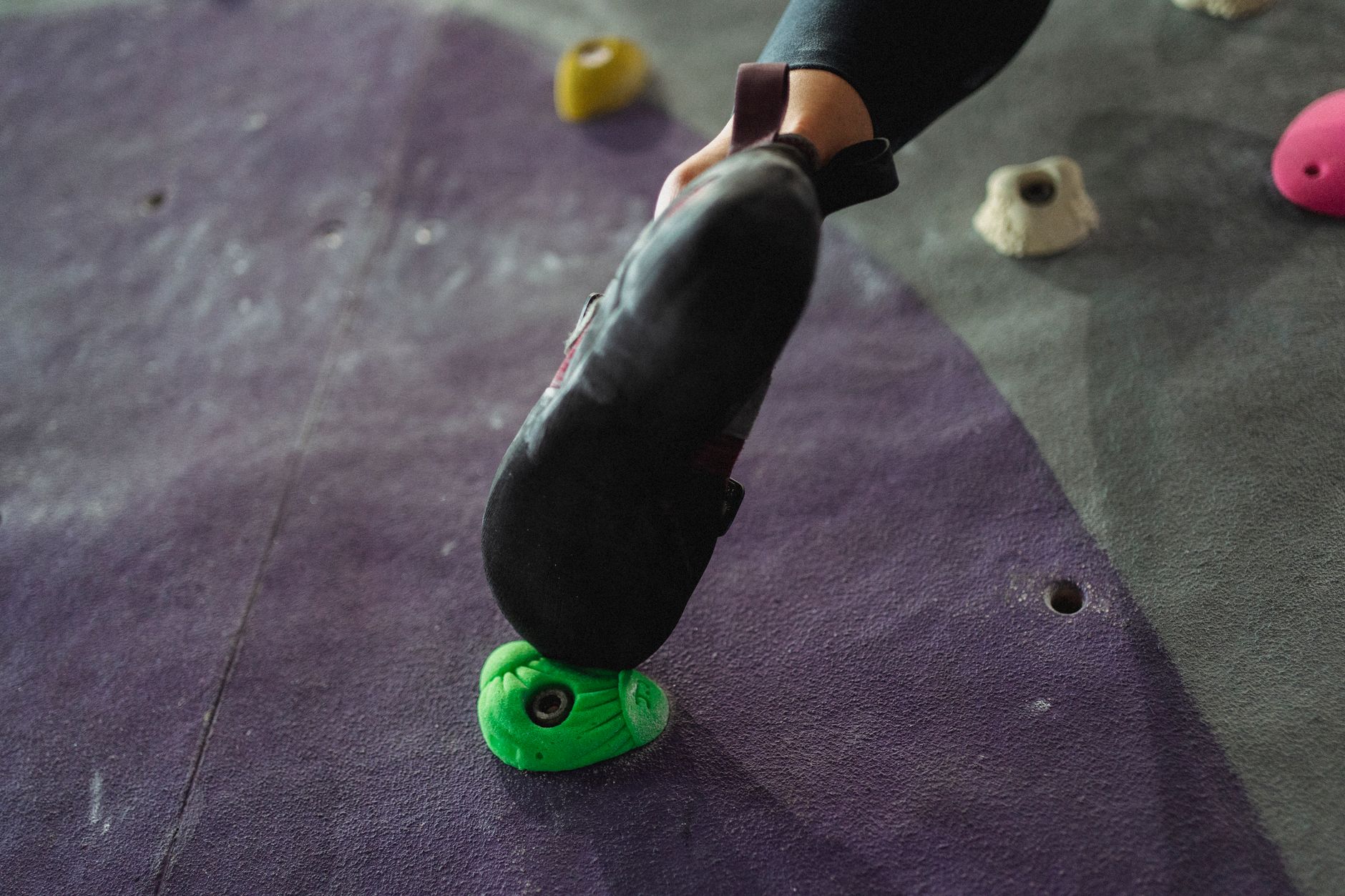
Photo by Allan Mas
Home and Gym Drills for Hamstring and Glute Power
Hit these moves twice weekly. They mimic the heel pull. Watch progress in weeks. Your legs fire on granite roofs.
Focus on controlled reps. Rest 90 seconds between sets. Do three rounds each.
- Hamstring curls. Lie face down. Slide heels toward glutes with a towel or slider. Squeeze at top. 12 reps. Builds the exact pull for hooks.
- Glute bridges. Feet flat on floor. Lift hips high. Hold two seconds. Single-leg version amps intensity. Strengthens the hip chain.
- Hangboard heel hooks. Hang from jugs. Hook heel on a hold. Pull hips in. Hold 10 seconds. Five reps per side. Trains loaded stability.
- Campus board frog positions. Sit low on board. Heels on lowest rung. Pull knees up. Hold tuck. Progress to pulses. Boosts explosive leg drive.
These drills prevent strains too. See heel hook exercises from Rock and Ice for video demos.
Crag Practice to Nail Trad Heel Hooks
Take training outside. Top-rope overhangs first. Master the swing without fall risk. Then lead moderate 5.10 cracks.
Progress step by step. Spot hooks on every route. Repeat crux moves five times.
Start on easy terrain. Swing heels smooth. Lock and shake arms. Move to crux sections. Add a pack for trad weight. Practice transitions under pump.
For roofs, try double heel hooks. Hook both heels on edges. Stem hands free. Pull hips under the bulge. Great for Yosemite lips. Builds endurance fast.
Boost Flexibility for Deeper Hooks
Tight hips kill heel reach. Stretch daily. Hold 30 seconds per side. Breathe deep.
Try pigeon pose. Knee forward, shin across. Fold over. Loosens glutes. Add lizard lunge. Elbows down. Opens hips wide.
Flexible legs swing higher. Hooks grab distant flakes. No more reaches that barn door you off. Combine with strength work. Your trad climbing heel hook technique levels up quick. (412 words)
Conclusion
You’ve got the blueprint now. Spot those edges and bumps on slabs or flares. Swing your heel precise. Flex hamstrings and glutes to pull hips tight. Brace your core. Shake arms free for gear. Transition smooth to the next rest. These steps in the trad climbing heel hook technique save your arms on jams and pro. They lock you secure on steep roofs. Energy lasts through multi-pitch days.
Picture yourself on that granite overhang from the start. No more pump midway. Heel hooks turn fatigue into flow. You top out strong. Arms ready for the rappel.
Head out on your next climb. Practice on a local crag. Toprope cruxes first. Then lead with a pack. Feel the difference on runouts.
Back to Trad Climbing Skills and Techniques
Recommended Products for Trad Climbing
These products match the equipment and gear topics covered in this article.
Affiliate disclosure: As an Amazon Associate, TradClimbers may earn from qualifying purchases at no additional cost to you.