

Thinking about trying bouldering? It’s a super fun way to get a workout and challenge yourself. But like anything new, it can feel a bit overwhelming at first. We’ve put together some straightforward Bouldering Tips for Beginners to help you get started on the right foot. These ideas should make your first few times on the wall a lot smoother and more enjoyable. Let’s get you climbing!
Bouldering Tips Post Key Takeaways
- Always warm up properly before you start climbing to avoid injuries and get the most out of your session.
- Learn to relax your body while climbing, using your legs more and not just pulling with your arms. This helps with breathing and control.
- Get climbing shoes that fit well. They make a big difference in how you feel and perform on the wall.
- Don’t be afraid to fall. It’s a normal part of learning and getting better at bouldering.
- Take breaks between climbs to let your body recover. Resting is just as important as climbing itself.
Mastering the Fundamentals of Bouldering
Getting started in bouldering can feel a bit overwhelming, but focusing on a few core ideas will make a big difference. It’s not just about brute strength; it’s about how you move and think on the wall.
Prioritize A Proper Warm-Up Routine
Before you even think about touching a boulder problem, you need to get your body ready. Bouldering uses your whole body, and jumping straight into hard moves is a fast track to getting hurt. A good warm-up gets your blood flowing, loosens up your joints, and wakes up your muscles. This means fewer tweaks and strains, and more energy for actual climbing.
Here’s a quick way to get warmed up:
- Light Cardio: 5-10 minutes of jogging in place, jumping jacks, or arm circles to get your heart rate up.
- Dynamic Stretching: Focus on movements like leg swings, torso twists, and arm circles to prepare your muscles for action.
- Easy Climbing: Spend 10-15 minutes on very easy routes, focusing on smooth movement and getting a feel for the holds.
Think of your warm-up not as a chore, but as an investment in a better, safer climbing session. It sets the stage for everything that follows.
Learn To Relax Your Body While Climbing
It’s super common for beginners to tense up and rely too much on their arms. This is called getting “pumped” and it happens fast. The trick is to learn to hang loose. When your arms are straight, you’re using less energy than when they’re bent. This also gives you more time to look around and figure out where your feet need to go. Relaxing your shoulders and letting your arms hang helps you breathe better, too, which means you can climb longer.
Understand The Importance Of Footwork
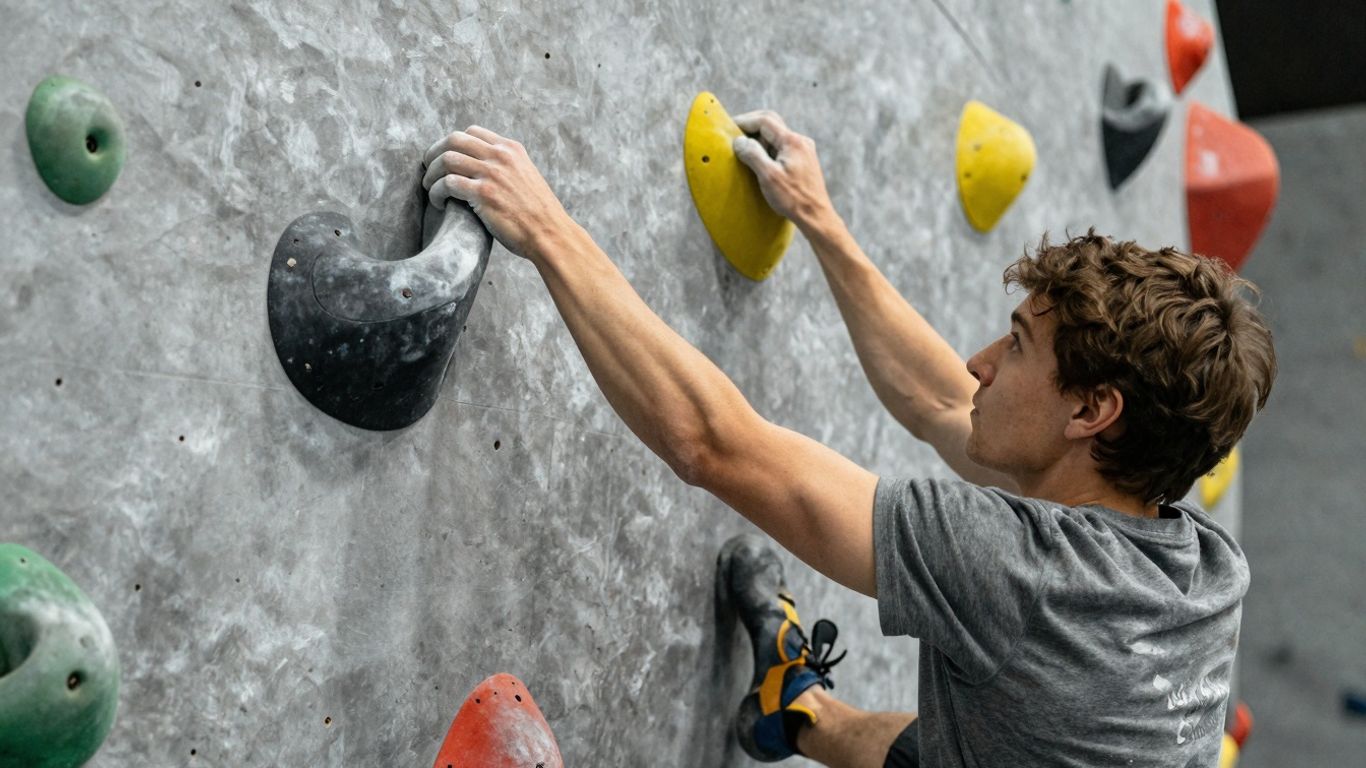
Your feet are your foundation. Seriously, they’re more important than you might think. Your legs have the biggest muscles in your body, and you want to use them! Good footwork means placing your feet precisely on the holds, using the edges of your shoes. Paying attention to where your feet are going is key to climbing efficiently.
- Watch Your Feet: Make a habit of looking at your foot as it moves from one hold to the next. Keep your eyes on it until it’s securely placed.
- Use Your Toes: When you step on a hold, try to push through the very tips of your toes, not the middle of your foot. This gives you more control and precision.
- Engage Your Legs: Think about pushing up with your legs rather than just pulling with your arms. This uses your body weight more effectively.
Essential Gear For Bouldering Beginners
Alright, let’s talk about what you actually need to get started in bouldering. It’s not a ton of fancy stuff, which is part of what makes it so approachable. But there are a couple of key items that will make a huge difference in your comfort and performance.
Choosing The Right Climbing Shoes
This is probably the most important piece of gear you’ll buy. Forget those generic athletic shoes; you need something designed for climbing. Your climbing shoes are your primary connection to the wall. They need to fit snugly, almost like a second skin, but not so tight that they’re agony. There should be no dead space, especially in the heel or around the toes, because your feet need to feel secure and precise on tiny holds. When you’re starting out, it’s easy to get overwhelmed by all the different models.
Don’t be afraid to ask the staff at your local gym for recommendations. They can help you find a shoe that matches your foot shape and the type of climbing you’ll be doing. Getting your first pair of rock climbing shoes for beginners is a big step, and the right fit will boost your confidence immensely.
The Role Of Climbing Chalk
So, you’ve got your shoes. Now, what about chalk? Chalk isn’t just for looking cool; it’s functional. It absorbs sweat from your hands, which is super important because sweaty hands mean slippery hands. When your grip fails, you fall. Simple as that. For bouldering, since the climbs are short, you usually don’t need to wear a chalk bag around your waist.
You can just chalk up before you start a problem. This also helps keep the mats cleaner, which the gym staff will appreciate. A small chalk bag that you can keep near the wall or a simple chalk ball is often all you need. It’s a small thing, but having dry hands makes a big difference.
Bouldering is pretty straightforward when it comes to gear. You really only need a good pair of shoes and some chalk. Everything else, like fancy crash pads or harnesses, is for a different type of climbing. Focus on getting these two items right, and you’ll be well on your way to enjoying the sport.
Developing Your Bouldering Technique
Alright, so you’ve got the basics down, you’re not totally terrified of heights, and your shoes feel… well, like shoes. Now it’s time to actually get better at climbing. This is where the fun really starts, figuring out how to move on the wall like you see those pros doing. It’s not just about brute strength, though that helps. It’s about being smart with your body and using the holds in a way that makes sense.
Push Through Your Toes For Better Grip
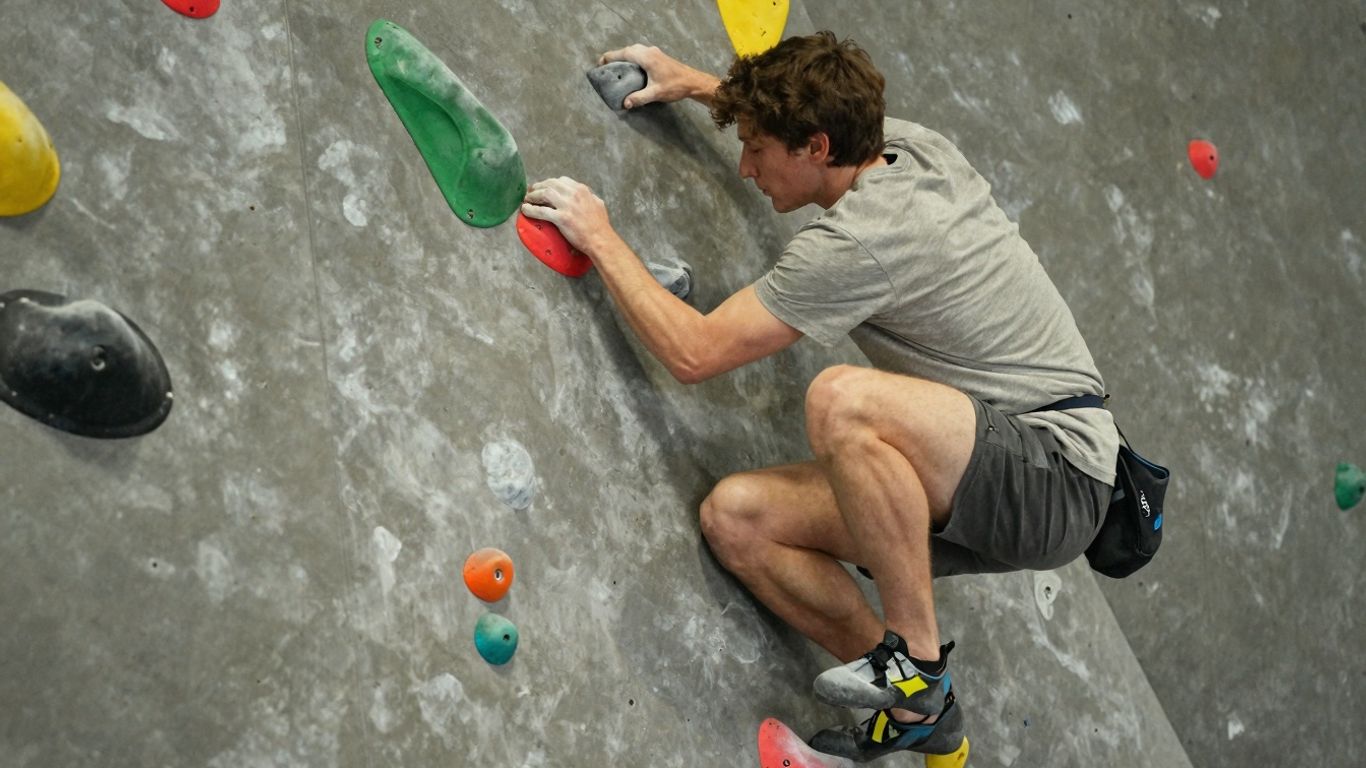
This one sounds a little weird at first, but it makes a huge difference. When you’re placing your foot on a hold, don’t just slap it there. Really focus on using the tip of your shoe, your toes, to push off. Think about it: your legs have way more power than your arms, right? Using your toes to push allows you to engage those big leg muscles more effectively. It’s like using a lever. You want to be pushing through the ball of your foot, right where your toes meet your foot, not the middle of your shoe. This gives you a much more solid connection to the wall.
Here’s a quick way to practice:
- Find a few easy holds on the wall.
- When you place your foot, try to make as little noise as possible. This means you’re being precise.
- Focus on pressing down through your toes, feeling the edge of the hold.
- Try to keep your weight over that pushing foot as much as possible.
Avoid Over-Gripping Holds
This is a big one, and honestly, it took me a while to figure out. When you’re new, you tend to grab every single hold like it’s going to disappear. You squeeze with all your might, and your forearms feel like they’re going to explode after just a few moves. This is called getting ‘pumped,’ and it’s your enemy. The less you grip, the longer you can climb.
Instead of death-gripping, try to use just enough pressure to stay on the hold. Let your arms hang a bit straighter when you can. This relaxes your muscles and lets you breathe better. It might feel insecure at first, but trust me, it saves a ton of energy. You’ll be able to climb more problems and stay on the wall longer.
Embrace The Concept Of Downclimbing
So, you’ve reached the top of a boulder problem. Awesome! Now, what? Most people just drop down. But try this instead: climb back down the way you came. This is called downclimbing. It sounds simple, but it teaches you a lot about control and body awareness. You have to be just as deliberate with your foot and hand placements going down as you do going up. It helps you learn to trust your feet and find different ways to move. Plus, it’s a good way to get a little extra workout in without feeling like you’re just doing more climbing.
Downclimbing is like a secret training tool. It forces you to think about your body position and how you’re interacting with the wall, not just how to get to the top. It builds confidence in your ability to control your movements, which is super important when you’re trying harder climbs.
Navigating The Mental Game Of Bouldering
Bouldering isn’t just about brute strength or fancy footwork; it’s a serious mental puzzle. You’re going to spend a lot of time thinking, strategizing, and sometimes, just plain getting frustrated. That’s totally normal, by the way.
Accept That Falling Is Part Of The Process
Look, you’re going to fall. A lot. It’s not a sign of failure; it’s how you learn. Every time you slip or can’t quite make the next move, you’re gathering information. You’re figuring out what doesn’t work, which is just as important as finding out what does. Instead of getting down on yourself, try to see each fall as a data point. What went wrong? Was it your foot placement? Your grip? Your body position? Thinking about this stuff after you fall helps you adjust for the next try. Don’t let the fear of falling keep you from trying hard moves.
Don’t Get Hung Up On The Same Climb
It’s easy to get fixated on one particular boulder problem. You’re so close, or maybe it just looks cool, and you want to send it. But if you’re hitting a wall and getting really frustrated, it’s often best to just walk away for a bit. There are tons of other climbs in the gym, each with different styles and challenges. Trying something else can give your brain a break, let your muscles recover, and sometimes, you’ll come back to that problem later with fresh eyes and figure it out. Plus, you’ll get more practice on different types of moves.
Try Not To Treat Grades As Gospel
Boulder problems are given grades, which are supposed to tell you how hard they are. But honestly, don’t get too caught up in them. What one person finds easy, another might find incredibly difficult, and vice versa. Grades are a guideline, not a rulebook. Focus more on the process of climbing and figuring out the moves rather than just ticking off the hardest grades. Sometimes a climb that’s graded easier might teach you a new technique, or a harder one might just be a bad fit for your body type. Enjoy the climb itself, not just the number attached to it.
Optimizing Your Bouldering Sessions
Alright, so you’ve got the basics down, you’re starting to feel more comfortable on the wall, and you’re ready to make the most of your time at the gym. That’s awesome! But how do you actually get better? It’s not just about climbing harder problems all the time. There’s a bit of strategy involved in making your sessions count. Let’s talk about how to really dial in your bouldering time.
Take Plenty Of Rests Between Climbs
This one might seem obvious, but it’s super important. Bouldering is intense, right? You’re giving it your all on each problem. Your muscles need time to recover so you can actually perform well on the next climb. Think of it like this: your body uses up energy stores with each hard effort. To get those stores back up to full power, you need a break. Science backs this up, giving yourself about three minutes between really tough climbs can make a big difference in how strong you feel and how well you climb.
Here’s a quick look at why rest matters:
| Activity | Energy Depletion | Recovery Time (Approx.) |
|---|---|---|
| Intense Bouldering | High | 3+ minutes |
| Light Bouldering | Medium | 1-2 minutes |
| Resting/Walking | Low | Minimal |
So, don’t feel like you have to rush from one problem to the next. Patience during rest periods is key to better performance.
Watch Others Climb And Learn Beta
Ever get stuck on a problem? We all do. Instead of just staring at it and getting frustrated, take a step back and watch other people try it. You’ll often see different ways to move, different ways to use your feet, or even just a better sequence of holds.
This is called learning ‘beta’, and it’s a huge part of bouldering. You can pick up so many tricks just by observing. Pay attention to how they position their body, where they place their feet, and how they shift their weight. It’s like getting free coaching just by hanging out.
Find Some Partners-In-Climb
Climbing with friends is just more fun, but it’s also really beneficial for your progress. Having people to climb with means you have someone to cheer you on, someone to give you advice, and someone to just hang out with during those rest periods.
You can bounce ideas off each other about how to solve a problem, and you’ll naturally get more chances to watch others climb. Plus, it just makes the whole experience more social and motivating. Don’t be afraid to strike up a conversation with other climbers at the gym; most people are pretty friendly and happy to share tips or try a problem with you.
Sometimes, the best way to figure out a tricky move isn’t to try it yourself over and over, but to see how someone else approaches it. You might be surprised at the different solutions people come up with. It’s a great way to expand your own climbing toolkit without even realizing it.
Keep Climbing!
So there you have it, a few pointers to get you started on the wall. Bouldering can seem a bit much at first, with all the different holds and moves, but remember to take it one step at a time. Don’t get too caught up in the grades or worrying about falling – everyone does it. Just focus on having fun, learning from others, and enjoying the process. Keep practicing, stay safe, and you’ll be surprising yourself with what you can do before you know it. See you at the gym!
Frequently Asked Questions
Why is warming up so important before bouldering?
Warming up is super important because bouldering uses your whole body! Getting your muscles ready helps prevent injuries, both the sudden kind and the ones that sneak up on you over time. Plus, a good warm-up helps you have a much better climbing session overall.
How can I avoid getting too tired when climbing?
Try to relax your body, especially your shoulders. Instead of pulling hard with your arms all the time, let them hang a bit straighter. This gives you more time to look around and place your feet carefully. It also helps you breathe better, so you don’t get tired as quickly.
What’s the deal with climbing shoes and chalk?
Climbing shoes are special shoes that fit snugly and help you grip the wall better. They make a big difference in how well you can climb! Chalk is a powder that you put on your hands to keep them dry and improve your grip. It helps you hold onto the climbing holds better.
Is it okay to fall when bouldering?
Absolutely! Falling is a normal part of bouldering, especially when you’re learning. Don’t get discouraged if you can’t finish a climb. Every time you try, you learn something new. Think of each fall as a chance to get better and stronger.
How long should I rest between climbing attempts?
When you’re really pushing yourself, it’s best to rest for at least 3 minutes between climbs. This gives your body’s energy stores time to refill so your muscles can recover. Taking good breaks helps you climb better and feel stronger for your next try.
Should I focus on the difficulty numbers (grades) of the climbs?
Grades are helpful for knowing how hard a climb might be, but don’t get too stuck on them. Sometimes you might be great at one type of climbing but struggle with another, even if they have the same grade. Use grades as a guide to find climbs that will help you improve, rather than just trying to climb the hardest ones.
Recommended Products for Bouldering
These products can help new climbers assemble a practical, safety-focused setup.
Affiliate disclosure: As an Amazon Associate, TradClimbers may earn from qualifying purchases at no additional cost to you.
Keep exploring helpful trad climbing, gear, safety, and technique resources.
- A Climber’s Guide to Rock Climbing in Thailand
- A Trad Climber’s Guide to the Isle of Skye Ridge
- Hueco Tanks Rock Climbing: hueco tanks rock climbing Essentials
- A Climber’s Guide to The Nose of El Capitan
- The Top 8 Unforgettable Climbing Routes El Capitan Has to Offer in 2026
- Yoga for Climbers: Boost Strength, Flexibility, and Recovery | yoga for climbers