

You’ve squeezed a standard nut into a pin scar or flared crack before. It sits there, wobbling like it’s about to pop out on your next move. That’s frustrating, especially when you’re runout and need solid gear.
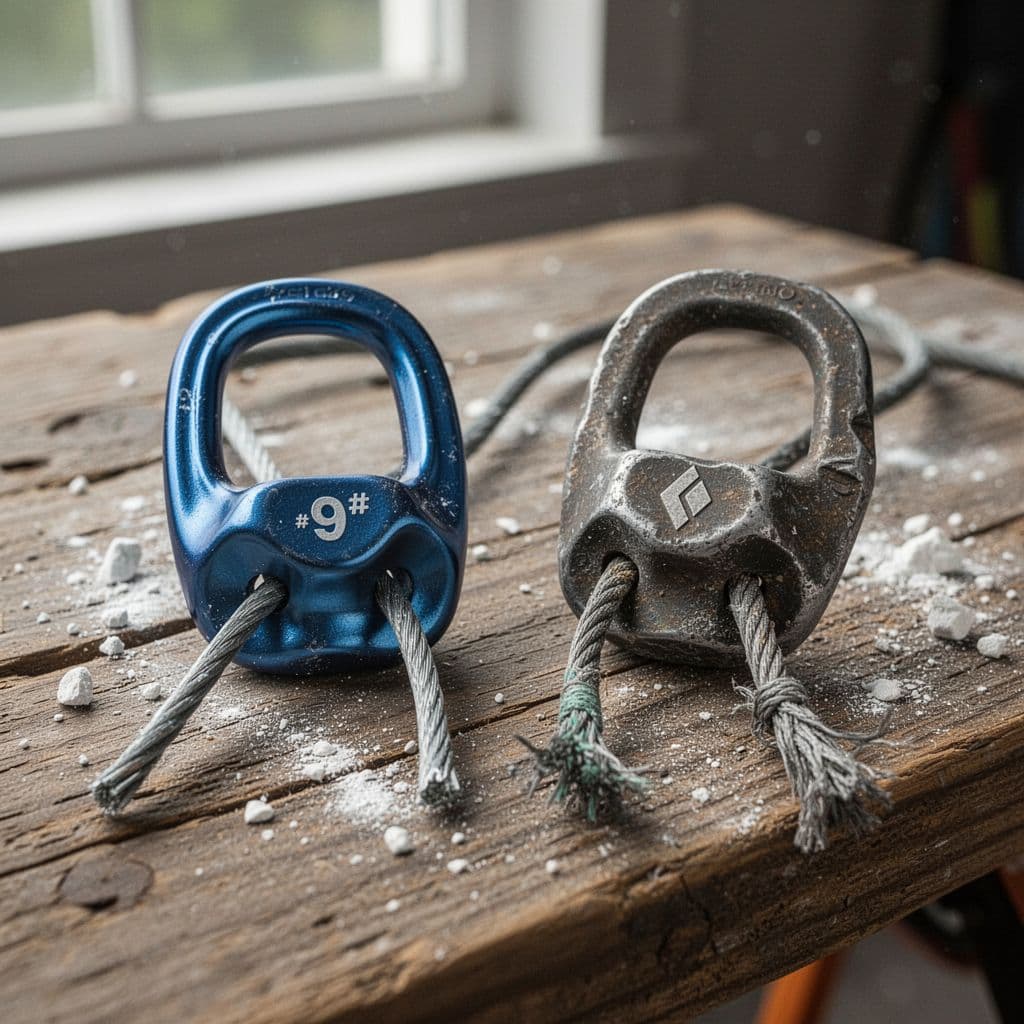
Black Diamond offset stoppers fix that issue. They’re hot-forged aluminum heads on tough steel cables, with one side wider than the other. This offset shape lets them grip irregular spots perfectly, so they hold firm without extra fiddling.
Picture old bolt scars from aid routes, granite cracks that pinch and taper, or flares that swallow regular nuts. These stoppers shine there because you rotate them until the narrow side slots in deep, and the wide side constricts against the rock. Climbers love them for trad leads, mixed pitches, or alpine routes; they rate 10 kN strong across sizes like #7 red to #11 purple.
In this guide, you’ll learn exactly how they work, how to pick the right sizes from #7 to #11 for your rack, plus tips to place and clean them fast. We’ll cover when to grab offsets over standard stoppers or cams, and key factors to weigh before you buy. Stick around, and you’ll place bomber pro sooner.
What makes Black Diamond Offset Stoppers different from regular nuts
Regular nuts work great in straight, parallel cracks. But they often flop in pin scars, flares, or pinches. Black Diamond offset stoppers stand out because their lopsided wedge shape grabs those odd spots. One side stays narrow to slip deep. The other side spreads wide to bite the rock. You get four tapered faces you can rotate for the best fit. This design pulls the nut tight on both sides. As a result, placements feel solid and safe.
Each stopper uses a hot-forged aluminum head on a galvanized steel cable. They hold 10 kN across all sizes. That strength matters because it matches falls on steep routes. Regular nuts might shift in weird cracks. Offsets don’t. They bridge the gaps instead.
Offset shape, four usable faces, and why they bite in weird cracks
Rotate the nut a bit. Contact points shift each time. First face might skim the rock. Turn it 90 degrees. Now it digs in better. Those four usable faces let you find the sweet spot fast.
More contact on both sides means safer gear. Regular nuts touch evenly or not at all in flares. Offsets force grip because the narrow side wedges deep. The wide side then clamps the flare or pinch. In non-parallel cracks, they shine too. Picture a crack that twists or tapers. You slot the skinny end first. Pull down hard. It sets like it belongs there.
Flares eat standard nuts. Pinches leave them wobbly. Offsets handle both because the offset bridges the difference. Test the tug. If it sticks without rocking, you’re golden.
Sizes you actually get, and what #7 through #11 covers
Black Diamond offset stoppers come in five key sizes: #7 gold, #8 red, #9 blue, #10 green, and #11 purple. This set fills the mid-size gap. It covers cracks from about 0.5 inches to over 1 inch. You won’t rack a full stopper set with just these. They pair with standards for complete coverage.
Weights stay light overall. Here’s a quick breakdown:
| Size | Grams | Ounces |
|---|---|---|
| #7 | 30.5 | 1.0 |
| #8 | 32.6 | 1.1 |
| #9 | 40.2 | 1.4 |
| #10 | 44.6 | 1.6 |
| #11 | 55.5 | 2.0 |
The full #7 to #11 set weighs 250 grams (8.8 oz). That keeps your harness light for long routes. Heavy racks tire you out. These add versatility without the drag. Grab them for granite trad or alpine pushes.
Color coding and quick racking habits that speed up placements
Colors match Black Diamond’s standard stoppers. So #7 gold jumps out small. #11 purple signals big. This setup feels familiar if you own other BD gear.
Rack smart to grab fast. Clip all five on one large oval carabiner. Hang them in size order, smallest to largest. Cables stay untangled if you twist the biners right. Or split them: smaller ones (#7-#9) on one loop, larger (#10-#11) on another. Either way, colors guide your hand mid-pitch.
In short, this racking saves seconds. You spot gold for tight scars. Reach for purple in wider flares. Practice at home. It becomes second nature on lead.
Where these offsets shine on real routes (and where they do not)
Black Diamond offset stoppers save your lead in tricky spots. They grab irregular cracks on classic routes like Yosemite’s granite aid scars or the Bugs’ wonky seams. However, they don’t fit every placement. Pick the right tool for the rock. That keeps your rack efficient and your gear bomber. Let’s break it down.
Pin scars, flares, and tapers: the classic offset problems they solve
Pin scars come from old pitons or bolts hammered into rock long ago. They leave narrow grooves or holes that twist oddly. Regular nuts skip right through or wobble out. Flares widen like a V from a tight spot outward. Tapers do the opposite. They narrow down sharply.
Offsets handle these because the narrow side slips deep into the pinch. The wide side then bites the flare or taper walls. You see this on routes with history, like shallow constrictions in Squamish granite or flared pods on Tahquitz classics.
Use this quick mental checklist for solid placements:
- Spot the constriction first.
- Rotate for opposing contact on both sides.
- Seat it with a firm tug.
- Test the pull direction. It should hold down and out.
As a result, these nuts feel locked in old fixed-gear scars or irregular seams. Climbers report they cut mid-size nut needs in half on seamy rock.
When a normal stopper is simpler and just as solid
Match your gear to the crack every time. Standard stoppers win in clean, parallel granite constrictions. There, they seat even on all faces. No rotation needed. Plus, they clean faster because they release straight out.
Think smooth Index cracks or Ship’s Prow dihedrals. A #8 or #9 regular nut slides in perfect. It holds 10 kN just like offsets but without fuss. Offsets add weight and hassle here. So, save them for weird spots. Stick to standards in parallels. Your second will thank you.
When a cam is the smarter option
Cams beat nuts in certain cases. First, slick rock like wet Yosemite slabs offers no friction for passive gear. Cams expand to grip anyway. Second, no constriction means nothing pinches. Active lobes hold firm.
Watch for outward pull too. Nuts pop under horizontal force. Cams resist it better. Finally, speed matters on runouts. If safe, place a cam fast in flaring pods. However, always test. Prioritize bomber holds over speed.
In short, offsets fill niches. Standards cover parallels. Cams handle the rest. Rack a mix for any route.
How to place Black Diamond Offset Stoppers so they feel “bomber”
You want every Black Diamond offset stopper to lock in like it grew there. Good placements start with the right size and a quick routine. They often seat deeper than regular nuts in pin scars or flares. That depth boosts your confidence because the narrow side digs into the constriction while the wide side clamps the walls. Always evaluate before you clip the rope. Look for no wobble, solid resistance on a tug, and contact on both sides. Now let’s break it down step by step.
A simple placement routine: pick, rotate, seat, test, extend
Beginners nail this with five easy steps. First, pick the size that matches the narrowest part of the scar or flare. Gold #7 works for tight spots; purple #11 fits wider ones. Colors help you grab fast since they match standard stoppers.
Next, rotate the nut. Take that extra second to turn it. Slot the narrow side into the thin constriction. Twist 90 degrees until the wide side presses against the flare. You feel it catch when contact shifts.
Then seat it. Give a sharp downward tug on the cable. Rounded edges let it wiggle in without snagging. It sinks deeper now.
Test right away. Yank down hard. No shift means it’s bomber.
Finally, extend with a long alpine draw. Clip the rope through it. This cuts drag and keeps the load straight.
Practice this on toprope. Soon offsets feel intuitive.
Reading the direction of pull (and why offsets can fail if loaded wrong)
Pull direction makes or breaks an offset. Straight down works best in vertical cracks. The nut constricts tighter under that force. But traverses, roofs, or zig-zag cracks pull outward or sideways. Offsets can lift or walk if you ignore this.
In a traverse, expect pull down and out. Align the narrow side toward the expected load. That keeps the wide side snug. Roofs demand the same. Place so the cable runs in line with your body weight.
Zig-zag cracks fool people. The rope yanks at angles. So position the offset to match the crack’s turn.
Use longer slings here. An alpine draw adds 12 inches or more. It lets the nut stay put while the rope runs straight. Always avoid lift-out spots. If the wide side faces up, it pops on outward force. Reposition lower or skip it.
Test with a bounce. Holds firm? Clip it. This simple check saves falls.
Common mistakes: shallow seats, “tippy” placements, and over-camming with a nut tool
New climbers mess up offsets in predictable ways. Fix them quick to build bomber gear. Here are six to watch:
- Shallow seats: You skip the tug, so it sits high. Always pull down hard after rotating. Depth locks it in.
- Tippy placements: The nut rocks side to side. Rotate again for even contact on both sides. No wobble means good.
- Wrong size: Too small skips through; too big won’t fit. Match the narrowest pinch first.
- Ignoring pull direction: Outward loads pop it. Align with your traverse or roof move.
- Over-camming with a nut tool: Don’t lever it in like a cam. Just tug the cable. Passive pro doesn’t need force.
- Hammering them: Never hit offsets. They damage easy. Reserve hammers for pins.
Also avoid prying against the cable. It bends or snaps. Use the tool on the head only if needed. Clean cracks first for better grip. These fixes turn shaky spots solid.
Cleaning offsets without a fight
Offsets stick tight because they seat deep. Reverse your placement to yank them out. Pull the cable in the same direction it went in. Twist gently if stuck.
Grab a nut tool for tough ones. Hook it under the nut head, not the cable. Pry outward slow. The cable stays safe this way.
Patience matters on deep seats. Wiggle side to side. It pops free without drama.
Seconds, watch the leader. Note how they placed it. Pull from that angle. You’ll clean faster and keep the rack clean.
Buying and building a rack around offset stoppers in 2026
You rack Black Diamond offset stoppers to fill gaps in your gear. They handle pin scars and flares where standards fail. So build your rack around them wisely. Start with the #7 to #11 set if irregular cracks define your routes. Or test singles first. This approach saves weight and cash while boosting versatility. Pair them with a full standard stopper rack for complete coverage. Now let’s match them to your style.
Who gets the most value from the #7 to #11 set
Certain climbers swear by the #7 to #11 Black Diamond offset stoppers set. It weighs just 250 grams total, so it adds little drag. These pieces shine in mid-sizes you place often. However, they complement your standard stoppers. They don’t replace them.
Gym-to-outdoor trad leaders grab the most benefit. You’ve practiced parallels indoors. Real granite shows pin scars and flares. Offsets solve that wobble fast. You slot the narrow side deep. Suddenly gear feels bomber on your first leads.
Granite junkies in Yosemite or the Bugs love them too. Pin scars from old aid routes eat regular nuts. These offsets bridge the narrow groove to flared edges. As a result, you place fewer cams and climb lighter.
Aid climbers rack them for shallow scars. They mimic piton shapes in knobby rock. The offset bites where pins once sat. You save time on free-aiding pitches.
Rack reducers pick them to cut duplicates. You already own too many #8-#10 standards. Offsets handle the weird spots. So you streamline your mid-range without gaps.
In short, buy if irregular cracks slow you down. They pay off quick.
Set vs singles: an easy way to decide
Decide between the full #7-#11 set or singles with this simple tree. Do you climb pin scars or flares weekly? Grab the set. It covers all mid-sizes for $85 to $95. You’ll use every piece often.
Test them casually? Buy one or two singles at $15 to $20 each. Start with sizes you place most. Check #8 red or #9 blue for common scars in your area. They fit granite tapers perfect.
Gym grads follow the test path first. Lead a few outdoor routes. See offsets save your runouts. Then upgrade to the set.
Granite veterans skip testing. They know flares demand full coverage. Rack the set on one carabiner. Colors match your standards for quick grabs.
Singles suit budget watchers too. Try #7 gold in tight scars. Add more as you commit. Either way, versatility wins. These pieces reduce cam needs and speed leads.
Price, durability, and what to check before you rack them up
Black Diamond offset stoppers hold value well. The #7-#11 set runs $85 at RopesGear or $95 at REI and the Black Diamond site. Singles cost $15 to $20 from Ascent Outdoors or Black Diamond. Sales drop some to $11. Shop REI for member rewards.
Durability impresses climbers. Hot-forged aluminum heads and steel cables take abuse. They rate 10 kN strong. Use them season after season in scars.
Check wear before racking. Look for sharp edges on the head from rock grind. Feel the cable for frays or kinks. Spot smashed heads from bad falls. Retire any with these signs. Safety first. A worn piece fails when you need it.
Inspect after each trip. Rinse chalk off. Store dry. Good ones last years. Bad ones go in the bin.
Replace proactively. Your partners count on solid gear. Fresh offsets build trust on leads.
Conclusion
Black Diamond offset stoppers transform marginal spots into reliable gear. They grip pin scars, flares, and tapers where standard nuts wobble or skip. Because of their offset shape, these nuts seat deep with the narrow side in tight constrictions and the wide side clamping irregular walls. Plus, they stay light at 250 grams for the full #7 to #11 set and hold 10 kN strong across sizes.
Smart placement seals the deal. Always match the direction of pull so they constrict under load. Extend with alpine draws to cut rope drag and prevent walking. Practice cleaning them at home; a quick twist and tug gets them out fast.
Next time you hit a low-stakes pitch with weird cracks, rack a couple Black Diamond offset stoppers. Track which sizes you place most, like #8 red or #9 blue. Then decide on singles or the full set.
Back to Climbing Nut Reviews
Recommended Trad Protection and Rack Essentials
These products can support safer climbing, belaying, rappelling, and emergency readiness.
Affiliate disclosure: As an Amazon Associate, TradClimbers may earn from qualifying purchases at no additional cost to you.
Keep exploring helpful trad climbing, gear, safety, and technique resources.
- A Climber’s Guide to Rock Climbing in Thailand
- A Trad Climber’s Guide to the Isle of Skye Ridge
- Hueco Tanks Rock Climbing: hueco tanks rock climbing Essentials
- A Climber’s Guide to The Nose of El Capitan
- The Top 8 Unforgettable Climbing Routes El Capitan Has to Offer in 2026
- Yoga for Climbers: Boost Strength, Flexibility, and Recovery | yoga for climbers