

Seeking what is the best backpacking power bank or for backpacks with water bottle pocket? Heading out on the trail and worried about your phone dying? We get it. Keeping your gear charged when you’re miles from an outlet is a big deal. Whether you’re using your phone for maps, photos, or just staying in touch, a reliable power bank is a must-have. We’ve put a bunch of them to the test to find the Best Backpacking Power Bank that won’t weigh you down but will keep your devices running.
Key Takeaways
- For ultralight trips, consider two smaller 10,000mAh power banks instead of one large one for better weight distribution and redundancy.
- The Nitecore NB10000 Gen II and Flextail Zero Power Bank 10k are top contenders for their balance of power, weight, and durability.
- Durability features like water resistance (IP ratings) and rugged casing are important for outdoor use.
- Capacity matters: 5,000mAh is good for short trips, while 10,000mAh or more is better for longer adventures or heavy device use.
- Look at the mAh-to-weight ratio to find the most efficient power bank for your pack.
1. Nestout 15,000mAh Outdoor Battery
Alright, let’s talk about the Nestout 15,000mAh Outdoor Battery. This thing has been my go-to for a while now, and honestly, it’s earned its spot. It’s not the biggest battery out there capacity-wise, but what it lacks in sheer mAh, it makes up for in toughness and features. This power bank is built for the rough stuff. We’re talking waterproof, dustproof, and shockproof. It’s got an IP67 rating, meaning you could accidentally drop it in a lake for half an hour and it would probably be fine. I’ve seen some other rugged ones, but the Nestout really stands out.
It packs 15,000mAh, which is a solid amount for keeping your phone, GPS, or whatever else charged up on a multi-day trip. Plus, it’s got three ports, so you can juice up multiple devices at once. What’s cool is that all three ports can be used for input or output. This means you can charge it up faster if you have a beefier power source, or use it to charge other things. It also puts out 32W of power, which is pretty zippy for getting your gear back online quickly. And get this, it can be fully recharged in about 3.5 hours, which is not bad at all for its size. You can even use it with a solar panel when you’re really off the grid.
Here’s a quick look at what it offers:
- Capacity: 15,000mAh
- Output Power: 32W
- Durability: IP67 (waterproof, dustproof, shockproof)
- Ports: 3 (input/output)
- Recharge Time: ~3.5 hours
One of the neatest tricks this battery has up its sleeve is the integrated LED light. It’s not just a little flashlight; it can actually light up your campsite or tent for a good while, up to 26 hours if you’re just using the light. Of course, running the light will eat into how many times you can charge your phone, but it’s a nice bonus feature. It also comes with a small tripod, which is handy for setting it up as a light source or just keeping it off the wet ground. It looks pretty cool too, which is a nice bonus when you’re out in the wilderness. If you need a reliable power source that can handle some abuse, the Nestout 15,000mAh Outdoor Battery is definitely worth checking out for your next adventure. You can find more details about its outdoor battery capabilities.
This power bank is a great example of how you don’t need the absolute biggest capacity to have the most useful tool. Its combination of ruggedness, charging speed, and extra features like the light make it a standout choice for anyone who spends time outside.
2. Nitecore NB10000 Gen II
The Nitecore NB10000 Gen II is a pretty neat little power bank. It’s one of the smallest 10,000 mAh options out there, which is a big win when you’re trying to pack light. Seriously, this thing is tiny and weighs just over five ounces. It easily slides into a pocket, making it super convenient to carry around.
It consistently performed well across the board without any major drawbacks. During testing, it managed to charge an iPhone 13 fully about two and a half times, which is exactly what Nitecore claims. While it might not be the fanciest or most rugged power bank, it gets the job done reliably for charging smaller electronics.
One thing I really liked is its carbon fiber exterior. It feels tough, and even after a short drop test, it came out without a scratch. This makes it a solid choice for outdoor adventures where things can get a bit rough.
Here’s a quick look at what it offers:
- Capacity: 10,000 mAh
- Weight: Around 5.1 oz (145g)
- Ports: USB-C (with increased output in Gen II), USB-A
- Special Features: Low current mode for small devices, pass-through charging
The second generation improved the USB-C output for faster charging and added a ‘low current mode’. This mode is handy for charging smaller gadgets like smartwatches or wireless earbuds that sometimes have trouble with standard chargers. Plus, you can charge two devices at once, which is always a bonus.
It also has pass-through charging, meaning you can plug it into the wall and charge your devices from the power bank simultaneously. It’s not the most precise battery indicator light, but honestly, that’s a minor quibble for such a compact and capable unit.
3. BioLite Charge 80 PD
Okay, so the BioLite Charge 80 PD. This one kind of surprised me. It’s not the smallest or the lightest power bank out there, tipping the scales at over a pound. But honestly, for longer trips where you really need to keep everything juiced up, it became a go-to for one of our testers. It’s got a solid 16.4 ounces of weight, but it can charge your phone more than five times, your tablet twice, and even a laptop once. That’s pretty impressive.
It’s definitely more than just a phone charger. Think road trips, extended photo shoots in the middle of nowhere, or even international travel. If you’re heading out for five days or more and need reliable power, this thing offers a good balance of power and weight. The charging speed is also a plus, with two USB-A Quick Charge ports and a USB-C PD port. It juices up pretty fast too, usually taking around 4.5 to 5 hours to get back to 100%, which is better than some others I’ve tried with similar capacity.
| Device Charged | Number of Charges |
|---|---|
| Smartphone | 5+ |
| Tablet | 2 |
| Laptop | 1 |
The build quality feels really sturdy, like it can handle being tossed around in a backpack. It’s got this durable plastic shell that hasn’t shown any scratches even after a lot of miles. It’s not waterproof, though, so keep that in mind if you’re expecting heavy rain.
My only real complaints are the battery indicator. It’s a bit tricky to tell exactly how much juice is left, and I’m not a huge fan of the light staying on while it’s charging. It seems like a little energy could be saved if it turned off after a bit, and that light can be a bit much in a dark tent.
Overall, the BioLite Charge 80 PD is a dependable power source in a tough package. It might not be the absolute lightest option if you’re strictly going for ultralight, but for many backpacking scenarios, it’s a really solid choice.
4. Flextail Zero Power Bank 10k
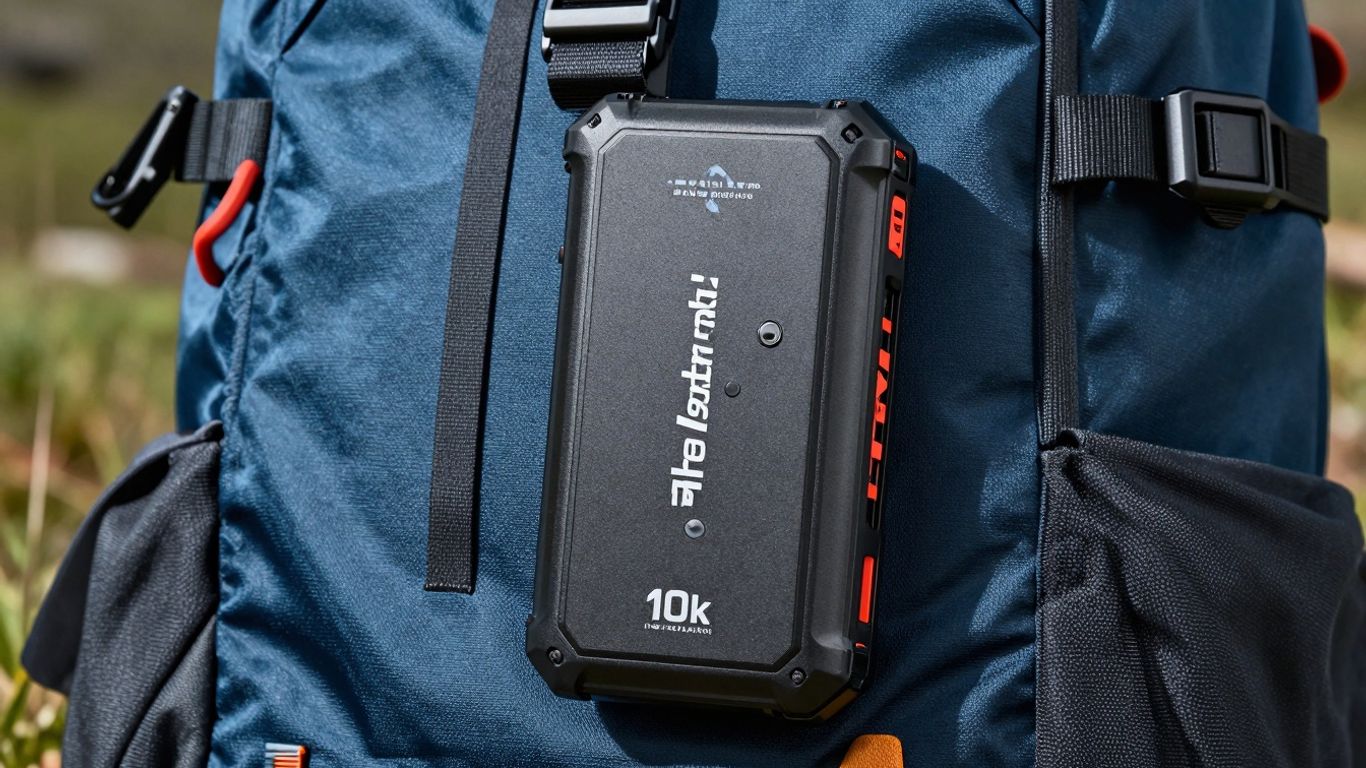
Okay, so let’s talk about the Flextail Zero Power Bank 10k. This thing is pretty neat if you’re trying to keep your pack as light as possible. It’s seriously one of the lightest 10,000mAh power banks out there, weighing in at just 5.1 ounces. That’s a big deal when you’re carrying everything on your back for days.
It’s built with this cool forged carbon fiber shell, which apparently is stronger than metal and also handles cold weather better. Nice touch. Plus, it’s got dual USB-C ports, which is great for charging two things at once or just using whatever cable you have handy. It even has an IPX4 water-resistant rating, so a little rain shouldn’t be a problem.
| Feature | Specification |
|---|---|
| Capacity | 10,000 mAh |
| Weight | 5.1 oz |
| Ports | 2 x USB-C |
| Ingress Rating | IPX4 |
| Special Features | Carbon fiber shell, Fast/Efficiency modes |
There are two modes: fast charge and efficiency. Fast charge is pretty self-explanatory, but the efficiency mode is supposed to help it last longer between charges. It’s a small thing, but when you’re out there, every bit counts, right?
This power bank is a solid choice for backpackers who prioritize minimal weight without sacrificing too much power. The carbon fiber construction and dual USB-C ports make it stand out.
Compared to its main competitor, the Nitecore NB10000 Gen 3, the Flextail Zero is slightly lighter and a bit cheaper. The Nitecore has a slightly better water resistance rating (IPX5 vs IPX4) and some rubber bumpers for drop protection, but for most people, the Flextail Zero’s advantages in weight and cost are probably more significant.
5. Anker 313 Power Bank (PowerCore 10K)
Alright, let’s talk about the Anker 313 Power Bank, also known as the PowerCore 10K. This thing is pretty solid for what it is. It packs 10,000mAh, which is enough to charge up most smartphones about two to three times. So, if you’re heading out for a weekend trip or just have a long day ahead, it should keep your phone going.
What I like is that it’s not too bulky. It’s slim and doesn’t weigh a ton, making it easy to just toss in your backpack or even a larger pocket. Anker calls their charging tech PowerIQ, and it does a decent job of speeding things up. There’s also a trickle-charge mode, which is handy for smaller gadgets like wireless earbuds that don’t need a super fast charge.
Here’s a quick rundown:
- Capacity: 10,000mAh
- Weight: Just over half a pound
- Charges: About 2-3 phone charges
- Ports: Charges one device at a time
- Build: Feels pretty sturdy, with protection against overcharging and stuff.
One thing to note is that it only charges one device at a time. So, if you’re traveling with someone and need to charge both your phones simultaneously, you’ll have to take turns. It’s not a dealbreaker for me, but it’s something to be aware of.
Overall, the Anker 313 is a reliable choice if you’re looking for a straightforward, portable power bank that won’t break the bank. It’s been a go-to for keeping my phone alive on long travel days and even on hikes where I’m using my phone for navigation.
6. Skullcandy Fat Stash 2
Alright, let’s talk about the Skullcandy Fat Stash 2. This thing is pretty neat, especially if you’re someone who likes to keep their tech charged but doesn’t want to lug around a brick. It’s got a 10,000 mAh capacity, which is a solid amount for most phones, and it can even give your smartphone about 50% charge in just 30 minutes thanks to its 20W power delivery. That’s pretty quick when you’re on the go and need a boost.
What I really liked about this one is how compact it is. It really does fit in a pocket, making it super easy to take anywhere. We even found it could charge an iPhone 14 Pro from 20% to full capacity even when the power bank itself was down to its last 12-15%. That’s some impressive juice left in the tank.
It comes with a short, 6-inch combo charging cable. It’s handy because it keeps things tidy, letting you stack your phone right on top of the power bank without a long cable dangling everywhere. However, I do wish it came with a USB-C PD cable to really take advantage of that 20W output.
Here’s a quick look at how it stacked up in our testing:
| Category | Score |
|---|---|
| Value | 7.5 |
| Durability | 9.0 |
| Portability & Weight | 6.8 |
| Charging Performance | 9.0 |
We found this power bank to be surprisingly tough. While Skullcandy doesn’t give official ratings, it handled drops and splashes pretty well during our tests. It seems like it can take a beating, which is great for anyone with an active lifestyle or just a tendency to be a bit clumsy.
It also offers a good mix of ports, including USB-A and USB-C, plus that combo cable. It’s a versatile little unit that punches above its weight for its size.
7. Goal Zero Flip 24
The Goal Zero Flip 24 is a pretty neat little power bank, especially if you’re not trying to charge a laptop or anything super power-hungry. It’s got a 10,000 mAh capacity, which is enough to charge up an iPhone 13 about twice. For its price, it’s a solid choice for keeping your phone, earbuds, or smartwatch topped up on a long hike or bike ride.
One of the coolest things about this one is the built-in USB-A stick. You just plug it right into a compatible port, no extra cables needed. It’s super convenient. The battery indicator lights are also a nice touch, showing you how much juice is left with a simple button press on that same USB stick.
However, it’s not all sunshine and rainbows. The Flip 24 mostly sticks to USB-A for both input and output. This means charging your devices might be a bit slower compared to other options that use USB-C. If you’re used to faster charging speeds, this might feel a little dated.
Here’s a quick look at what it offers:
- Capacity: 10,000 mAh
- Weight: 7.5 oz
- Size: 5.9” x 2.7” x 0.57”
- Outputs: 1x USB-A
- Inputs: 1x Micro USB, 1x USB-C
While it’s a great option for smaller electronics, if you need to power bigger gear, you’ll want to look at something with a higher capacity, like the BioLite Charge 80 PD. But for everyday carry and keeping your phone alive, the Goal Zero Flip 24 is a reliable companion that won’t weigh you down. It’s a good example of a compact portable charger that gets the job done without fuss.
8. Nitecore NB Air 5000
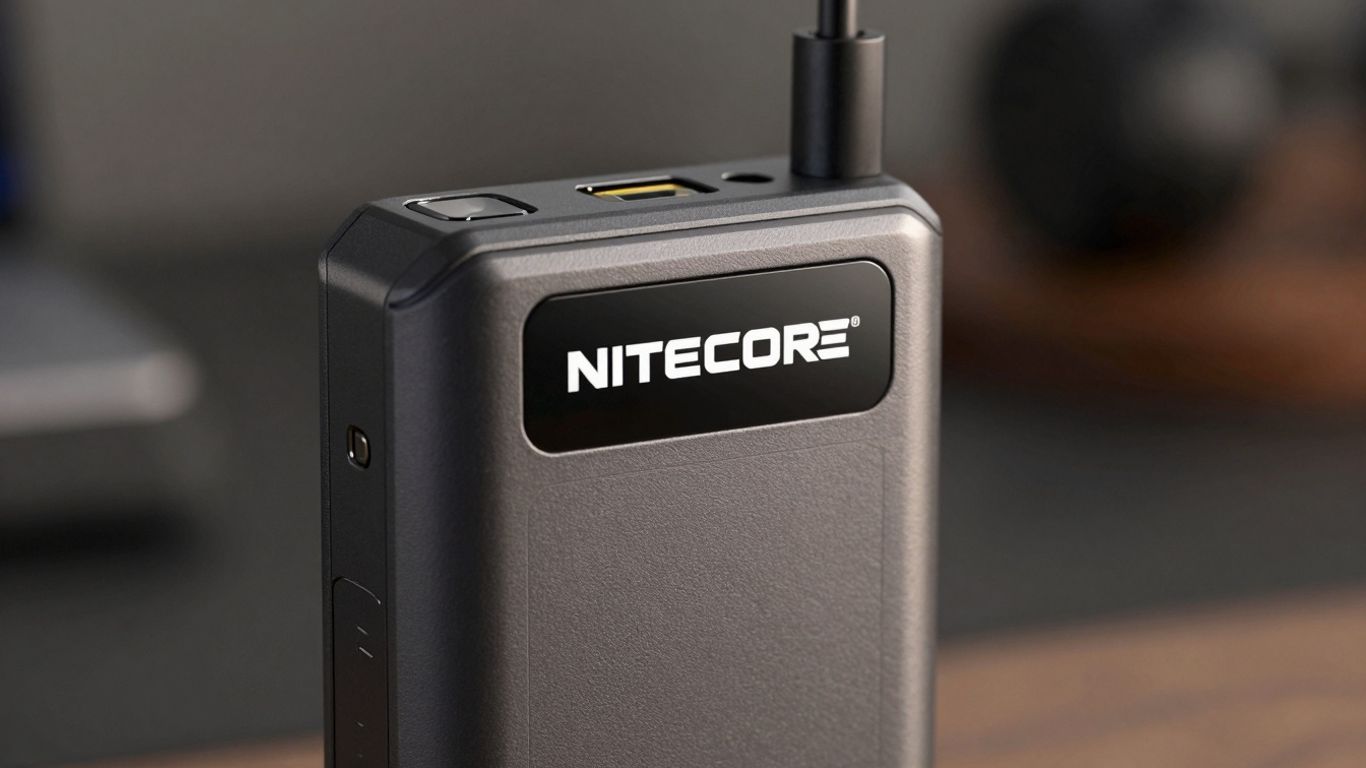
When you’re out in the backcountry and need a reliable way to keep your phone topped up, the Nitecore NB Air 5000 really stands out. It’s currently the lightest 5,000 mAh power bank you can find, which is a pretty big deal when every ounce counts on a long hike. This little guy is designed to give you one full phone recharge, making it perfect for shorter trips or as a backup.
What’s cool is that it doesn’t just skimp on weight; it also packs an IPX7 rating, meaning it can handle getting submerged in water for a bit. That’s a feature you don’t see on many small power banks, and it gives you peace of mind if the weather turns or you have a close call near a stream. It’s got a single USB-C port, which is pretty standard these days for charging your devices.
Here’s a quick look at its specs:
- Power: 5,000 mAh
- Weight: 3.1 oz
- mAh per ounce: 1,612 mAh/oz
- Water Resistance: IPX7
- Ports: 1 x USB-C
Compared to other options in the 5,000 mAh range, like some from BioLite or InfinityLab, the Nitecore NB Air 5000 is significantly lighter and usually more affordable. Plus, it includes helpful power indicators, which some heavier competitors lack. It’s a solid choice if you’re prioritizing minimal weight without sacrificing essential features for a single phone recharge on the trail.
9. Anker PowerCore 5,000 mAh Portable Charger
Alright, let’s talk about the Anker PowerCore 5,000 mAh. This little guy is pretty straightforward. It’s not going to win any awards for being the most feature-packed, but sometimes, simple is exactly what you need when you’re out and about.
This power bank is a solid choice if you just need a reliable way to get a bit more juice for your phone. It’s small, light, and easy to stash in a pocket or a small bag. I’ve found it’s perfect for those days when you know you’ll be out for a while and your phone battery tends to give up the ghost around dinnertime. It usually gives my iPhone a full charge, maybe a little more, which is often enough to get me through the rest of the day.
Here’s a quick rundown of what you get:
- Capacity: 5,000 mAh (enough for about 1-2 full phone charges, depending on your phone).
- Size: Super compact, often compared to a deck of cards or a small wallet.
- Weight: Very light, you’ll barely notice it in your pack.
- Ports: Typically includes a USB-A output and sometimes a micro-USB input for charging the bank itself.
- Charging Speed: It’s not the fastest out there, but it gets the job done without taking forever.
It’s the kind of power bank you don’t really think about until you need it, and then you’re really glad you have it. It’s not for powering up laptops or multiple devices simultaneously, but for keeping your primary device alive, it’s a dependable option. Think of it as your phone’s emergency backup.
While it won’t be powering your whole campsite, its primary strength lies in its sheer portability and the peace of mind it offers for keeping your most important device, your phone, alive and kicking. It’s a no-fuss solution for everyday carry or short trips.
10. GOODaaa Power Bank Wireless Charger 36,000 mAh
If you need a serious amount of power on your adventures, the GOODaaa 36,000 mAh Wireless Charger might be worth a look. This thing is a beast, capable of charging your phone multiple times over or keeping a tablet alive for days. It’s the kind of power bank you’d want for extended camping trips, long road journeys, or just to have as a reliable backup for emergencies.
What’s pretty neat is how many ways you can charge devices with this unit. It’s got six different outputs, including built-in cables and wireless charging, so you can juice up several gadgets at once. Plus, it supports 15W fast charging, which is handy when you’re in a hurry. Recharging the power bank itself is also flexible, with options for USB-C, micro-USB, and even a solar panel. For outdoor use, it comes with a built-in carabiner and two flashlights, adding to its practicality.
However, it’s not all perfect. Those built-in cables are a bit short, making it awkward to use your phone while it’s plugged in. The solar panel is more of a trickle charger; don’t expect it to be your main power source, especially if it’s not in direct sunlight. And at over a pound, it’s definitely on the heavier side, so it might not be the best choice if you’re trying to pack light or keep your pockets free.
Here’s a quick look at its specs:
| Feature | Specification |
|---|---|
| Capacity | 36,000 mAh |
| Wireless Charging | Yes (15W Fast Charge) |
| Outputs | 6 (incl. built-in) |
| Inputs | USB-C, Micro-USB, Solar |
| Extra Features | Carabiner, Dual Flashlights |
While the GOODaaa 36,000 mAh is a bit bulky and has some minor drawbacks with its short cables, its massive capacity and versatile charging options make it a solid contender for anyone needing substantial power on the go. The added outdoor features like the carabiner and flashlights are a nice touch for campers and hikers.
So, Which Power Bank Wins?
After all that testing, picking just one winner feels tough, but we have to. For most backpackers, the Nestout 15,000mAh Outdoor Battery really stood out. It’s tough, can charge a few things at once, and even has a built-in light, which is pretty neat. If you’re looking for something a bit easier on the wallet, the Skullcandy Fat Stash 2 is a solid choice that won’t weigh you down. Remember, the best power bank for you really depends on how long you’re out, what gadgets you absolutely need to keep alive, and how much weight you’re willing to carry. Happy trails and stay charged!
Frequently Asked Questions
How much power do I really need in a power bank for backpacking?
For short trips, like a day hike or overnight, a smaller one around 5,000mAh is usually enough to charge your phone once. If you’re going for several days (3-6), a 10,000mAh power bank is a good choice, giving you a couple of full phone charges. For longer trips, you might want a 20,000mAh or even consider bringing two smaller ones for backup.
Is it better to have one big power bank or two smaller ones?
Bringing two smaller power banks, like two 10,000mAh ones instead of one 20,000mAh, can be a smart move. If one breaks or gets lost, you still have the other. Plus, two smaller ones can sometimes fit into your backpack more easily than one large, bulky one.
What does ‘mAh’ mean on a power bank?
‘mAh’ stands for milliampere-hour. It’s a way to measure how much energy a battery can store. A higher mAh number means the power bank can hold more charge and power your devices for longer before needing to be recharged itself.
How do I keep my power bank from dying in the cold?
Cold weather can make batteries lose power faster. To help your power bank last longer in the cold, try to keep it close to your body, like in an inside pocket of your jacket or even in your sleeping bag at night. Some power banks, especially those with carbon fiber parts, are designed to work better in cold temperatures.
Do I need a waterproof power bank?
While not every power bank needs to be totally waterproof, it’s definitely a bonus for outdoor adventures. If your power bank has a good water-resistance rating (like IPX5 or higher), it can handle splashes or light rain better. Just remember to protect it from getting completely soaked, especially if it’s not specifically designed for submersion.
How can I charge my power bank when I’m out in the wilderness?
If you’re on a long trip, you might need to recharge your power bank itself. Some larger power banks can be recharged using solar panels designed for camping. You can also recharge them from a car adapter if you’re on a road trip. For most backpacking trips, though, you’ll want a power bank with enough capacity to last your entire trip without needing a recharge.
Recommended Climbing Products
These products can help with approaches, remote climbing trips, navigation, and preparedness.
Affiliate disclosure: As an Amazon Associate, TradClimbers may earn from qualifying purchases at no additional cost to you.
Keep exploring helpful trad climbing, gear, safety, and technique resources.